


Crystal Spheres in Witchcraft: Display, Meditation, Scrying, Stands, and Care

A crystal sphere can be a mineral specimen, a meditation focus, an altar centerpiece, a scrying surface, or simply a way to appreciate color and structure from every angle. Its usefulness does not come from the shape alone. Material, size, polish, stability, lighting, and the way you intend to work with it all matter.
This guide explains how to choose and use crystal spheres without treating every polished orb as the same object. It separates observable mineral features from metaphysical tradition, compares practical sizes, explains stands and display safety, and offers grounded methods for meditation and scrying.
What Is a Crystal Sphere?
A crystal sphere is a rounded object made by cutting, grinding, and polishing mineral material into a ball. The original stone may be naturally formed, but the sphere itself is a manufactured shape. Natural inclusions, color bands, fractures, veils, pits, and uneven transparency may remain visible after polishing.
The phrase crystal ball is often used broadly. Some crystal balls are made from quartz or another mineral. Others are made from glass, lead crystal, resin, or synthetic material. A clear appearance does not prove that an object is natural quartz, and a dramatic internal pattern does not automatically prove that it is untreated.
Before buying, look for a clear material name, approximate diameter, photographs from more than one angle, and disclosure of treatments when known. When the exact identity is uncertain, treat the sphere as an attractive polished object rather than assigning mineral-specific properties with certainty.
Why Practitioners Choose the Sphere Shape
A sphere has no single point, edge, or obvious front. It can be turned in the hand and viewed from every direction, which makes it especially useful for observing inclusions, bands, flashes, and internal landscapes. It also creates a strong visual center on an altar or shelf.
In modern metaphysical practice, spheres are often said to distribute a stone’s energy evenly in every direction. That is a symbolic or spiritual interpretation, not a scientifically established physical effect. The practical qualities are easier to observe: a sphere offers a continuous surface, feels balanced in the hand, and encourages slow, circular attention.
For a comparison with other shapes, read our guide to tumbled stones, palm stones, towers, and natural specimens.
Choose a Sphere by Its Intended Use
Mineral Display and Collection
If your main interest is mineral beauty, choose by pattern, color, transparency, inclusions, polish, and provenance rather than by a long list of promised effects. Banded agates, included quartz, patterned jasper, mica-rich material, and stones with optical flash can reveal different details as the sphere turns.
A display piece should have enough size to show its internal structure from your normal viewing distance. It also needs a stand that supports its weight without hiding the most interesting area.
Meditation and Tactile Focus
For hand-held meditation, comfort matters more than spectacle. A small or medium sphere should rest securely in your palm without forcing your fingers apart. Very polished spheres can become slippery, especially when hands are warm or recently moisturized.
Choose a piece you can handle without strain. A smaller sphere can be more useful than a large one when your practice involves breath counting, sensory observation, or carrying the object between rooms.
Altar Centerpiece
A sphere works well as a visual center because it can be seen from several directions. Choose a size that fits the altar without crowding candles, incense, offering vessels, or frequently handled tools. The stand should sit flat, resist vibration, and keep the sphere from rolling if the surface is bumped.
Scrying
Scrying uses a reflective, translucent, patterned, or dark surface as a focus for relaxed observation and symbolic interpretation. A perfectly clear quartz ball is not required. Dark obsidian, smoky material, included quartz, glass, and strongly patterned stones can all provide visual depth.
The best scrying sphere is one that lets your gaze soften without creating uncomfortable glare. A smaller sphere may work well at close range, while a larger one provides a wider visual field. Your lighting setup usually matters more than the price of the object.
Crystal Grids and Arrangements
Mini spheres can serve as central or repeating elements in a grid. Because they roll, every sphere should be placed in a ring, recessed holder, shallow dish, or other stable support. Do not rely on surrounding stones alone to keep a sphere in place on a table that can be bumped.
Crystal Sphere Size Guide
There is no universal spiritual meaning assigned to each diameter. The ranges below are practical categories for handling and display:
- Mini spheres, about 18–25 mm: portable, suitable for small altars, grids, bowls, and close observation.
- Small spheres, about 30–50 mm: comfortable for many hands and visible on a desk, shelf, or compact altar.
- Medium spheres, about 50–75 mm: substantial display pieces with more visual surface and noticeably greater weight.
- Large spheres, above roughly 75 mm: prominent collection pieces that require careful lifting, a strong stand, and a stable surface.
Weight increases quickly as diameter increases. Two spheres that look only moderately different in width can feel dramatically different in the hand. Dense minerals also weigh more than less-dense materials of the same size. Check both diameter and weight when those details are available.
Choosing the Material and Visual Character
Clear and Translucent Quartz
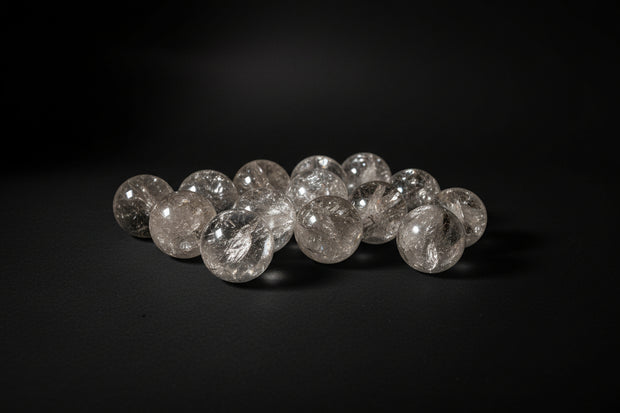
Clear and semi-clear quartz can reveal internal fractures, veils, clouds, and rainbow effects. These features may create depth for meditation or scrying, but they are also part of the mineral’s physical character. An inclusion is not automatically damage, and a natural fracture does not necessarily mean the sphere is unstable.
A Clear Quartz Sphere can be a versatile first choice when you want a compact piece for observation, grids, or altar work. Inspect clear and translucent spheres carefully for chips around the base contact area, where damage may be easier to miss.
Dark and Opaque Materials
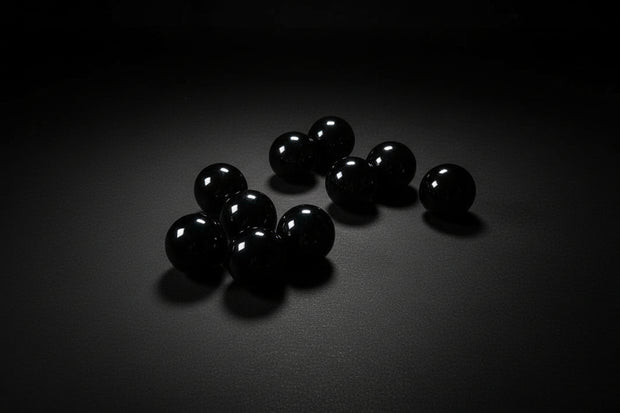
Obsidian and other dark polished materials create a mirror-like or shadowed surface. They can be visually effective for scrying because reflections and low-contrast forms emerge in subdued light. Obsidian is volcanic glass rather than a crystalline mineral, but it is commonly included in metaphysical crystal collections.
An Obsidian Sphere may suit practitioners who prefer a dark viewing surface, a strong visual presence, or a piece that does not depend on internal transparency.
Banded, Patterned, and Included Stones
Agate, jasper, included quartz, and other patterned materials invite slow rotation and detailed observation. Their markings can function as meditation prompts or imaginative scrying surfaces without requiring the practitioner to claim that every line is an external message.
When a sphere has dramatic color, ask whether the material may be dyed, heat-treated, coated, stabilized, or reconstructed. Treatments do not automatically make a piece undesirable, but accurate labeling helps you care for it and understand what you are purchasing.
Softer and More Delicate Materials
Not every sphere tolerates the same cleaning method. Calcite, selenite, fluorite, malachite, and many other materials can be scratched, dulled, etched, fractured, or damaged by moisture, acids, salt, impact, or prolonged exposure. A high polish does not make a soft mineral durable.
When the material is unknown, use the least aggressive care method and avoid soaking it.
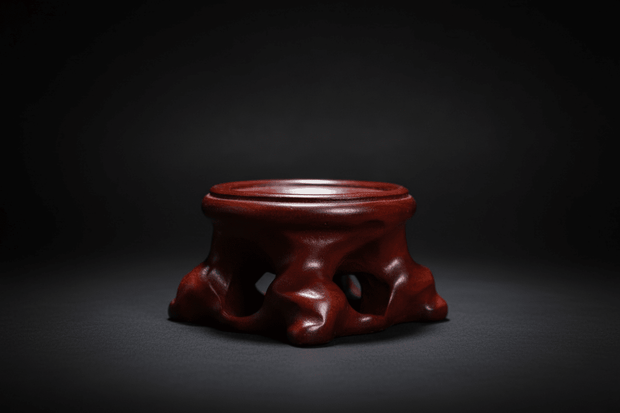
How to Choose a Sphere Stand
A sphere should never be displayed loose on a flat surface. Even a slight tilt, vibration, pet, child, closing door, or accidental touch can send it rolling.
A useful stand should:
- Match the sphere’s diameter and weight
- Hold the sphere below its widest point without swallowing the piece
- Sit level without rocking
- Have a broad enough base to resist tipping
- Use a contact surface that will not scratch the polish
- Remain stable on the actual shelf, altar, or table where it will be used
Test the stand with gentle pressure from several directions. If the sphere shifts easily, the pairing is decorative but not secure. Larger pieces may need a deeper ring or heavier base than photographs suggest.
Our Sphere Holders collection includes supports designed for crystal orbs and round altar objects. Select by actual fit rather than by appearance alone.
How to Meditate with a Crystal Sphere
A sphere can support meditation by giving the eyes and hands one consistent object to return to. It does not need to produce a supernatural sensation to be useful.
- Place the sphere securely in your hands or on a stable stand.
- Notice its temperature, weight, polish, color, and visible structures.
- Take several slow breaths without trying to force an impression.
- Rotate the sphere slightly and identify one new feature.
- Choose a simple theme such as patience, clarity, courage, grief, or rest.
- When attention wanders, return to the physical object and your breathing.
- End by writing one observation or practical action.
Metaphysical correspondences can provide a symbolic theme, but the mineral does not guarantee a mood, event, cure, or outcome. Use the sphere as a focus within a larger practice rather than as a substitute for action.
How to Scry with a Crystal Sphere
Scrying is best approached as a contemplative and divinatory practice, not as a guaranteed method of seeing fixed future events.
Prepare the Space
- Use a quiet room with comfortable, subdued lighting.
- Place the sphere against a plain, darker background if reflections are distracting.
- Use indirect light from the side or behind you rather than a bright lamp aimed into your eyes.
- Keep open flames well away from the sphere, stand, cloth, hair, sleeves, and curtains.
- Set a short session length, such as ten or fifteen minutes.
Begin the Session
- Write your question before looking into the sphere.
- Relax your eyes and look through or slightly beyond the surface rather than staring aggressively at one point.
- Notice shadows, reflections, clouds, colors, memories, words, and emotional responses without immediately declaring what they mean.
- Record the first impressions in neutral language.
- Interpret only after the observation period ends.
Reflections, optical effects, expectation, memory, and imagination can all influence what appears meaningful. That does not prevent the practice from being spiritually valuable, but it does make careful journaling important. Do not use a scrying session as the sole basis for medical, legal, financial, or safety-critical decisions.
For another form of reflective divination, see our guide to using a scrying mirror.
Displaying Crystal Spheres Safely
Choose a low, stable location away from shelf edges, foot traffic, vibration, and areas where cords or fabrics can catch the stand. Keep heavy spheres below head height whenever possible. Do not place them where a child or pet can pull them down.
Never leave a clear or translucent polished sphere in direct sunlight. A curved transparent object can concentrate sunlight onto a small area and create enough heat to scorch or ignite nearby material. Keep spheres away from sunny windows, window ledges, paper, cloth, dried plants, and other flammable surfaces.
Direct sunlight can also alter the color of some minerals or treatments over time. A shaded shelf with controlled lighting is generally safer for both the collection and the room.
Cleaning and Caring for Crystal Spheres
The safest default is a clean, dry microfiber cloth. Remove dust while supporting the sphere with both hands over a padded surface. Avoid polishing while standing over tile, concrete, or a hard sink.
Before using water, cleaners, oils, salt, smoke, or sunlight, identify the material and any treatments as accurately as possible. Do not assume that a method is safe because it worked on quartz.
- Water: can damage, dull, dissolve, stain, or weaken some minerals and coatings.
- Salt: can scratch polished surfaces and enter small fractures.
- Acids and household cleaners: may etch carbonates and damage coatings or dyes.
- Oils: can leave residue, enter fractures, collect dust, or alter the appearance of porous material.
- Smoke: can leave soot or fragrance residue and may be unsuitable for people, pets, or rooms with poor ventilation.
- Sunlight: can fade certain materials and presents a lens-related fire hazard with clear or translucent spheres.
For material-specific alternatives, read How to Cleanse and Charge Crystals Safely.
Physical Cleaning vs. Spiritual Cleansing
Physical cleaning removes dust, fingerprints, oils, and residue. Spiritual cleansing is a religious or metaphysical act intended to reset, dedicate, or prepare an object. They are not the same process.
A spiritual cleansing method does not need to expose the sphere to damaging substances. Prayer, sound, breath, visualization, written intention, placement on an altar, or a brief dedication ritual can be used without soaking, salting, heating, or leaving the object outdoors.
Consecration is also optional. A sphere can remain a mineral specimen, decorative object, or meditation aid without being assigned a ritual role.
Common Crystal Sphere Mistakes
Assuming Every Clear Sphere Is Natural Quartz
Glass, synthetic material, and natural quartz can look similar in photographs. Buy from sellers who identify the material clearly and disclose uncertainty rather than relying on appearance alone.
Buying by Metaphysical Claims Alone
Choose a sphere you can physically use, display, and care for. A long list of promised benefits does not compensate for unclear identity, poor polish, unstable fractures, or an impractical size.
Ignoring Weight
Large spheres can be surprisingly heavy. Confirm that shelves, stands, and altars can support the piece and that you can lift it safely with two hands.
Using an Unstable Stand
A beautiful stand is not useful if the sphere rocks, rolls, or tips. Test the complete setup before placing it near other valuables.
Displaying It in Direct Sunlight
Do not treat a clear sphere like ordinary window décor. Move it well away from direct sun and reflective window areas.
Soaking an Unknown Stone
If you do not know the mineral, treatment, dye, adhesive, or coating, do not submerge it. Begin with dry care.
Treating Scrying as Certainty
Record impressions, consider alternative explanations, and verify important decisions through ordinary evidence and qualified advice.
Frequently Asked Questions
Is a crystal sphere the same as a crystal ball?
The terms often overlap, but “crystal ball” can refer to natural mineral, glass, lead crystal, synthetic material, or another polished transparent or reflective sphere. Check the listed material rather than assuming.
What is the best crystal sphere for a beginner?
A small or medium sphere with clear material identification, a secure stand, and a surface you enjoy observing is usually more useful than a very large or expensive piece. Quartz, obsidian, agate, jasper, and many other materials can work depending on your intended use.
Are inclusions and internal fractures bad?
Not necessarily. Inclusions, veils, color zones, and internal fractures can be natural features. Inspect for open cracks, loose sections, fresh chips, or instability, especially around the contact point with the stand.
Does a sphere need to be cleansed before use?
No. Cleansing is optional and tradition-dependent. Physical inspection and safe cleaning are more important. A simple spoken dedication or quiet observation can be enough when you want a spiritual beginning.
Can I hold a sphere during meditation?
Yes, provided it is small enough to hold securely. Sit over a padded surface and avoid handling a polished sphere with wet, oily, or recently lotioned hands.
How do I choose the right sphere holder?
Match the holder to the sphere’s diameter, weight, and contact area. The setup should remain steady when gently nudged from several directions.
Can I put a crystal sphere in sunlight?
No clear or translucent sphere should be left in direct sunlight. Curved transparent surfaces can focus light and create a fire risk, and some materials may fade or change with prolonged exposure.
Choose for Material, Purpose, and Stability
A useful crystal sphere should be more than visually dramatic. It should have an accurately described material, a practical size, a secure stand, and a clear role in your collection or practice. Decide whether you want close mineral observation, meditation, scrying, altar display, or a grid centerpiece, then choose the piece that physically supports that use.
Start with one sphere you can study carefully. Learn its visible structures, establish safe care, keep it away from direct sunlight, and give it a stable place. The value of the practice comes from attention and consistency—not from the assumption that a polished object must automatically produce results.
Tools for this practice
Explore the products selected for this guide. Review each listing for what is included and how to use it.

Shop this guide · 4 items Collapse


Keep exploring the shop
You made it to the end of the guide. Keep exploring through related products, major departments, or the full catalog.
 RELATED TO THIS GUIDE
Crystals & Stones
Shop this topic
RELATED TO THIS GUIDE
Crystals & Stones
Shop this topic


Leave a comment