


Crystals and Stones Used in Wicca: A Practical Guide

Crystals and stones are optional tools within modern Wiccan practice. They may serve as elemental symbols, meditation objects, altar anchors, seasonal decorations, or physical reminders of a ritual intention.
The structured crystal correspondences used by many modern practitioners developed largely through nineteenth- and twentieth-century occult and metaphysical movements rather than an unchanged ancient Wiccan system.
The Role of Crystals in Wiccan Practice
- Elemental representation: A stone may mark Earth, Air, Fire, Water, or Spirit.
- Ritual focus: Texture, color, weight, and placement help concentrate attention.
- Altar structure: Stones can define quarters, seasonal themes, or the working center.
- Meditation: Holding a stone provides a tactile anchor.
- Spell symbolism: A selected mineral can reinforce the written intention of a working.
- Devotional use: A stone may be placed near a deity image when the association fits the practitioner’s tradition.
Stones support ritual structure; they do not replace intention, ethics, skill, or practical action.
Do Wiccans Use Crystals?
Many Wiccans use crystals and stones, but crystals are not required for Wiccan practice. Practitioners may place stones on an altar, use them as elemental symbols, hold them during meditation, include them in seasonal observance, or simply appreciate them as natural objects. The exact correspondences vary by practitioner and source rather than forming one universal Wiccan rule.
If you are beginning, one or two stones chosen for a clear purpose are enough; a large crystal collection is not a prerequisite for ritual or devotion.
Common Stones Used in Wicca
To compare stone formats rather than relying only on correspondence charts, browse beginner-friendly tumbled stones, points, specimens and other shapes. Choose by the actual material, dimensions and care needs.
Clear Quartz
Clear quartz is commonly used as a neutral focus stone, altar centerpiece, or substitute when a specific correspondence is unavailable.
Amethyst
Amethyst is often associated with meditation, dream symbolism, spiritual study, and lunar ritual.
Obsidian and Black Tourmaline
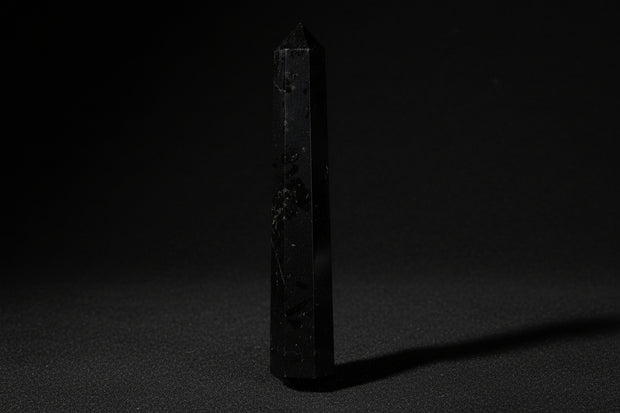
Obsidian and black tourmaline are modern symbolic choices for grounding, boundaries, protection, and the northern or Earth quarter.
Rose Quartz
Rose quartz appears frequently in self-love, relationship, compassion, and Beltane-themed work. Responsible love magic should focus on mutuality rather than coercion.
Citrine
Citrine is associated with solar symbolism, prosperity, confidence, career goals, and harvest festivals.
Selenite
Selenite is often connected with lunar aesthetics and altar display. It is soft and water-sensitive and should be kept dry.
Elemental Stone Correspondences
Correspondences vary by author, lineage, and personal practice. A simple modern arrangement might include:
- North / Earth: Jasper, hematite, obsidian, or black tourmaline
- East / Air: Clear quartz, fluorite, or a pale lightweight stone
- South / Fire: Carnelian, garnet, or sunstone
- West / Water: Amethyst, aquamarine, or moonstone
- Center / Spirit: Clear quartz or a personally significant stone
Initiated practitioners should follow their tradition’s established correspondences when applicable.
Using Stones on a Wiccan Altar
- Place quarter stones near the corresponding directional tools.
- Use one central stone rather than overcrowding the working area.
- Keep stones far enough from candles that they cannot obstruct or destabilize the holder.
- Use stands for towers, spheres, sharp points, and heavy specimens.
- Rotate seasonal stones rather than displaying every correspondence at once.
- Leave clear space for the actual ritual work.
Crystals and the Sabbats
- Samhain: Obsidian, jet, or smoky quartz
- Yule: Garnet, clear quartz, or snowflake obsidian
- Imbolc: Amethyst or clear quartz
- Ostara: Green aventurine or moss agate
- Beltane: Rose quartz or carnelian
- Litha: Sunstone, citrine, or tiger’s eye
- Lughnasadh: Citrine, jasper, or carnelian
- Mabon: Jasper, smoky quartz, or tiger’s eye
These are modern optional associations rather than historical requirements.
Building a Small Wiccan Stone Set
A practical beginning set might contain:
- One clear quartz or neutral focus stone
- One dark grounding stone
- One stone associated with meditation or lunar work
- One stone connected with love or relationship symbolism
- One solar or prosperity stone
Add specimens deliberately as new ritual needs arise.
Mineral Care and Ethical Sourcing
- Identify a mineral before exposing it to water, salt, sunlight, heat, or chemicals.
- Do not make crystal elixirs or place unknown stones in food or drinks.
- Avoid inhaling mineral dust or grinding specimens.
- Use sellers who disclose treatments, locality, and sourcing when possible.
- Recognize that heat-treated amethyst is commonly sold as citrine.
- Keep small, sharp, toxic, or fragile specimens away from children and pets.
Frequently Asked Questions
Are crystals required in Wicca?
No. Wiccan ritual can be practiced without crystals or mineral specimens.
Are Wiccan crystal correspondences ancient?
Some stones have long symbolic histories, but modern standardized correspondence systems are largely recent occult syntheses.
How many stones should be on an altar?
Use only enough to support the altar’s purpose while preserving clear, safe working space.
Related Reading
Tools for this practice
Explore the products selected for this guide. Review each listing for what is included and how to use it.
Shop this guide · 1 item Collapse

Keep exploring the shop
You made it to the end of the guide. Keep exploring through related products, major departments, or the full catalog.
 RELATED TO THIS GUIDE
Crystals & Stones
Shop this topic
RELATED TO THIS GUIDE
Crystals & Stones
Shop this topic


Leave a comment