


Devotional Practice vs. Deity Work: Prayer, Offerings, Relationships, and Boundaries

“Devotional practice” and “deity work” are often used as though they describe the same thing. They can overlap, but they carry different expectations in different Pagan, polytheist, occult, and witchcraft communities.
Neither term has one universal definition. The most useful approach is to describe what you actually do, identify the tradition shaping it, and avoid turning personal experience into a rule for everyone else.
What Is Devotional Practice?
Devotion is sustained religious attention directed toward a deity, group of deities, sacred power, ancestor, saint, spirit, or religious ideal. Depending on the tradition, it can include:
- Prayer, hymns, praise, or contemplation
- Offerings and libations
- Festival observance and sacred calendars
- Maintaining a shrine or sacred image
- Reading myths, theology, history, or liturgy
- Acts of service, charity, hospitality, or ethical discipline
- Meditation, pilgrimage, vows, or regular ritual
Devotion does not require visions, audible messages, supernatural proof, or a belief that the deity has personally selected the practitioner.
What Do People Mean by Deity Work?
“Deity work” is a modern umbrella term commonly used in online Pagan and witchcraft spaces. Some people use it for any intentional relationship with a deity. Others reserve it for reciprocal ritual, magical collaboration, spirit communication, or a structured commitment beyond ordinary worship.
Because the term is broad, ask what a writer or practitioner means rather than assuming. Historical religions had their own categories—prayer, sacrifice, priesthood, mystery initiation, household cult, civic festival, votive practice, oracular consultation—and should not automatically be translated into one modern phrase.
Devotion Does Not Require a Patron Deity
You may honor one deity, several, a whole pantheon, local powers, ancestors, or no personal deity at all. A meaningful practice can develop through deliberate choice rather than a dramatic calling. Our article Do You Need a Patron Deity? explains why patronage is not a universal Pagan requirement.
Prayer and Offerings Are Not Transactions
Offerings can express hospitality, gratitude, remembrance, obligation, celebration, or reciprocity. They do not guarantee a requested outcome. A healthy devotional practice leaves room for silence, uncertainty, disappointment, and ordinary life.
Learn the customs of the tradition you are approaching. Appropriate offerings, disposal methods, sacred days, purity expectations, and the role of images differ widely. Avoid constructing one universal deity-altar formula from unrelated religions.
Signs, Coincidences, and Discernment
A repeated symbol, animal, dream, song, or coincidence may feel personally meaningful. It is not automatically proof that a deity is issuing a command. Before acting, consider ordinary explanations, the symbol’s actual historical relationship to the deity, your emotional state, and whether the proposed message aligns with your ethics and responsibilities.
No deity relationship should require abandoning medical care, isolating from supportive people, spending money you cannot afford, breaking the law, or obeying frightening instructions. Intrusive thoughts, anxiety, and sleep disruption can feel spiritually charged. They still deserve grounded care and, when needed, professional support.
Boundaries Are Compatible With Reverence
Practitioners can set limits on timing, offerings, communication methods, ritual intensity, and commitments. Do not make vows impulsively. Write down the exact promise, duration, obligations, and conditions before speaking it. Tradition-specific religious guidance may be appropriate for serious vows or initiatory obligations.
Shrines, Altars, and Sacred Images
A shrine emphasizes presence, remembrance, prayer, and devotion. An altar emphasizes ritual action or offerings, though one space can serve both roles. See Altar vs. Shrine for a fuller distinction.
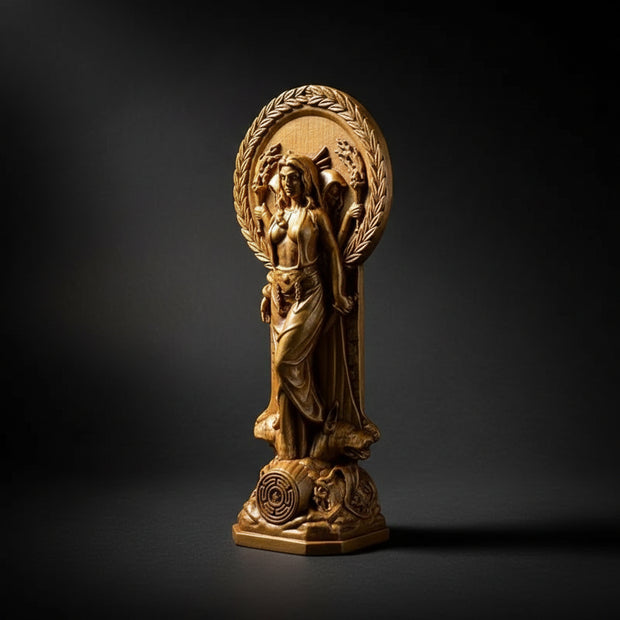
A statue can focus attention and represent myth, attributes, or sacred presence, but it is not mandatory. Our guide to choosing a deity statue covers symbolism, placement, and respectful use. Practical supplies can be found in the altar supplies collection, but devotion does not depend on owning elaborate tools.
A Simple Beginning Devotional Routine
- Choose a deity or tradition you genuinely wish to learn about.
- Read reliable historical and tradition-specific introductions.
- Set a modest schedule you can maintain.
- Clean the space and offer a simple greeting or prayer.
- Give an appropriate offering if the tradition uses one.
- Sit quietly, read a hymn, or reflect on a myth or virtue.
- Close with thanks and dispose of offerings appropriately.
- Keep notes without treating every event as a message.
Frequently Asked Questions
Is deity work more advanced than devotion?
Not universally. The terms describe different frameworks, not a fixed beginner-to-advanced ladder.
Do I need permission from a deity before beginning devotion?
Most public religious traditions do not require a supernatural sign before respectful prayer or study. Initiatory practices may have specific requirements.
What if I never receive a sign?
Silence does not make a devotional practice invalid. Prayer, offerings, study, ethics, and ritual can remain meaningful without extraordinary experiences.
Can I stop a devotional practice?
Yes, unless you have made a specific vow or formal obligation. Even then, seek tradition-appropriate guidance rather than remaining trapped by fear.
Tools for this practice
Explore the products selected for this guide. Review each listing for what is included and how to use it.



Shop this guide · 4 items Collapse


Keep exploring the shop
You made it to the end of the guide. Keep exploring through related products, major departments, or the full catalog.
 RELATED TO THIS GUIDE
Ritual Supplies & Altar Tools
Shop this topic
RELATED TO THIS GUIDE
Ritual Supplies & Altar Tools
Shop this topic


Leave a comment