


Exploring Satanism: Beliefs, Ethics & Finding Your Path

This is a personal study and discernment guide for people considering whether Satanism describes their values or religious outlook. It is not a complete history of the movement. Begin with What Is Modern Satanism? for the historical and religious-studies overview.
Satanism is not one worldwide organization or uniform set of beliefs. The name is used by several modern religious and philosophical movements and by independent practitioners. Some are non-theistic and use Satan as a symbol of opposition, autonomy, skepticism, or human nature. Others are theistic and understand Satan, Lucifer, or related figures as spiritual beings.
There is no required initiation, blood pact, criminal act, public declaration, purchase, or dramatic ritual that makes someone a Satanist. A responsible path begins with study, self-examination, consent, and clear ethical boundaries.
Understand the major approaches
Non-theistic Satanism
Non-theistic Satanists generally do not believe in a literal Satan. The figure functions as a symbol within a philosophy or religious identity. Ritual may serve as psychodrama, reflection, celebration, art, or emotional catharsis.
Theistic Satanism
Theistic Satanists understand Satan, Lucifer, or related adversarial figures as real spiritual beings. Beliefs vary widely, and no single group speaks for every practitioner. Read Theistic Satanism: Belief, Devotion, and Modern Religious Practice.
Independent and eclectic paths
Some people study several currents and develop a private practice. Independence does not remove the need for accurate research, lawful behavior, consent, source evaluation, and respect for other people’s rights.
Use How Scholars Distinguish Theistic and Atheistic Satanism for a direct comparison.
Study before adopting a label
Read material from more than one perspective. Distinguish:
- primary texts from summaries;
- historical scholarship from promotional writing;
- an organization’s claims from outside analysis;
- personal revelation from verifiable history;
- a founder’s opinions from your own considered values.
A label should describe a worldview you have examined, not pressure you into accepting every statement made by an author, leader, organization, or online community.
Write a personal ethical framework
Before choosing an identity, answer questions such as:
- How will you protect consent and bodily autonomy?
- What conduct remains unacceptable when you are angry?
- How will you distinguish self-defense from revenge?
- How will you evaluate claims that lack evidence?
- How will you protect children, animals, vulnerable people, and yourself from harm?
- How will you repair harm when you make a mistake?
Personal sovereignty is not permission to disregard another person’s sovereignty. A durable ethical system includes accountability as well as freedom.
No dangerous initiation is necessary
You do not need to cut yourself, sign in blood, burn religious property, trespass, vandalize, use drugs, engage in sexual activity, harm an animal, or break the law. These actions do not prove sincerity. A personal commitment can be expressed through ordinary writing, art, study, service, or a practical goal.
A 30-day reflection exercise
- Write what the symbol of Satan means to you, if anything.
- List three values you want your life to demonstrate.
- List three behaviors that would contradict those values.
- Read one primary source and one reputable historical or religious-studies source.
- Compare at least two distinct Satanic organizations or currents without assuming they are interchangeable.
- Choose one practical action that improves your life without violating another person’s rights.
- Review your notes after thirty days before deciding whether the identity still fits.
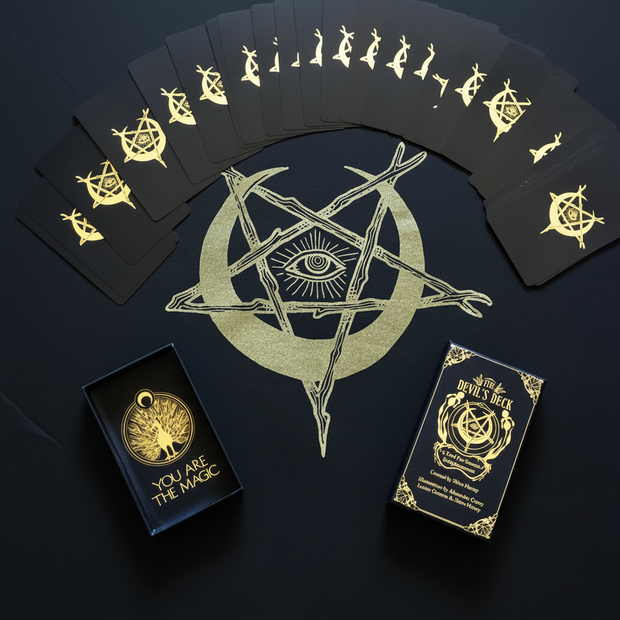
A reflective tool such as The Devil’s Deck may provide prompts, but it should not replace your own judgment or independent research.
How to evaluate groups and teachers
Healthy communities allow questions, publish clear expectations, respect consent, permit members to leave, and do not punish disagreement. Leave any group that demands:
- unquestioning obedience or loyalty to a leader above your safety;
- isolation from friends, family, or professional care;
- sexual access, nudity, humiliation, or bodily fluids as initiation;
- illegal activity, self-harm, animal harm, or violence;
- racism, antisemitism, hate ideology, or political extremism;
- large unexplained payments or financial control;
- secrecy about abuse or illegal conduct.
Extremism and cruelty are not signs of deeper occult knowledge.
Privacy and social considerations
Religious and philosophical beliefs can remain private. Consider possible effects on employment, housing, family relationships, social media, and personal safety before disclosing them publicly. Privacy is different from being pressured into silence about abuse or illegal conduct.
Ritual is optional
Some Satanists value elaborate ceremony; others use simple reflection, activism, study, art, devotion, or no ritual at all. Safe symbolic practice may involve journaling, music, meditation, or a supervised candle. It should never require injury, coercion, dangerous fire, or targeting another person.
For the mechanics of ritual, read How Ritual Works in Modern Satanism. For myths and safety boundaries, read Satanic Rituals: Myths, Meaning & Responsible Practice.
Frequently asked questions
Do I need to join an organization?
No. Some people join organizations, while others remain independent or study without adopting the identity.
Is Satanism always theistic?
No. Modern Satanism includes non-theistic, theistic, and independent approaches.
Do I need to buy ritual supplies?
No. Study, reflection, and ethical practice do not require a purchase.
Can my views change?
Yes. A label should remain open to revision as you learn, gain experience, and reconsider your values.
Continue studying
Tools for this practice
Explore the products selected for this guide. Review each listing for what is included and how to use it.
Shop this guide · 1 item Collapse
Keep exploring the shop
You made it to the end of the guide. Keep exploring through related products, major departments, or the full catalog.
 RELATED TO THIS GUIDE
Divination Tools
Shop this topic
RELATED TO THIS GUIDE
Divination Tools
Shop this topic


Leave a comment