


Satanism Books for Beginners: A Responsible Reading Path

A responsible introduction to Satanism requires more than one dramatic book, social-media account, or organization’s website. Modern Satanism includes non-theistic, theistic, Luciferian, organizational, and independent approaches that disagree about belief, ritual, ethics, history, and even the meaning of Satan.
There is no single universal Satanic canon. A useful reading path compares primary texts with historical scholarship, separates description from promotion, and leaves room to reject harmful or unsupported claims.
How to Evaluate a Satanism Book
- Identify the type of source. Is it scripture, ritual writing, memoir, organizational material, academic history, or commentary?
- Check the author’s position. An insider can explain lived belief but may also defend a group’s preferred narrative.
- Look for sources. Historical claims should lead to documents, dates, editions, or credible scholarship.
- Separate theology from fact. A spiritual interpretation may be meaningful without being objectively verifiable.
- Compare traditions. No one author represents every Satanist or Luciferian.
- Keep ethical agency. A book does not outrank consent, law, medical care, financial safety, or another person’s rights.
A Six-Stage Beginner Reading Path
1. Begin With an Overview
Start by learning the difference between modern Satanism, historical accusations of Satan worship, literary Satan, and contemporary religious identity. What Is Modern Satanism? provides a neutral foundation.
2. Compare Major Approaches
Read both Non-Theistic Satanism and Theistic Satanism. Note where they use similar symbols but make different claims about spiritual beings.
3. Study Historical Development
Organizations often tell simplified origin stories. Compare them with The History of Modern Satanism and track which statements are documented, disputed, or interpretive.
4. Read Primary Texts Critically
Primary texts show what a founder, author, or community taught; they do not automatically prove that the history or supernatural claims inside them are correct. Write down what you accept, reject, and want to verify.
5. Examine Ritual and Ethics
Compare ritual theory with actual safety and consent standards. Satanic Rituals for Beginners offers a grounded introduction without blood, coercion, or illegal activity.
6. Delay the Label
After several weeks of reading, write a one-page statement of your own values. A label should describe a considered worldview, not pressure you to imitate an author or online group.
Books and Guided Tools From the Shop
Modern Ritual Practice
The Devil’s Tome is a modern Satanic ritual book. Treat it as one practitioner-oriented source and compare it with historical and organizational material rather than using it as a universal authority.
Structured Reflection
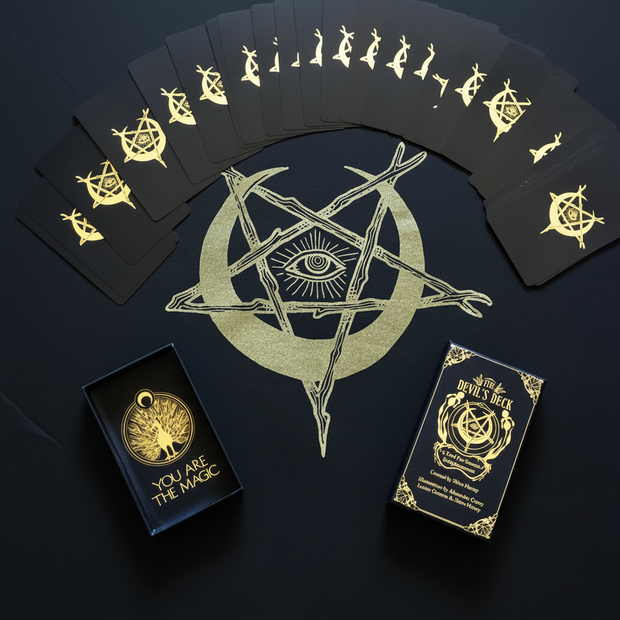
The Devil’s Deck combines 30 cards with a guidebook for ritual or reflective prompts. A deck can help structure journaling, but it should not be treated as an unquestionable command system.
Grief and Mortality
The Devil’s Death is a specialized companion for grief and dying. It is most relevant when those themes are personally present and should complement—not replace—medical, legal, hospice, or mental-health support.
A Practical Note-Taking System
Divide each page into four sections:
- Claim: What exactly is the author saying?
- Source: What evidence, text, or experience supports it?
- Response: What do you accept, reject, or question?
- Action: Does the idea suggest a lawful, consensual, reality-based practice?
This prevents compelling language from being mistaken for evidence and makes disagreements between authors easier to see.
Reading and Community Warning Signs
- Claims that one leader alone speaks for Satan and cannot be questioned
- Pressure to cut yourself, use blood, break the law, or surrender sexual boundaries
- Racism, antisemitism, political violence, or extremist propaganda presented as occult depth
- Instructions to stop medical or mental-health care
- Large unexplained payments, secrecy around abuse, or punishment for leaving
- Historical claims with no sources beyond repeated internet quotations
- Promises of guaranteed wealth, control over another person, or supernatural immunity from consequences
Frequently Asked Questions
What is the first Satanism book I should read?
Begin with a broad historical overview, then compare at least one non-theistic and one theistic source. There is no single first book suitable for every path.
Do I have to agree with a founder’s entire system?
No. Read critically and keep a clear record of what you reject. Personal sovereignty includes responsibility for evaluating authority.
Are older grimoires Satanic scriptures?
Not automatically. Grimoires come from varied historical and religious settings and should be studied in context rather than relabeled wholesale as modern Satanism.
How long should I study before identifying as a Satanist?
There is no required waiting period, but slowing down reduces pressure and gives you time to compare traditions, communities, and ethical implications.
Related Reading
Tools for this practice
Explore the products selected for this guide. Review each listing for what is included and how to use it.


Shop this guide · 4 items Collapse


Keep exploring the shop
You made it to the end of the guide. Keep exploring through related products, major departments, or the full catalog.


Leave a comment