


How to Choose a Divination Tool: Tarot, Oracle, Pendulum, Runes, or Dowsing

Choosing a divination tool is easier when you begin with how you want to work rather than trying to identify the one system you are supposedly destined to use. Tarot, oracle cards, pendulums, runes, and dowsing rods organize information differently. Each rewards a different mix of study, interpretation, movement, symbolism, and recordkeeping.
No tool removes uncertainty or replaces judgment. A useful system gives you a consistent way to frame questions, notice patterns, and reflect on possible choices without treating the result as unquestionable fact.
Begin With the Kind of Question You Want to Ask
Before comparing tools, identify the kind of response you need:
- Complex situation: several influences, relationships, or possible developments.
- Open reflection: themes, prompts, or ideas for journaling.
- Simple choice: a limited yes-or-no or either-or question.
- Symbol study: a compact set of signs you want to learn deeply.
- Movement-based practice: a method where physical motion is part of the response.
The clearer the question, the easier it becomes to choose an appropriate method. Read How to Ask Better Divination Questions before relying on any tool.
Tarot: A Structured Symbolic System
Tarot normally uses a 78-card deck divided into Major Arcana and Minor Arcana. The recurring suits, numbers, court cards, and archetypal images create a system that can support detailed readings.
Tarot may suit you when:
- you enjoy studying a consistent symbolic structure;
- you want several cards to describe different parts of a situation;
- you like visual art, storytelling, and pattern recognition;
- you are willing to keep notes and compare readings over time;
- you want a system with many books, courses, and established spreads.
Considerations
Tarot has a larger learning curve than a binary tool. Different decks may reinterpret traditional imagery, and a dramatic card does not automatically predict a dramatic event. Beginners benefit from learning a few cards and small spreads rather than attempting elaborate layouts immediately.
Browse the Tarot collection when comparing deck artwork, size, guidebooks, and traditional versus redesigned symbolism.
Oracle Cards: Flexible and Deck-Specific
Oracle decks do not follow one universal structure. A deck might contain affirmations, animals, deities, plants, archetypes, seasons, shadow-work prompts, or another theme chosen by its creator.
Oracle may suit you when:
- you want a more accessible entry point;
- you prefer direct prompts or short messages;
- you are drawn to one theme or artistic style;
- you want a deck for journaling, meditation, or a daily card;
- you do not need every deck to work like every other deck.
Considerations
The flexibility of oracle cards can also make quality uneven. Read the guidebook sample, check how the creator defines the system, and decide whether the messages are specific enough to be useful without pretending to provide certainty.
Pendulums: Simple Movement and Controlled Questions
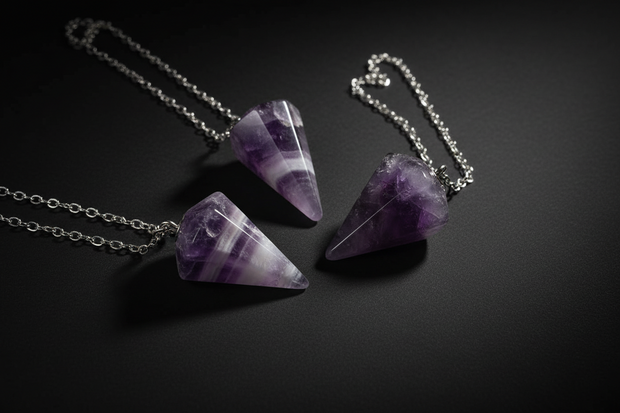
A pendulum is a weighted object suspended from a chain or cord. Practitioners establish response directions and observe movement while asking limited questions.
A pendulum may suit you when:
- you prefer a compact and portable tool;
- you want to practice controlled yes-or-no questions;
- you enjoy observing subtle movement;
- you are willing to test consistency and record results;
- you can pause when fatigue, expectation, or emotional investment affects the session.
Considerations
Pendulum movement can be influenced by small unconscious muscle movements, posture, air currents, chain length, and expectation. Calibration does not eliminate bias. Use it as a reflective method rather than proof of hidden facts.
Read How to Use a Pendulum for Beginners and compare options in Divination Tools, including Gemstone Pendulums.
Runes: A Compact Symbol Set With Historical Context
Rune sets commonly use characters from historical Germanic alphabets, though modern divinatory meanings may combine historical evidence, later occult interpretation, and contemporary practice.
Runes may suit you when:
- you enjoy learning a smaller symbol set in depth;
- you want to study language, history, and modern interpretation separately;
- you prefer casting or drawing a few pieces rather than handling a full deck;
- you like concise symbols that require active interpretation;
- you want a durable, portable system.
Considerations
Not every modern rune meaning is directly documented in historical sources. A responsible practice distinguishes the alphabet’s historical use from modern divinatory methods. Browse the Runes collection and compare the included guide, material, legibility, and completeness of each set.
Dowsing Rods: Movement, Space, and Environmental Awareness
Dowsing rods are usually L-shaped rods held so they can rotate freely. Practitioners observe crossing, opening, or directional movement while walking or asking questions.
Dowsing rods may suit you when:
- you prefer a full-body or movement-based method;
- you want to practice outdoors or through a physical space;
- you are interested in testing repeatability;
- you can control for slope, grip, wind, posture, and expectation;
- you understand that movement is not scientific confirmation of water, hazards, illness, or invisible forces.
Read How to Use Dowsing Rods Responsibly before treating rod movement as evidence.
Side-by-Side Comparison
| Tool | Typical Response | Learning Style | Portability |
|---|---|---|---|
| Tarot | Detailed symbolic narrative | Study, imagery, pattern recognition | Good |
| Oracle | Deck-specific theme or prompt | Intuitive and guidebook-based | Good |
| Pendulum | Limited directional or binary response | Calibration and controlled questioning | Excellent |
| Runes | Compact symbolic interpretation | Symbol, language, and historical study | Excellent |
| Dowsing rods | Physical directional movement | Movement, environment, repeated testing | Moderate |
Consider Accessibility and Handling
Hand strength, vision, tremor, reading comfort, and available space matter. Large cards may be easier to see but harder to shuffle. Tiny rune pieces may be difficult to handle. A pendulum requires a stable holding position. Dowsing rods require room to move. Choose the tool that can be used comfortably and consistently.
Set a Budget for the Whole Practice
Include more than the tool itself. You may also want a journal, cloth, storage box, replacement pouch, stand, or guidebook. You do not need a premium deck, rare stone, or elaborate kit to begin. One clearly labeled tool used consistently teaches more than several systems purchased at once and rarely practiced.
Test One Method for a Defined Period
- Choose one tool.
- Use the same simple question format for several weeks.
- Record the question, response, interpretation, and later outcome.
- Note where your expectations influenced the reading.
- Review whether the method produced useful reflection.
- Change tools only after you can explain what the current one does and does not provide.
Frequently Asked Questions
Which divination tool is best for beginners?
Oracle cards and pendulums can feel immediately accessible, while tarot offers a deeper standardized structure. The best starting point depends on whether you prefer direct prompts, binary movement, or symbolic study.
Can I use more than one system?
Yes, but learn each system independently before combining them. Using several tools to repeat the same question can encourage answer-shopping.
Do I need to be psychic?
No. Observation, study, clear questions, and honest recordkeeping are more useful than claiming special certainty.
Should someone else choose my first tool?
No. Gifts can be meaningful, but you can select your own deck, pendulum, rune set, or rods according to practical fit and interest.
Can divination make medical, legal, or financial decisions?
It should not replace qualified professional advice, evidence, or informed consent. Use it for reflection rather than high-stakes certainty.
What if a reading frightens me?
Pause, review the interpretation, and avoid treating symbols as unavoidable predictions. Reframe the question around choices and available support.
Choose a Method You Can Practice Honestly
The right divination tool is not the one with the strongest mythology or highest price. It is the one whose structure you understand, whose limitations you respect, and whose results you can record without turning uncertainty into certainty.
Tools for this practice
Explore the products selected for this guide. Review each listing for what is included and how to use it.
Shop this guide · 1 item Collapse
Keep exploring the shop
You made it to the end of the guide. Keep exploring through related products, major departments, or the full catalog.
 RELATED TO THIS GUIDE
Divination Tools
Shop this topic
RELATED TO THIS GUIDE
Divination Tools
Shop this topic


Leave a comment