


How to Choose an Offering Bowl: Materials, Uses, and Altar Care

An offering bowl may be one of the simplest tools on an altar, but choosing one responsibly requires more than selecting a shape or symbol that looks appropriate. The vessel must also suit what it will hold. A bowl intended for dry herbs is not automatically safe for water. A decorative metal dish is not automatically food-safe. A vessel sold for offerings is not necessarily suitable for charcoal, flame, or hot resin.
The best offering bowl is therefore not the most elaborate one. It is the vessel whose material, size, and care requirements match the practice you actually intend to maintain. This guide explains how to choose an offering bowl for food, libations, dry materials, devotional objects, or carefully managed incense work without treating every altar vessel as interchangeable.
What Is an Offering Bowl?
An offering bowl is a vessel reserved for presenting something within a spiritual, devotional, memorial, or ritual practice. Depending on the tradition and the individual practitioner, it may hold water, wine, grains, bread, fruit, flowers, herbs, coins, written petitions, stones, or another symbolic item.
The bowl does not create the offering’s meaning by itself. Its role is practical and ceremonial: it contains the material, keeps the altar orderly, separates the offering from the surrounding surface, and gives the act of presentation a visible place.
Some practitioners use one general-purpose vessel. Others maintain separate bowls for food, liquids, incense, ancestors, household spirits, or particular deities. Neither approach is universally required. The correct choice depends on the tradition being followed, the materials being used, and what can be cleaned and maintained safely.
For a broader guide to selecting and disposing of the offering itself, read How to Make Offerings to Deities and Ancestors.
Choose the Offering Before You Choose the Bowl
Begin with the material that will go into the vessel. This decision determines which bowl qualities matter most.
Dry offerings
Dry grains, salt, dried herbs, coins, stones, written petitions, and similar materials are generally the least demanding. A stable decorative bowl may be adequate if it is clean, intact, and reserved for that purpose.
Even dry materials require judgment. Salt can corrode some metals. Powder can settle into porous surfaces. Herbs may stain unfinished wood or soft stone. Small items can also become a choking hazard around children and animals.
Food offerings
Food should be placed only in a vessel confirmed to be food-safe. Appearance does not establish this. Decorative ceramics may use glazes not intended for food contact, older or handmade pieces may have uncertain finishes, and ritual objects may be manufactured strictly for display.
If food safety is not stated, use a removable food-safe liner or place the food on a separate household dish. Do not later return ritual food to human or animal consumption unless the ingredients, exposure time, sanitation, and tradition all make that appropriate.
Liquid offerings and libations
Water, wine, milk, tea, oil, and other liquids need a nonporous, liquid-safe vessel. Check for cracks, leaks, reactive metals, water-sensitive minerals, and finishes that may soften or stain.
Acidic liquids such as wine, citrus juice, or vinegar can react with certain metals. Milk and sweet liquids spoil quickly. Oils can penetrate porous ceramic, wood, shell, or stone and become difficult to remove. A bowl that can physically hold liquid is not automatically suitable for prolonged liquid contact.
Incense, ash, charcoal, or flame
Heat use is a separate category. Never assume that a bowl is fire-safe because it is made of metal, stone, ceramic, or shell. Thermal shock, hidden cracks, coatings, solder, thin construction, and surface treatments can all create hazards.
Use charcoal, hot resin, burning herbs, or direct flame only in a vessel specifically described as suitable for that use. Add the recommended insulating medium when appropriate, keep the vessel on a heat-resistant base, and maintain ventilation. A hot bowl should never sit directly on an altar cloth, wooden shelf, painted furniture, or crystal surface.
If the primary purpose is burning rather than presentation, a purpose-built burner or cauldron may be the better tool. See How to Choose and Use a Cauldron in Witchcraft for more detailed fire-safety guidance.
Four Different Claims: Decorative, Food-Safe, Liquid-Safe, and Heat-Safe
One of the most useful habits when shopping for an offering bowl is to separate four claims that are often mistakenly treated as the same:
- Decorative: suitable for display or dry symbolic objects.
- Food-safe: made and finished for direct contact with food.
- Liquid-safe: nonporous, nonreactive, and able to hold the intended liquid without damage.
- Heat-safe: designed to tolerate the temperature and method of burning being used.
A vessel may meet one, several, or all of these standards. Unless the product information clearly confirms a use, choose the more conservative interpretation. A liner, separate insert, or second dedicated bowl is usually easier than repairing an altar, replacing a damaged vessel, or managing a preventable fire.
Offering Bowl Materials
Ceramic
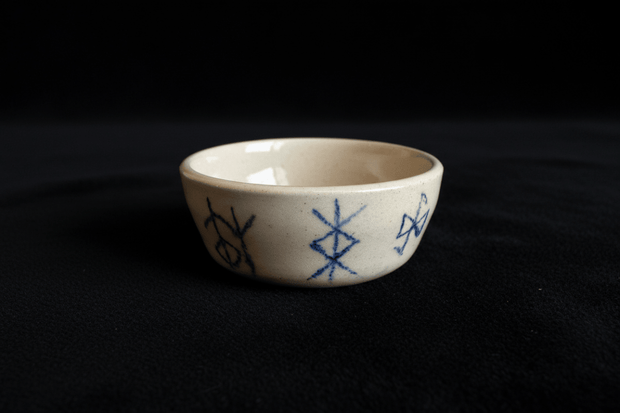
Ceramic bowls are common because they are stable, easy to arrange, and available in many sizes and designs. A fully glazed, food-safe ceramic vessel can work well for food and many liquids. An unglazed, cracked, crazed, or purely decorative ceramic bowl is better reserved for dry materials.
Ceramic is not automatically flame-safe. Sudden heat can crack the vessel, and a decorative glaze may not tolerate charcoal or resin temperatures. Choose a ceramic burner only when heat use is explicitly supported.
A symbolic ceramic option such as the Bind Rune Ceramic Bowl can serve as a contained altar vessel for dry materials or other uses compatible with its confirmed specifications. Its imagery may be personally meaningful, but the symbol does not establish food, liquid, or heat safety.
Glass
Glass makes the offering visible and is usually easy to clean when it is intact and intended for household use. It can be useful for water, flowers, or layered dry materials. Inspect the rim and body for chips or cracks before every use.
Ordinary glass is vulnerable to thermal shock. Do not place charcoal, a candle flame, boiling liquid, or hot ash into a glass bowl unless the vessel is specifically rated for that temperature and use.
Brass and copper
Brass and copper have a traditional ceremonial appearance and can be durable altar materials. They also tarnish, react with some substances, and may contain finishes or alloys that are not intended for food contact.
Acidic offerings can discolor or react with bare metal. Salt and prolonged moisture may also affect the surface. Confirm food-contact suitability before placing edible offerings directly into a metal bowl, and avoid leaving liquids standing longer than necessary.
The Brass Ritual Drinking Bowl provides a classic vessel form for ceremonial presentation. Before using any metal bowl for consumable liquid, acidic material, or prolonged storage, verify the manufacturer’s care and contact instructions. A small glass insert can preserve the visual role of the brass while keeping the offering in a known nonreactive container.
Cast iron
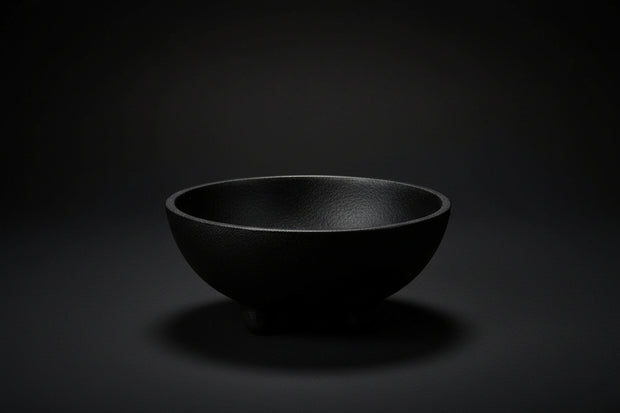
Cast iron is heavy, stable, and useful when a substantial vessel is needed. It may rust if moisture remains on the surface and can become extremely hot during burning work. Keep it dry, inspect it for corrosion, and place it on a suitable heat-resistant support.
The Cast Iron Incense Burner and Offering Bowl is designed with both altar presentation and incense use in mind. Follow its stated instructions, use appropriate insulation for hot materials, and treat the entire vessel as hot until fully cooled. Its suitability for incense does not automatically make it appropriate for food or drink.
Shell
Natural shells bring organic form, color, and variation to an altar. They may be used for dry offerings, display, or other applications supported by the individual shell’s condition and product instructions.
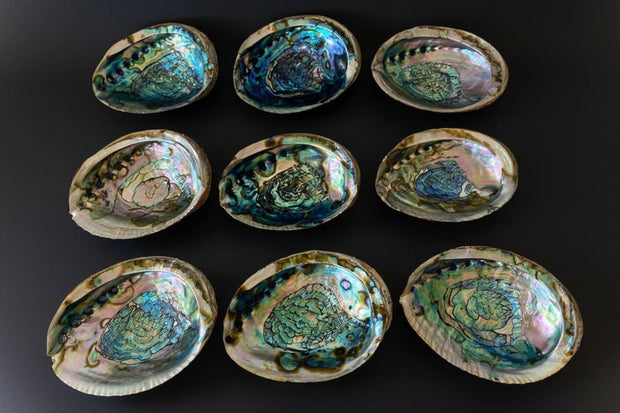
Shell is not indestructible. It can chip, crack, stain, retain residue, or react poorly to concentrated heat. Ethical sourcing and legal or ecological restrictions may also matter, particularly with protected or culturally significant species.
The Abalone Shell Ritual Bowl offers a broad natural vessel for altar presentation. Use a protective layer or purpose-built insert when required, and do not assume direct charcoal or flame is safe without explicit guidance. Practitioners should also avoid presenting any one shell use as universal to all Indigenous or regional traditions.
Selenite, crystal, and carved stone
Crystal bowls can be visually striking, but the mineral must be matched carefully to the contents. Some stones are porous, soft, water-sensitive, salt-sensitive, dyed, treated, or prone to scratching.
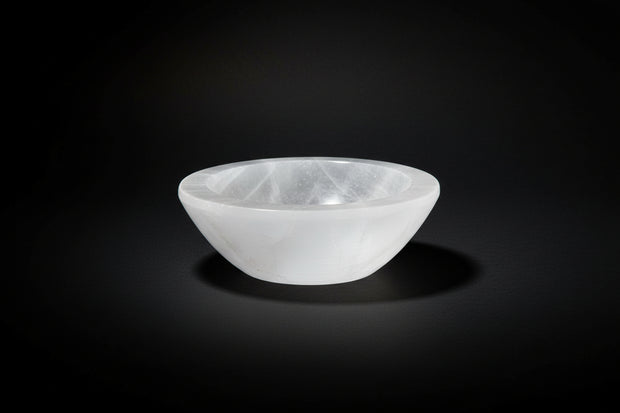
Selenite is especially important to understand. It is soft and moisture-sensitive. It should not be soaked, filled with liquid, washed under running water, or used for wet food offerings. It is best reserved for dry objects and gentle dry cleaning.
A White Selenite Bowl can provide a dedicated place for compatible dry crystals, jewelry, petitions, or symbolic objects. It should not be treated as a general-purpose libation, food, or burning bowl. Place it where it will not be struck by harder stones or exposed to spills.
Metaphysical associations with a mineral may be meaningful within a practitioner’s tradition, but they do not override the mineral’s physical care needs.
Wood
Wooden bowls are lightweight and appropriate for many dry offerings. Their suitability for food depends on the species, finish, adhesives, paint, and intended manufacturing use. Oil and moisture can soak into unfinished wood and cause staining, odor, swelling, or mold.
Never use a wooden offering bowl for flame, charcoal, hot ash, or smoldering herbs. Keep it away from nearby candles and incense fallout.
Choosing the Right Size and Shape
A bowl should fit both the altar and the offering. Oversized vessels crowd a small working surface, while very shallow dishes spill powders and liquids easily.
For a compact altar, choose a low bowl with a stable base and enough room to clean around it. For fruit, bread, flowers, or group ritual, a wider vessel may make more sense. Deep bowls contain grains and liquids more securely. Shallow dishes make coins, stones, petals, and written offerings easier to see.
Measure the available space before purchasing. Leave a clear buffer between the bowl and candles, incense, edges, fabrics, electrical cords, and fragile statues. The ability to place and remove the offering without disturbing the rest of the altar is more valuable than filling every inch of space.
Should You Use One Bowl or Several?
One clean vessel is enough for many personal practices. A bowl does not need to remain permanently assigned if it can be cleaned properly and the practitioner’s tradition does not require separation.
Dedicated vessels become useful when materials have incompatible care needs. A practical arrangement might include:
- one food-safe bowl for edible offerings;
- one nonreactive cup or bowl for libations;
- one decorative vessel for dry symbolic items; and
- one explicitly heat-safe burner for incense or charcoal.
Separate vessels can also prevent cross-contamination between oils, allergens, ash, food, and devotional materials. Labeling the underside or maintaining a simple altar inventory in a journal can prevent confusion.
Offering Bowl Placement on the Altar
Place the vessel where it is stable, visible, and easy to service. There is no universal side or direction that applies to every path. Some traditions prescribe a location; others allow the practitioner to organize by function.
A useful general arrangement is to keep offerings near the representation of the deity, ancestor, spirit, or purpose to which they are directed while preserving safe access. On a devotional altar, the bowl may sit before a statue or image. On a working altar, it may occupy a side position so the center remains open.
Use a coaster, tray, saucer, or washable barrier beneath liquids, oils, staining foods, or metal. This protects the altar cloth and makes spills easier to contain. For broader setup guidance, see How to Build a Deity Altar.
Cleaning and Caring for an Offering Bowl
Clean the bowl according to its material rather than using one ritual cleansing method for everything.
- Food-safe ceramic and glass: wash promptly with the method approved for the vessel and dry fully.
- Brass and copper: remove offerings promptly, wipe dry, and use only compatible cleaners.
- Cast iron: prevent standing moisture, dry immediately, and follow the maker’s finish-care instructions.
- Shell: wipe gently and avoid harsh abrasives, prolonged soaking, and sudden temperature changes.
- Selenite: use a soft dry cloth or brush; do not soak or rinse.
- Wood: keep dry unless the bowl is specifically finished and approved for washing.
Smoke, moonlight, sound, prayer, or another symbolic cleansing practice may be added when appropriate, but symbolic cleansing does not remove grease, bacteria, mold, allergens, corrosion, or toxic residue. Physical sanitation and spiritual preparation serve different purposes.
How Long Should an Offering Remain?
The appropriate duration depends on the tradition and the material. Food and sweet liquids should not remain long enough to spoil, attract insects, grow mold, or become accessible to pets. Water should be replaced regularly. Flowers should be removed when they decay. Dry symbolic offerings may remain longer if they stay clean and safe.
Set a routine instead of relying on memory. Daily, weekly, or ritual-based maintenance prevents an altar from becoming unsanitary. When removing an offering, dispose of it according to the material, local rules, environmental responsibility, and the practice being followed.
Do not leave food outdoors merely because it is “natural.” Salt, alcohol, chocolate, raisins, onions, essential oils, wax, metal, glass, and many common ritual materials can harm wildlife or soil. For a more detailed disposal guide, read Proper Disposal of Ritual Remnants in Folk Magic.
Common Offering Bowl Mistakes
Choosing by symbolism alone
A meaningful symbol can support devotion, but it cannot make a water-sensitive stone safe for libations or a decorative glaze safe for food.
Using one bowl for food and burning
A vessel exposed to charcoal, resin, ash, soot, or unknown incense ingredients should not later be used for consumable food or drink.
Assuming all metal is fire-safe
Thin metal, soldered seams, coatings, handles, and decorative finishes may fail or release fumes under heat. Use only the method stated for the product.
Leaving wet offerings in porous material
Moisture can stain, corrode, soften, crack, or contaminate wood, shell, stone, unglazed ceramic, and some minerals.
Ignoring altar surroundings
A stable bowl can still create danger if it sits near fabric, paper, dry herbs, overhanging shelves, children, or animals. Consider the entire setup, not only the vessel.
Treating an elaborate bowl as mandatory
A clean household dish may be entirely appropriate when it is safe and respectfully chosen. Expensive ritual equipment does not make an offering more sincere.
Finding a Bowl for Your Practice
The American Occultist’s Offering Bowls collection includes ceramic, metal, shell, cast-iron, and mineral vessels for different altar arrangements. Compare each item’s confirmed specifications with the material you intend to place inside it.
For a broader search, explore Altar Tools and Altar Supplies. Select the vessel by function first, then consider size, design, symbolism, and how it fits the rest of the sacred space.
A Practical Final Checklist
Before placing an offering, ask:
- What exactly will the bowl hold?
- Is the vessel confirmed safe for food, liquid, or heat when that use applies?
- Will the material react with salt, acid, oil, moisture, or smoke?
- Can the bowl be cleaned thoroughly without damaging it?
- Is it stable and protected from children and animals?
- Is there enough distance from flame, fabric, paper, and fragile objects?
- Do I have a responsible plan for removing and disposing of the offering?
An offering bowl should make devotional practice more deliberate and more manageable. When material, purpose, and care are aligned, even a simple vessel can support an altar for years.
Tools for this practice
Explore the products selected for this guide. Review each listing for what is included and how to use it.
Shop this guide · 4 items Collapse


Keep exploring the shop
You made it to the end of the guide. Keep exploring through related products, major departments, or the full catalog.
 RELATED TO THIS GUIDE
Ritual Supplies & Altar Tools
Shop this topic
RELATED TO THIS GUIDE
Ritual Supplies & Altar Tools
Shop this topic


Leave a comment