


How to Keep a Divination Journal: Questions, Interpretations, Confidence, and Outcomes

A divination journal is most useful when it records more than card names or dramatic successes. It should preserve the exact question, method, first interpretation, uncertainty, alternative explanations, later outcome, and readings that did not match. This creates a practice you can evaluate instead of a collection of memories that become clearer only after events occur.
What a divination journal should accomplish
A strong journal helps you:
- Remember the original question and timeframe
- Separate observation from interpretation
- Notice repeated symbols without forcing them
- Compare different methods
- Identify vague questions and flexible predictions
- Record misses as well as apparent hits
- Recognize emotional or reassurance-seeking patterns
- Protect private information about yourself and others
The purpose is not to prove that every reading was correct. It is to learn how you ask, interpret, act, and revise.
The core divination-journal entry
| Field | What to record |
|---|---|
| Date and time | When the reading occurred and, when relevant, the review date |
| Method | Tarot, oracle, runes, pendulum, scrying, dreams, lots, or another system |
| Exact question | The wording used before the reading began |
| Context | Known facts, recent events, emotional state, and practical decisions involved |
| Procedure | Deck, spread, casting method, reversals, clarifiers, or pendulum calibration |
| Raw result | Cards, symbols, rune positions, responses, images, words, or sketches |
| First interpretation | Your meaning before searching for confirmation |
| Confidence | High, medium, low, or a numerical rating |
| Alternatives | At least one other reasonable interpretation |
| Action | What you will do, avoid, observe, or research |
| Review criteria | What would count as a match, partial match, non-match, or unresolved result |
| Outcome | What actually happened, recorded at the review date |
Write the exact question before the reading
Small changes in wording can produce large changes in interpretation. “Will I get the job?” is different from “What can I improve before the interview?” Write the exact question before shuffling, casting, swinging, or gazing.
Avoid replacing the original wording later with a cleaner version. Preserve mistakes because they reveal how question design affects the reading.
Separate raw observation from meaning
Use two sections:
- What appeared: the actual cards, positions, symbols, movements, images, sounds, or dream sequence.
- What I think it means: your interpretation and the reasoning behind it.
This distinction is especially valuable in scrying, dreams, intuitive tarot, and pendulum work. “I saw a dark circular shape near the edge” is observation. “It represents an ending” is interpretation.
Record the first interpretation before researching
Write your initial reading before consulting guidebooks, online groups, another reader, or an artificial-intelligence tool. Later sources can be added in a separate section. This preserves what you actually understood at the time and prevents outside interpretations from replacing your own memory.
For tarot technique, see How to Read Tarot Intuitively.
Add a confidence rating
Confidence is not proof, but tracking it helps reveal whether certainty is calibrated. You might use:
- High: the symbols and context point strongly toward one interpretation
- Medium: one interpretation leads, but alternatives remain plausible
- Low: the reading is unclear, emotionally charged, or difficult to separate from expectation
At review, ask whether high-confidence readings were actually more accurate than low-confidence readings. Do not quietly raise the original confidence after an apparent match.
Define the timeframe and evaluation criteria
A prediction without a timeframe can remain “pending” forever. A broad statement such as “change is coming” can match almost any later event. Before closing the journal entry, write:
- The period being considered
- The specific event or condition being evaluated
- What would count as a clear match
- What would count as partial, vague, or incorrect
- When you will review the entry
Not every reading needs to predict an event. Advice readings can be evaluated by whether the guidance was practical, ethical, specific, and useful.
Record misses and unresolved readings
A journal that contains only successful readings creates a distorted record. Mark non-matches plainly. Do not convert every miss into “the future changed,” “the timing was symbolic,” or “the message referred to something else” unless there is independent reason to revise the interpretation.
| Outcome label | Description |
|---|---|
| Clear match | Specific documented details correspond within the stated timeframe |
| Partial match | Some details correspond, but important elements do not |
| Vague match | The statement was broad enough to fit many outcomes |
| Non-match | The documented outcome did not occur |
| Unresolved | The timeframe is incomplete or the result cannot be evaluated |
| Not actionable | The reading produced no clear or ethical guidance |
Keep method-specific details
Tarot and oracle
Record the deck, spread positions, reversals, jumpers, clarifiers, and whether the reading was open-ended or predictive. Photograph the spread when useful.
Runes and lots
Record the casting surface, which pieces were included, position, orientation, grouping, and the method used to decide what counted.
Pendulum
Record the exact question, yes/no calibration, neutral response, physical setup, hand position, airflow, and whether the question was repeated. Read How to Use a Pendulum for baseline procedure.
Scrying
Sketch raw shapes before naming them. Record lighting, duration, surface, fatigue, visual conditions, and whether imagery changed after prompting.
Dreams
Write the dream before searching symbols. Include recent experiences, stress, sleep disruption, medications or substances when relevant, and the original interpretation. See Was It a Prophetic Dream?.
Track emotional context without invalidating yourself
Emotions influence question choice and interpretation, but feeling strongly does not automatically make a reading wrong. Record anxiety, hope, grief, anger, excitement, exhaustion, or pressure as context. Later you may notice that certain states lead to more repeated questions, harsher interpretations, or stronger confidence.
When a reading increases fear and creates an urge to check again immediately, stop and review Should You Ask Tarot the Same Question Again?.
Protect privacy
Divination journals may contain names, relationships, health concerns, financial information, client details, or allegations about third parties. Use initials, access controls, locked storage, or separate client records. Do not leave identifiable readings open in shared spaces.
For professional or public reading, keep consent and confidentiality standards clear. Do not turn private details into social-media content without explicit permission.
A monthly review process
- Review entries whose evaluation dates have arrived.
- Assign outcome labels without rewriting the original text.
- Count clear, partial, vague, and non-matches.
- Compare confidence with outcomes.
- Identify recurring question types and emotional triggers.
- Note which spreads or methods produced useful action.
- Choose one practice change for the next month.
This is the same discipline described in Ritual Recordkeeping: Before, During, and After.
Frequently asked questions
Should I use a paper journal or digital spreadsheet?
Either can work. Paper supports sketches and privacy; digital systems are searchable and easier to summarize. Many practitioners use a notebook for entries and a spreadsheet for outcomes.
Do I need to journal every reading?
Record readings that influence decisions, repeat an ongoing question, involve strong emotion, or are intended to be evaluated later. Casual daily pulls can use a shorter format.
Should I write guidebook meanings?
Yes, but separate them from your first interpretation. Cite the deck or book so you can compare sources later.
What if I do not understand the reading?
Record the raw result, mark confidence low, and stop. An unclear reading is valid data and does not require endless clarifiers.
Can I change my interpretation later?
Yes, as a dated revision. Keep the original interpretation visible so hindsight does not replace it.
How long should I keep divination records?
Keep them long enough to review the stated timeframes and observe patterns. Professional readers should also consider privacy, legal, and record-retention obligations applicable to their work.
What is the most important field?
The exact question and first interpretation are essential. Without them, later comparison becomes unreliable.
Build a practice that can be reviewed
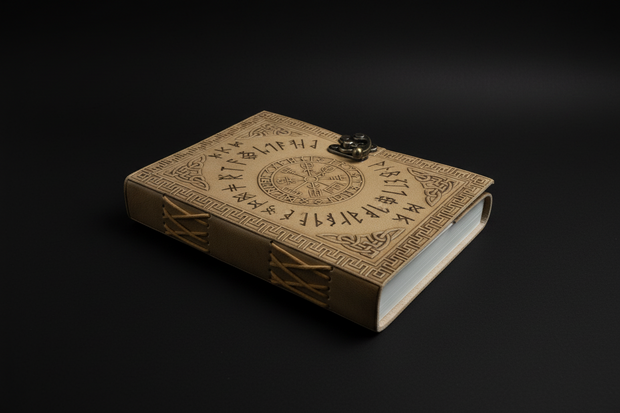
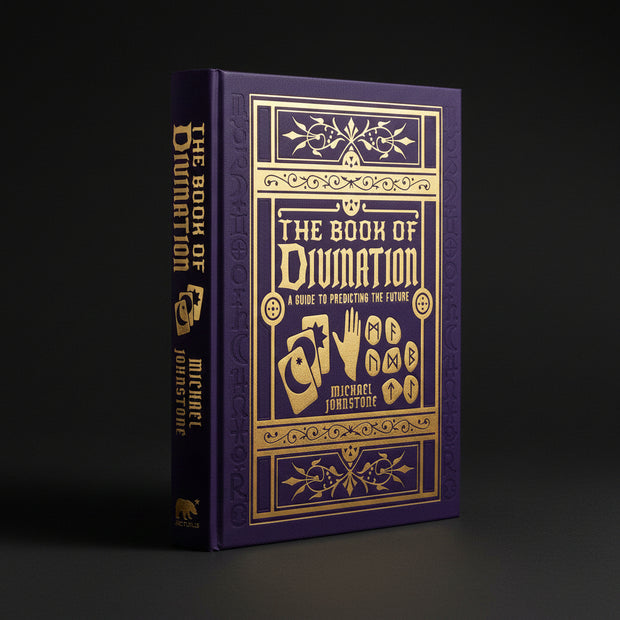
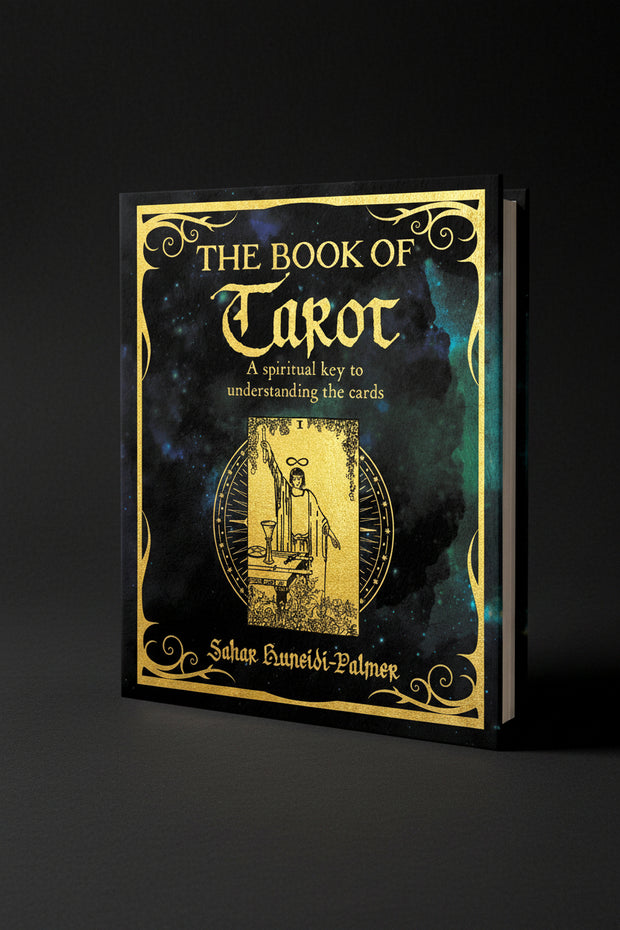
Browse journals, divination tools, and printed works to create a system that supports study, privacy, and honest review.
Tools for this practice
Explore the products selected for this guide. Review each listing for what is included and how to use it.

Shop this guide · 4 items Collapse



Keep exploring the shop
You made it to the end of the guide. Keep exploring through related products, major departments, or the full catalog.
 RELATED TO THIS GUIDE
Ritual Supplies & Altar Tools
Shop this topic
RELATED TO THIS GUIDE
Ritual Supplies & Altar Tools
Shop this topic


Leave a comment