


How to Label and Store Ritual Oils: Ingredients, Shelf Life, Leaks, and Safety

Ritual oil is often identified only by a purpose printed on the front of a bottle: protection, abundance, attraction, banishing, ancestor work, or another intention. That name may describe the product’s symbolic use, but it does not tell you everything needed for safe storage or handling.
A useful oil record identifies the product, supplier, ingredients when disclosed, date, intended route of use, container, condition, and restrictions. Storage should prevent light damage, heat exposure, leaks, cross-contamination, accidental ingestion, skin exposure, and contact with flame.
Keep the Original Information
Do not discard the supplier label or packaging until its information has been transferred to a permanent record. Retain:
- exact product name;
- manufacturer or supplier;
- ingredient list when provided;
- carrier oil or base;
- fragrance or essential oils when disclosed;
- net amount;
- lot or batch code;
- purchase and opening dates;
- warnings and directions;
- contact information;
- intended ritual use.
A label that says only “Protection Oil” is not enough to evaluate allergies, skin contact, pet exposure, combustion, or deterioration.
Separate Symbolic Purpose From Exposure Route
Decide how the oil may be used before storing it with other supplies.
- Object-only: intended for candles, tools, papers, or altar objects.
- Aromatic: intended to be smelled or diffused only under appropriate directions.
- Topical: explicitly formulated and labeled for skin use.
- Food or ingestion: only products specifically manufactured and labeled for that route.
- Unknown: treated as nonfood and non-topical until reliable information is available.
Do not assume a ritual oil is safe on skin because it is natural, diluted, handmade, or spiritually named. Do not ingest ritual oils unless the product is specifically labeled for ingestion and its use is appropriate for you.
For the difference between symbolic plant use and health practice, read Herbalism vs. Herbal Witchcraft.
Create a Complete Secondary Label
If you transfer oil into another bottle, label it immediately. Include:
- exact product or formula name;
- every known ingredient;
- carrier oil;
- concentration or dilution when known;
- supplier and batch;
- date mixed, transferred, or opened;
- intended use;
- “not for skin,” “not for ingestion,” or other restriction;
- allergen information;
- flammability or heat warning when applicable;
- the source record location.
Never pour an unknown oil into a decorative bottle and rely on memory.
Store Bottles Upright
Caps, droppers, roller tops, corks, and seals can leak when stored on their side. Keep bottles upright in a stable organizer with enough space to remove one without knocking over the others.
Use secondary containment such as:
- a washable tray;
- a divided plastic or metal organizer compatible with the contents;
- a sealed inner bin inside a decorative cabinet;
- individual leak-resistant bags for travel;
- absorbent material suitable for the known oil, replaced when contaminated.
Wooden chests can organize bottles, but bare wood absorbs leaks. Place bottles in a removable nonabsorbent insert.
Control Light and Heat
Light and heat can alter carrier oils, fragrance, color, labels, seals, and botanical material suspended inside a bottle.
Choose a location:
- away from windows and direct sun;
- away from radiators, stoves, candles, charcoal, and hot electronics;
- outside bathrooms and other humid areas;
- with a stable indoor temperature;
- away from vehicles, attics, and garages with large temperature swings;
- inaccessible to children and pets.
Amber or opaque bottles may reduce light exposure, but they do not replace a cool, dark cabinet.
There Is No Universal Shelf Life
Oil condition depends on the carrier, fragrance, essential oils, herbs, water content, preservatives, sanitation, packaging, temperature, light, and how often the bottle is opened.
Use dates as review points. Check for:
- rancid, sour, paint-like, or unfamiliar odor;
- unexpected cloudiness or separation;
- gas, pressure, or leakage;
- mold or growth;
- changes in color or viscosity;
- corroded caps or degraded droppers;
- cracked glass;
- missing or unreadable labels.
Some separation may be normal for a particular formula. Compare with the maker’s description rather than guessing. When identity or condition is uncertain, do not apply or burn it.
Herbs Inside Oil Need Extra Attention
Botanical material can look attractive while creating identification, moisture, filtration, and spoilage concerns. A sprig inside a bottle does not prove the species, cleanliness, extraction method, or skin safety.
Record:
- botanical name and plant part;
- whether the material was fresh or fully dried;
- source;
- date added;
- carrier oil;
- preparation method;
- intended route of use;
- signs that require disposal.
Do not improvise home oil preparations for medical use from correspondence charts.
Prevent Dropper Contamination
A dropper that touches skin, wax, herbs, ash, paper, another oil, or an altar surface can carry material back into the bottle.
- Dispense without touching the target when possible.
- Use a clean dedicated spoon or disposable applicator for shared work.
- Do not return excess oil to the bottle.
- Wipe bottle threads before replacing the cap.
- Replace damaged or degraded droppers with compatible closures.
- Do not swap droppers between products.
Symbolic cleansing cannot remove physical contamination.
Keep Oils Away From Flame
Ritual oils are commonly applied to candles, but more oil does not create a better working. Excess oil can run into the holder, carry herbs toward the flame, soften wax, stain surfaces, and increase flare-up risk.
When dressing a candle:
- confirm the product is intended for that use;
- use the smallest amount required by the method;
- keep oil away from the wick and immediate flame path;
- remove loose combustible additions;
- place the candle in a stable fitted holder;
- keep the oil bottle away from the burning area;
- never pour oil onto a lit candle, charcoal disc, or flame.
Store prepared candles separately using How to Store Ritual Candles.
Skin Contact and Allergies
Even a product labeled for topical use can cause irritation or allergic response. Follow the maker’s directions and consider personal health conditions, medications, pregnancy, age, damaged skin, and known allergies.
Do not apply unknown ritual oil to another person. In group practice, disclose the exact product and offer a no-contact alternative. See How to Prepare a Shared Ritual Space.
Pets and Household Exposure
Animals can lick spilled oil, knock over bottles, absorb material through fur or feet, and react differently from humans. Keep oils secured and clean spills promptly using guidance appropriate to the known substance and surface.
Do not place open oils near cages, aquariums, food bowls, bedding, or areas where pets groom. When an exposure occurs, contact an appropriate veterinarian or poison resource with the exact label and ingredient information.
Inventory and Rotation
Maintain a simple oil ledger:
- product name;
- purpose;
- ingredients;
- purchase and opening dates;
- quantity;
- storage location;
- approved routes of use;
- condition at last review;
- planned use or retirement date.
Use older acceptable products first. Avoid buying several oils with nearly identical functions before the existing bottles are used or reviewed.
Spill Response
Plan for spills before they happen.
- Keep people, pets, flame, and ignition sources away.
- Identify the product from the label.
- Ventilate when fragrance or vapor is strong.
- Contain the spread with material suitable for the oil and surface.
- Follow the manufacturer’s cleanup directions when available.
- Do not mix cleaning chemicals.
- Bag contaminated material and dispose of it according to the substance and local rules.
- Relabel or discard any bottle whose identity became uncertain.
A large, unknown, or hazardous spill may require professional guidance.
Disposal
Do not pour ritual oil into soil, waterways, storm drains, or household plumbing merely to give it a symbolic ending. Oils can affect plumbing, wildlife, soil, and water.
For small household quantities, follow product instructions and current local disposal guidance. Absorption into appropriate waste material may be suitable for some ordinary oils, while unknown or hazardous products require different handling. Review How to Retire, Reuse, or Dispose of Ritual Tools Responsibly.
Build an Oil Collection Around Defined Uses
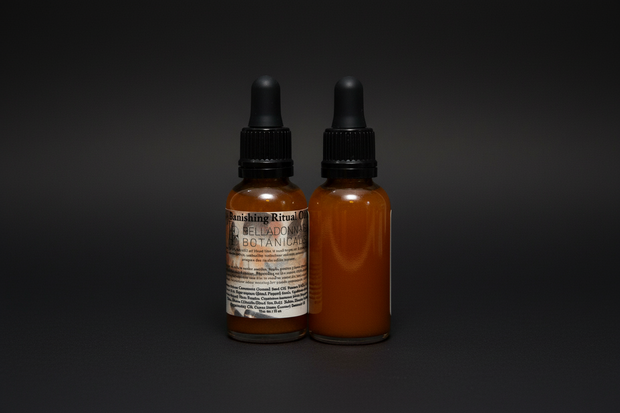
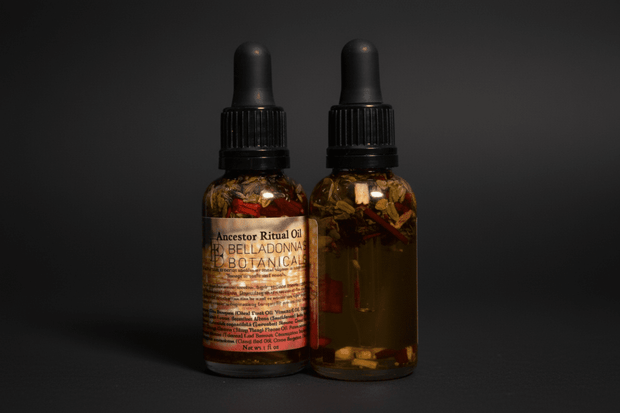
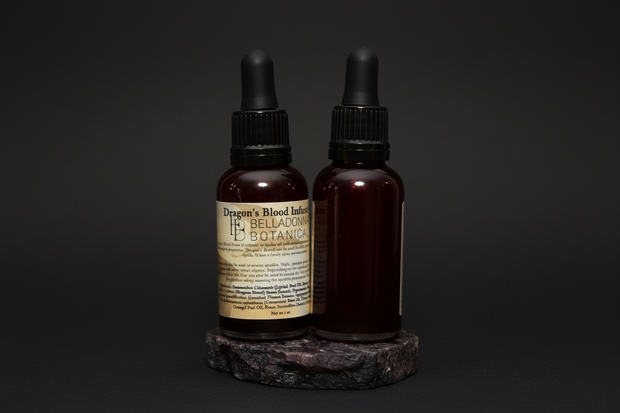
Explore the Ritual Oils collection after identifying a specific practice. Examples include Banishing Ritual Oil, Ancestor Ritual Oil, and Dragon’s Blood Ritual Oil. Retain each product’s exact label and directions. The ritual name describes intention; it does not make the oil universally safe for skin, ingestion, pets, or flame.
Frequently Asked Questions
Should ritual oils be refrigerated?
Only when the maker specifically recommends it. Refrigeration can cause condensation, separation, label damage, and accidental food contact.
Can I combine two ritual oils?
Not simply because the intentions sound compatible. Ingredients, concentration, exposure route, allergens, and physical compatibility must also be known.
Can I use an unlabeled oil if I remember what it is?
No reliable storage system should depend on memory. Quarantine it and discard it responsibly if the identity cannot be confirmed.
Are essential oils and ritual oils the same?
No. A ritual oil may contain a carrier, fragrance, essential oils, botanicals, or other ingredients. Use the actual label rather than assuming a composition.
Can I put ritual oil directly on a candle?
Only when the oil and candle are intended for that method, and then sparingly, away from the wick and active flame.
A Clear Label Protects the Practice
Store oils upright, cool, dark, secured, and inside secondary containment. Keep the full ingredient and supplier record, separate exposure routes, prevent dropper contamination, inspect condition, and never let a symbolic product name substitute for material safety information.
Tools for this practice
Explore the products selected for this guide. Review each listing for what is included and how to use it.
Shop this guide · 3 items Collapse


Keep exploring the shop
You made it to the end of the guide. Keep exploring through related products, major departments, or the full catalog.
 RELATED TO THIS GUIDE
Ritual Supplies & Altar Tools
Shop this topic
RELATED TO THIS GUIDE
Ritual Supplies & Altar Tools
Shop this topic


Leave a comment