


How to Store Ritual Candles: Heat, Warping, Fragrance, Dust, and Fire Safety

Candles are simple tools until storage changes the way they burn. Heat can bend narrow tapers, sunlight can fade dyes, fragrance can migrate between products, dust can clog textured wax, and an improperly stored partially burned candle can spread soot or oil through an entire cabinet.
Good candle storage protects the wax, wick, label, surrounding room, and the people or animals who share the space. It also makes ritual work easier because you can identify what you have without guessing from color alone.
Separate Candles by Condition
Do not store every candle together. Divide the collection into clear categories:
- New and unused: clean candles still in original packaging or labeled storage.
- Prepared or dressed: candles with oils, herbs, powders, pins, writing, or other additions.
- Partially burned: candles that have cooled completely after use.
- Damaged: cracked, bent, contaminated, melted, or unstable candles awaiting review.
- Scented: strongly fragranced candles stored away from unscented stock and sensitive materials.
These categories have different contamination, leakage, fire, and identification concerns. A clean white chime candle should not absorb loose herbs and oil from a prepared figure candle.
Keep Candles Cool, Dry, and Out of Direct Sun
Wax softens long before it becomes liquid. Cars, windowsills, radiators, attics, and cabinets above heating appliances can deform candles without an obvious spill.
Choose a location that is:
- away from direct sunlight;
- away from stoves, vents, radiators, and hot electronics;
- dry and free from condensation;
- stable rather than exposed to repeated temperature swings;
- separate from matches, lighters, charcoal, and active flame;
- inaccessible to children and pets.
A consistently moderate indoor temperature is more useful than a decorative display exposed to sun for several hours each day.
Prevent Warping and Surface Damage
Long tapers and narrow chime candles can bow when stored at an angle or under weight. Figure candles can lose small details when pressed against harder objects.
- Store straight candles flat in a shallow rigid box or upright with full support.
- Do not pile heavy jars, books, or statues on top of wax.
- Wrap detailed candles loosely in acid-free tissue or suitable clean paper when they need abrasion protection.
- Avoid plastic that sticks to warm or oily wax.
- Separate dark and light wax when color transfer is possible.
- Keep carved, painted, glittered, or coated candles from rubbing against plain candles.
Inspect warped candles before use. A candle that no longer sits securely in its holder should not be forced into place.
Protect the Wick
The wick determines how the candle receives fuel and burns. Bent, frayed, oily, wet, or contaminated wicks may light unevenly.
- Do not use the wick as a handle.
- Keep loose herbs and dust away from exposed wicks.
- Protect the tops of candles from crushing.
- Do not soak a wick in ritual oil unless the candle maker specifically designed the product for that use.
- Trim only according to the candle type and maker’s instructions before burning.
A broken wick is not automatically a spiritual sign. It is usually a physical storage or handling problem.
Label More Than Color
Color names vary, lighting changes appearance, and two visually similar candles may contain different fragrances or wax blends. Label storage by:
- product name;
- color;
- size and approximate burn time if known;
- scented or unscented;
- wax type when provided;
- manufacturer or supplier;
- date purchased;
- prepared, dedicated, or unused status;
- added oil, herb, pin, or decoration;
- allergen or fragrance warning when relevant.
Do not assign an unknown candle a purpose merely because it appears red, black, white, or green.
Store Scented Candles Separately
Fragrance can transfer to nearby wax, paper, cloth, decks, herbs, and wooden boxes. Strongly scented candles may also affect people with migraines, asthma, allergies, or sensory sensitivities.
Keep scented products:
- in their original boxes or closed compatible containers;
- away from unscented candles;
- away from ritual herbs and food;
- away from porous decks, fabrics, and unfinished wood;
- clearly labeled so no one lights them unknowingly.
A closed container reduces scent spread but does not eliminate every exposure concern.
Dressed Candles Need Secondary Containment
Oils soften some waxes, stain surfaces, attract dust, and migrate into paper or wood. Loose herbs and powders can fall into drawers and later reach an open flame.
For a prepared candle:
- write down every added material;
- place the candle on or in a nonabsorbent compatible tray or container;
- keep it upright if oil could run;
- separate it from clean stock;
- set a use or review date;
- remove excessive loose material before burning;
- never assume an herb or oil is safe near flame merely because it has a magical correspondence.
See How to Choose Ingredients for a Spell or Ritual before adding materials to wax.
Partially Burned Candles
Allow every candle and holder to cool completely before storage. Melted wax can remain hot beneath a solid-looking surface.
- Confirm the flame and ember are fully extinguished.
- Remove loose matches, herbs, paper, and wick debris.
- Check the holder for cracks, heat damage, and instability.
- Cover cooled jar candles according to the maker’s design.
- Place freestanding candles on a dedicated tray so soot and wax do not spread.
- Label the candle with the working, date, and whether it may be reused.
- Never close hot charcoal, incense, or a recently extinguished candle inside a box.
If a candle belongs to a multi-day working, store it where it cannot be mistaken for ordinary household stock.
Matches, Lighters, and Ignition Sources
Store ignition sources separately from candles and away from children. Do not leave matches loose in a candle box where friction, broken heads, oil, or wax residue can create a hazard.
Keep a functioning extinguisher or other appropriate fire-control equipment accessible in the room where candles are burned, not buried behind stored supplies. Follow the equipment instructions and local fire-safety guidance.
Choose Storage That Can Be Cleaned
Useful options include rigid lidded boxes, divided organizers, shallow drawers, and dedicated cabinets. The best container:
- supports the candle’s shape;
- does not absorb leaking oil;
- closes against dust;
- allows clear labels;
- does not trap a recently heated item;
- can be inspected and cleaned;
- keeps flame tools separate.
Decorative wooden boxes work well for clean, cool, dry candles. Use a removable liner or separate inner container for anything oily or partly burned.
Rotate Inventory Instead of Accumulating It
Use older acceptable candles before buying duplicates. A simple inventory should list color, form, scent, quantity, condition, and location.
Review the collection every few months for:
- warping;
- cracking or sweating;
- faded labels;
- fragrance transfer;
- oil leakage;
- dust and pest evidence;
- damaged wicks;
- candles purchased without a defined use.
Read You Do Not Need Every Ritual Tool before turning color correspondences into a requirement to own every shade.
Children, Pets, and Shared Homes
Wax, fragrance, decorations, pins, small charms, matches, and holders can be swallowed, knocked over, or carried away. Store candles behind a secured door or in a high, stable cabinet that cannot be climbed or tipped.
Do not leave a prepared altar candle burning unattended. A closed room is not supervision. For homes where flame or fragrance is unsuitable, use the alternatives in Smoke-Free and Flame-Free Witchcraft.
When a Candle Should Be Retired
Do not burn a candle that:
- cannot stand securely in a suitable holder;
- contains unknown embedded objects;
- has a damaged or inaccessible wick;
- is contaminated with an unknown substance;
- has cracked a container or holder;
- has been exposed to chemicals, mold, or pests;
- must be placed too close to fabric or other combustibles to use.
Ordinary disposal may be more responsible than unsafe ritual burning. Review How to Retire, Reuse, or Dispose of Ritual Tools Responsibly.
Build a Manageable Candle Supply
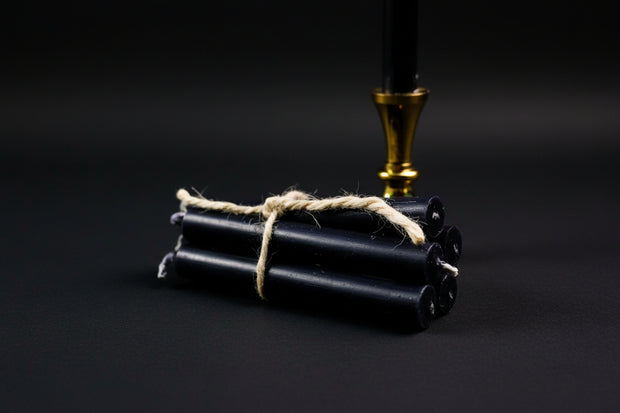
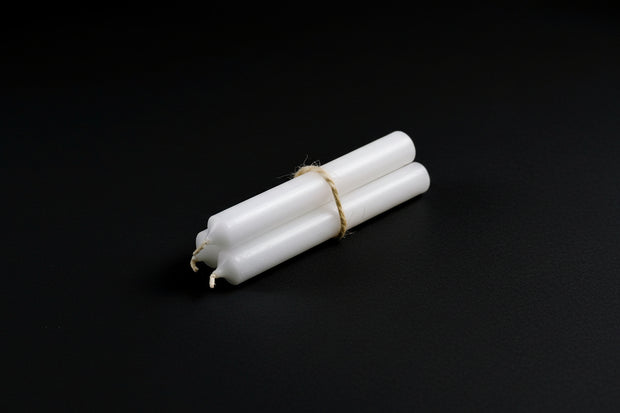
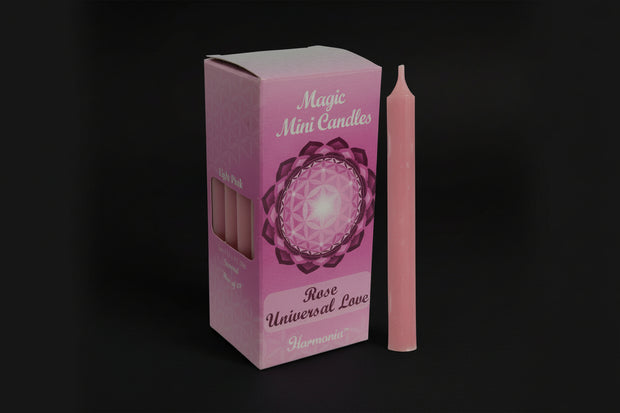
Browse the Candles collection after checking what your practice actually lacks. Compact options such as the Black Chime Candle, White Chime Candle, and Rose-Scented Chime Candle should be stored by exact product name rather than color alone. Pair every candle with a correctly fitting holder using How to Choose a Ritual Candle Holder.
Frequently Asked Questions
Should candles be stored upright or flat?
Either can work when the candle is fully supported. Long narrow candles often benefit from flat rigid storage, while prepared candles may need to remain upright to contain oil.
Can candles melt in a car?
Yes. Vehicle interiors become hot enough to soften, bend, or melt wax. Do not use a car for long-term candle storage.
Can I wrap candles in plastic?
Some packaging is suitable, but warm, oily, or fragranced wax can stick to or affect plastic. Original packaging or clean compatible paper and rigid storage is often easier to inspect.
Can different colors be stored together?
Yes when they are clean, stable, and separated enough to prevent rubbing or color transfer. Label them individually.
Should a partially burned candle be covered?
Only after it is completely cool and when the candle or container is designed to be covered. Never trap heat or a live ember.
Storage Is Part of Candle Safety
A candle’s condition before lighting shapes how safely it can burn. Keep wax cool and supported, protect wicks, separate scented and dressed products, label exact contents, isolate ignition sources, and retire anything that cannot be used in a stable holder.
Tools for this practice
Explore the products selected for this guide. Review each listing for what is included and how to use it.
Shop this guide · 3 items Collapse


Keep exploring the shop
You made it to the end of the guide. Keep exploring through related products, major departments, or the full catalog.
 RELATED TO THIS GUIDE
Candles & Incense
Shop this topic
RELATED TO THIS GUIDE
Candles & Incense
Shop this topic


Leave a comment