


How to Store Witchcraft Supplies: Altar Boxes, Herbs, Crystals, and Ritual Tools

A working collection of witchcraft supplies can grow faster than expected. A few candles become several colors and sizes. One herb jar becomes an entire shelf of botanicals. Tarot decks, pendulums, crystals, ritual oils, altar tools, petitions, and unfinished workings begin competing for the same limited space.
Good storage is not about hiding your practice or making every container look mystical. It is about protecting materials, reducing fire and spill risks, preserving tools, and making it easier to begin a ritual without searching through a disorganized pile. A well-planned storage system also helps separate ordinary supplies from items reserved for devotional, ceremonial, or ongoing work.
This guide explains how to store witchcraft supplies practically, how to choose an altar box or ritual chest, and which materials should never be placed together.
Why Ritual Storage Matters
Ritual tools are physical objects, and physical objects are affected by moisture, heat, sunlight, dust, friction, and careless handling. Even when a tool has spiritual or symbolic importance, its material construction determines how it should be stored.
Organized storage serves four practical purposes:
- Protection: It limits damage from spills, humidity, scratches, fading, and breakage.
- Safety: It keeps sharp tools, charcoal, oils, powders, and combustible materials contained appropriately.
- Privacy: It allows personal writings, devotional objects, and unfinished workings to remain undisturbed.
- Workflow: It makes tools easier to find, use, clean, and return to their proper place.
Before buying a decorative container, consider what you actually need to store. Our Altar Boxes collection includes compact wooden boxes for tools, decks, stones, herbs, and personal ritual materials, while the Ritual Chests collection offers additional options for larger or more developed working sets.
Begin by Sorting Supplies by Material and Use
Emptying everything into one chest may look tidy from the outside, but it can create problems inside. Oils can leak onto paper. Loose crystals can scratch polished tools or one another. Dried herbs can absorb moisture. Charcoal can leave dust across cloth, cards, and journals.
Sort your supplies into broad categories before choosing containers:
- Metal tools, blades, bells, keys, and hardware
- Crystals, stones, spheres, and mineral specimens
- Dried herbs, salts, powders, and earths
- Ritual oils, waters, and other liquids
- Tarot or oracle decks, pendulums, runes, and divination cloths
- Candles, incense, resin, and charcoal
- Petitions, journals, printed rituals, and active written work
- Devotional objects, offerings, and items reserved for a specific altar
Items can share a larger chest when each category has its own pouch, smaller box, jar, divider, or secondary container. The goal is controlled separation rather than absolute isolation.
Choose an Altar Box by Function, Not Symbol Alone
Pentacles, triple moons, triquetras, and other symbols can make a box meaningful, but the symbol should come after the practical questions. Measure the tools you plan to store. Check the interior depth. Decide whether you need a latch, a lock, portability, or enough room to keep a deck flat.
Compact Boxes for Focused Kits
A smaller box works well for a tarot deck, a pendulum, a few stones, written petitions, or a compact travel altar. The Blue Pentacle Box provides a contained 5-by-8-inch format for a focused set of materials rather than an entire supply collection.
Medium Boxes for Everyday Tools
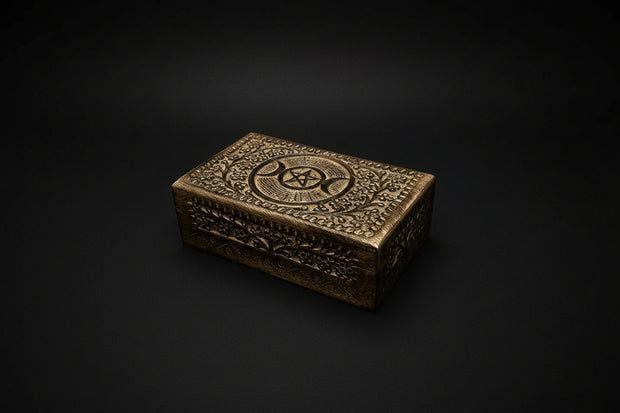
A medium wooden box can hold a working deck, ritual cloth, candle accessories, small jars, or a selection of frequently used tools. The Pentacle Wooden Box and Triple Moon Altar Box are sized for broader everyday storage while remaining practical for a shelf or altar area.
Separate Boxes for Separate Systems
Practitioners with several areas of work often benefit from multiple labeled boxes rather than one oversized chest. One might contain divination tools, another moon-work materials, and another active petitions or seasonal supplies. This keeps unrelated materials from becoming mixed and allows each system to remain easy to access.
How to Store Different Witchcraft Supplies
Metal Tools and Ritual Blades
Metal tools should be clean and completely dry before storage. Moisture trapped inside a wooden box can encourage corrosion, especially when the tool rests against damp cloth or plant material. Blades should be sheathed, wrapped, or placed in a fitted compartment rather than left loose among stones and glass bottles.
Keep sharp tools secured and inaccessible to children or anyone who may handle the box without understanding its contents. For a broader overview of common implements, see Tools of the Craft: 10 Essential Pagan Altar Tools and Supplies.
Crystals and Mineral Specimens
Crystals should not automatically be poured together into one bag. Harder stones can scratch softer minerals, points can chip, and polished surfaces can become scuffed through repeated contact. Use cloth pouches, divided trays, or individual wrapping for fragile pieces.
Keep moisture-sensitive minerals dry, and do not assume every stone benefits from sunlight, water, salt, smoke, or oil. The published guide How to Cleanse and Charge Crystals Safely explains how material properties should guide crystal care.
Dried Herbs, Salts, Powders, and Earths
Store dried botanicals and powders in sealed, clearly labeled containers. Include the common name, botanical name when known, and the date obtained or packaged. Labels become especially important when several herbs look similar after drying.
Keep ritual botanicals separate from culinary ingredients and medicines so they are not accidentally consumed. Discard material that develops moisture, visible mold, an unusual odor, or signs of insect activity. Powders and salts should remain tightly closed to prevent spills and humidity exposure.
Ritual Oils, Waters, and Other Liquids
Liquids should be stored upright in a secondary tray, pouch, or washable container. Do not rely on a decorative wooden chest to contain a leaking bottle. Oil can soak into unfinished wood, damage paper labels, stain cloth, and affect nearby herbs or decks.
Keep bottles away from heat and direct sunlight, check caps periodically, and label each formula clearly. Never apply an unknown oil to skin, and follow the product’s stated directions and cautions. For practical use and handling guidance, read How to Use Ritual Oils in Witchcraft.
Tarot Decks, Pendulums, Runes, and Divination Tools
Cards should remain dry, flat, and protected from direct sunlight. Their original box is often the most efficient storage unless it has become damaged. A cloth bag can add protection, but avoid tightly wrapping cards while they are damp or warped.
Pendulum chains are best coiled loosely or hung from a stand so they do not kink. Rune sets and casting stones can be kept in a dedicated pouch, but fragile materials should not be allowed to strike one another repeatedly. Keep reading cloths clean and folded loosely to reduce permanent creases.
Candles, Incense, Resin, and Charcoal
Combustible supplies require deliberate storage. Keep candles, incense, loose resin, herbs intended for burning, and quick-light charcoal in a cool, dry location away from open flame, heaters, and direct sun. Charcoal should remain in its original packaging or a clearly marked fire-safe storage container and should never be stored while warm.
Separate heavily scented incense from decks, fabrics, and porous wood if you do not want the aroma to transfer. Keep matches and lighters secured, and never treat a ritual chest as a place to extinguish hot material.
Written Rituals, Petitions, and Journals
Paper is vulnerable to oil, wax, moisture, smoke residue, and tearing. Store journals and petitions in a dry section away from liquids and loose powders. Use envelopes or folders to separate completed work from active petitions.
Some practitioners destroy or ritually dispose of completed papers; others preserve them as a record. Either method can be meaningful, but the decision should be intentional rather than the result of losing track of what is buried in a box.
Separate Active Work From General Supplies
An active ritual operation should not disappear into general storage. Use a dedicated tray, box, or clearly marked section for petitions, dressed objects, timed workings, or materials that need to be revisited. Record the start date, purpose, and next action in a journal or on an external label.
This is useful even for practitioners who do not believe objects retain energy. It prevents confusion, protects unfinished arrangements, and keeps practical deadlines from being forgotten.
Building a Portable or Discreet Practice
A portable altar does not need to contain miniature versions of every possible tool. Choose a compact set that serves several functions: a cloth to define the workspace, a small vessel, a writing tool, a deck or pendulum, and a few materials directly related to your practice.
A latched box such as the Triple Moon Pentacle Box can keep a small working set together while remaining easier to move or store than a permanent altar arrangement. Wrap fragile objects and remove liquids before transporting the box unless they are individually sealed and protected.
Cleaning and Resetting a Ritual Box
Inspect storage regularly rather than waiting for a spill or infestation. Remove every item, wipe the interior according to the box material, and allow it to dry fully before restocking. Wash removable fabric separately when appropriate, replace damaged pouches, and tighten or repair loose hardware.
This is also an opportunity to review what you actually use. Return misplaced tools, retire damaged materials safely, update labels, and move rarely used items into longer-term storage. A ritual collection should support the work rather than become an obstacle to it.
Common Storage Mistakes
- Choosing a box before measuring the tools that must fit inside
- Placing loose oils beside paper, cloth, herbs, or card decks
- Storing sharp metal tools without sheaths or dividers
- Allowing crystals of different hardness to strike and scratch one another
- Keeping unlabeled herbs, powders, or homemade blends
- Mixing active workings with ordinary supplies and forgetting their purpose
- Storing charcoal, incense, or candles near heat or while any material is still warm
- Using symbolism as the only criterion while ignoring size, construction, and closure
Create a Storage System That Supports Your Practice
The best ritual storage is not the most elaborate chest. It is the system that protects your materials, keeps hazardous items controlled, and makes your practice easier to begin and complete. Start with the supplies you already own, sort them by material and function, and add containers only where they solve a real problem.
Browse Altar Supplies, Altar Boxes, and Ritual Chests to build a storage arrangement suited to your available space, working style, and collection of tools. Choose the symbol that speaks to you—but choose the construction that will serve you.
Tools for this practice
Explore the products selected for this guide. Review each listing for what is included and how to use it.

Shop this guide · 2 items Collapse


Keep exploring the shop
You made it to the end of the guide. Keep exploring through related products, major departments, or the full catalog.


Leave a comment