


How to Take Useful Notes From Occult Books

Occult books often combine history, theology, ritual instruction, personal experience, symbolism, translation, and speculation on the same page. Without a clear note system, those layers can blur together. Months later, a reader may remember an idea but no longer know which author said it, whether it was quoted from an older text, or whether it began as a personal interpretation.
Useful notes preserve the route back to the source. They help you compare books, evaluate claims, build practices responsibly, and avoid turning a remembered impression into supposed tradition.
Begin With a Bibliographic Header
At the beginning of every set of notes, record enough information to identify the exact book:
- author or attributed author;
- full title and subtitle;
- translator and editor;
- publisher;
- publication year;
- edition or printing;
- ISBN when useful;
- whether the text is abridged, revised, annotated, or translated;
- the date you began and finished reading.
This may feel excessive until two editions use different page numbers, wording, introductions, or source manuscripts. Read Why Occult Books Disagree for the reasons those details matter.
Record the Page Before the Idea
Write the page number or stable section heading before taking the note. Digital books may use location numbers, chapter headings, paragraph numbers, or search-friendly phrases when page numbers are absent.
A note without a location is difficult to verify. It also creates extra work when you want to quote, compare, teach, or correct the material later.
Separate Five Kinds of Notes
1. Summary
State the author’s argument in your own words. A summary should represent the author fairly even when you disagree.
2. Direct quotation
Copy only the short passage you genuinely need, use quotation marks, and record the page immediately. Do not copy whole chapters into your notes. A quotation is evidence of what the author wrote, not proof that the claim is true.
3. Evidence
Record what supports the claim: a manuscript, archaeological object, court record, interview, earlier scholar, personal experience, or no visible source at all.
4. Analysis
Write your interpretation, criticism, comparison, or question in a visibly different format. Prefix it with “My note,” “Question,” or another marker so it cannot later be mistaken for the author’s statement.
5. Practice note
Record an instruction you may test or adapt. Include materials, safety concerns, tradition, prerequisites, and whether the author presents the method as personal, historical, inherited, or universal.
Use a Claim–Source–Evidence Format
For historical or cultural statements, use three short fields:
- Claim: What is the book asking you to believe?
- Source: Where does the author say the information came from?
- Evidence: What can actually be checked?
Example:
Claim: A symbol was used throughout ancient Europe.
Source: No citation in the chapter.
Evidence: One photograph from a nineteenth-century building is shown.
Question: Does the evidence support the geographical and chronological scale of the claim?
This method does not assume the book is wrong. It shows precisely what would need further verification.
Preserve the Author’s Level of Certainty
Do not turn “may have,” “possibly,” or “one interpretation suggests” into a confident statement. Record uncertainty as part of the claim.
Likewise, note when an author moves from evidence into speculation. Phrases such as “must have,” “surely,” and “it is obvious” may conceal a missing step in the argument.
Create a Vocabulary List
Occult terms change across languages, periods, traditions, and authors. Keep a running glossary with:
- the word;
- the author’s definition;
- page reference;
- language or tradition;
- other definitions encountered;
- whether the word is modern, translated, disputed, or used differently by practitioners.
Do not assume that two books mean the same thing by spirit, invocation, grimoire, witchcraft, initiation, energy, or deity work.
Map Citations Instead of Copying Them Blindly
When a book cites another source, record what kind of source it is and whether you have checked it.
- Primary source: material created in the period or community under study.
- Secondary source: later analysis of evidence.
- Tertiary source: summary or reference work.
- Practitioner source: first-person or community explanation of living practice.
- Untraceable source: “it is said,” “ancient people believed,” or another claim without identification.
Use Primary vs. Secondary Sources in Occult Study to classify them accurately.
Make Cross-References
When another book supports, modifies, or contradicts a note, connect them. A simple cross-reference might read:
Compare: Author B, chapter 4, who dates this practice two centuries later and uses different evidence.
Cross-references turn isolated reading notes into a research system. They also reveal when several popular books are repeating the same unsourced statement.
Take Notes on Images, Tables, and Diagrams
Do not treat visual material as self-explanatory. Record:
- the caption;
- object or manuscript date;
- collection, archive, or owner;
- whether the image is a reproduction, reconstruction, or modern artwork;
- what the image actually shows;
- what interpretation the author adds.
A modern redrawing can quietly introduce lines, labels, or symmetry absent from the original. A correspondence table can combine several traditions without showing where each entry originated.
Separate Reading Notes From Ritual Records
A book may inspire practice, but your experience should not be written into the source summary as though the author reported it. Keep two linked entries:
- Source note: what the book instructed and how it framed the practice.
- Practice record: what you actually did, changed, observed, and concluded.
See Ritual Recordkeeping for a full template.
Use Marginal Notes Carefully
Writing in your own book can make review fast, but use a consistent code:
- ? unclear or unsupported;
- ! important;
- C compare with another source;
- P possible practice note;
- S safety concern;
- T tradition-specific context needed.
Sticky tabs, removable notes, or a separate notebook may be better for borrowed, valuable, fragile, or collectible books.
A Two-Column Note Template
| Source | Your Work |
|---|---|
| Page and short quotation or summary | Question, comparison, interpretation, or action |
| Claim and cited source | Evidence checked or still needed |
| Ritual instruction | Safety, adaptation, and practice record link |
| Term and author’s definition | Alternative definitions from other sources |
This structure prevents your thoughts from becoming visually indistinguishable from the book.
How to Review a Finished Book
When you reach the end, write one page answering:
- What is the book trying to accomplish?
- Who is the intended reader?
- What are its strongest sources or explanations?
- Which claims remain unsupported or uncertain?
- What tradition, period, or perspective does it represent?
- What should be compared with another source?
- What practical material is safe and relevant to your goals?
- What will you remember six months from now?
Then create five to ten index terms so the notes can be found later.
Common Note-Taking Mistakes
- Highlighting entire pages without explaining why.
- Copying quotations without page numbers.
- Paraphrasing so closely that the wording is no longer clearly yours.
- Recording conclusions but not evidence.
- Combining several authors into one vague “tradition says” statement.
- Never reviewing notes after finishing the book.
- Collecting facts without connecting them to a study question.
- Treating personal disagreement as proof the author is dishonest.
Notes Should Be Searchable
Paper notes benefit from page numbers, an index, dated entries, and consistent topic headings. Digital notes benefit from stable filenames, tags, backups, and links between sources. Avoid building a system so complicated that maintaining it replaces reading.
Tools for an Occult Reading Practice
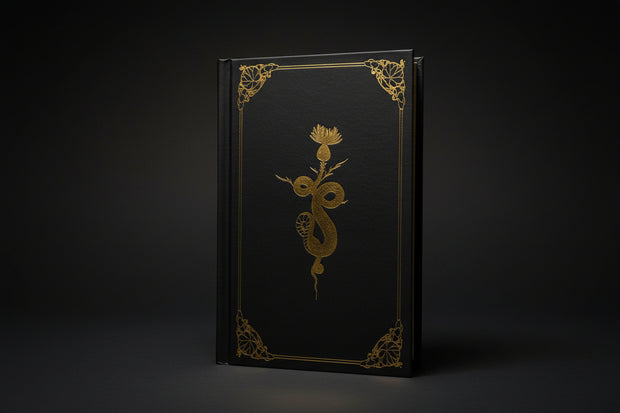
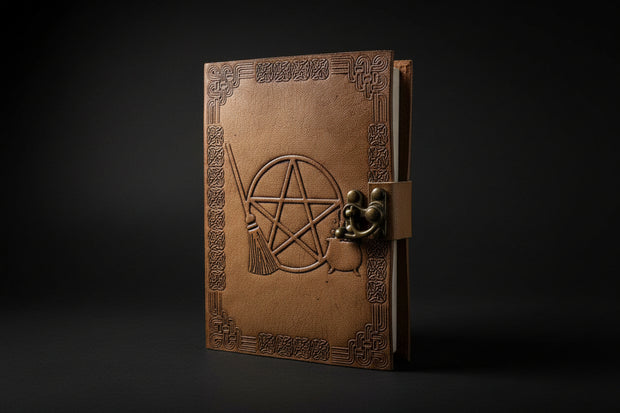
Browse Printed Works to build a focused library and Journals for source notes. The Devotion Gilded Grimoire offers space for a long-term study record, while the Pentagram Broom Leather Journal is compact enough for reading notes and source lists.
Frequently Asked Questions
Should I take notes on every page?
No. Take notes when a passage answers your question, defines an important term, provides evidence, gives an instruction, or creates a useful comparison.
Is highlighting enough?
Highlighting marks a passage but does not explain why it matters. Add a brief note and page reference so the selection remains useful later.
Can I photograph pages instead?
Photographs can support private study where permitted, but they are not a substitute for identifying the argument and source. Respect copyright, library rules, and the condition of the book.
How much can I quote?
Use only the short portion needed for analysis or reference, label it clearly, and keep full citation details. Do not reproduce substantial parts of a copyrighted book.
What if I change my interpretation later?
Add a dated revision rather than erasing the earlier note. The change shows how later evidence affected your understanding.
Make Every Note Traceable
The best occult notes do not merely preserve interesting sentences. They preserve context: who made the claim, where it appears, what supports it, how certain it is, and what you think still needs investigation. That traceability turns reading into knowledge you can responsibly use.
Tools for this practice
Explore the products selected for this guide. Review each listing for what is included and how to use it.
Shop this guide · 2 items Collapse


Keep exploring the shop
You made it to the end of the guide. Keep exploring through related products, major departments, or the full catalog.
 RELATED TO THIS GUIDE
Ritual Supplies & Altar Tools
Shop this topic
RELATED TO THIS GUIDE
Ritual Supplies & Altar Tools
Shop this topic


Leave a comment