


Intrusive Thoughts Are Not Spells: Accidental Intention, Magical Thinking, and Grounded Practice

An unwanted image enters your mind during a ritual. You think of the exact outcome you fear. A harsh sentence appears internally while you hold a candle. You immediately worry that the thought became an intention, curse, petition, or prediction.
It did not automatically become any of those things.
Thoughts can be sudden, involuntary, upsetting, contradictory, absurd, or completely unrelated to what a person values. A thought is not the same as an action, consent, desire, promise, spell, or moral decision.
This article offers grounded spiritual-practice boundaries. It does not diagnose or treat a mental-health condition.
What Is an Intrusive Thought?
An intrusive thought is a thought, image, urge, phrase, or doubt that appears without being deliberately chosen and may feel disturbing or unwanted. Many people experience them. The content can involve harm, religion, sexuality, contamination, mistakes, catastrophe, or violating a deeply held value.
The distress often comes not only from the thought, but from the meaning assigned to it:
- “Why would I think that?”
- “Does this reveal what I secretly want?”
- “Did thinking it make it more likely?”
- “Did the universe hear it?”
- “Do I need to cancel it with another ritual?”
Having an unwanted thought does not mean you will act on it or that it represents your character.
Thought, Intention, and Action Are Different
| Category | Description |
|---|---|
| Thought | A mental event that may be chosen or unchosen |
| Feeling | An emotional or bodily response |
| Intention | A consciously adopted aim or direction |
| Ritual action | A deliberate behavior performed within a chosen structure |
| Outcome | What actually happens, influenced by many causes outside thought |
Witchcraft traditions disagree about how spells work, but no responsible practice requires treating every involuntary mental event as a completed ritual.
What Is Thought-Action Fusion?
Psychology uses the term thought-action fusion for beliefs that thinking about an event makes it more likely to occur or that thinking an unacceptable thought is morally equivalent to performing the action.
Spiritual language can intensify this fear when it is expressed as:
- “Every thought creates reality.”
- “The universe cannot understand a negative word.”
- “Fear attracts exactly what you fear.”
- “A bad thought during ritual contaminates the working.”
- “You must immediately replace every negative thought.”
These statements can turn normal mental noise into a constant threat and encourage exhausting attempts to monitor the mind.
An Accidental Thought Is Not a Spell
A spell normally involves some combination of chosen purpose, method, timing, action, symbols, words, materials, and closure. Traditions differ, but deliberate participation matters.
The following do not automatically create a spell:
- a sudden disturbing image;
- misreading a word;
- thinking the opposite of your goal;
- an anxious “what if” question;
- a dream you did not choose;
- a lyric passing through your mind;
- dropping an object;
- briefly imagining harm;
- feeling anger during a protection ritual;
- forgetting a line or saying it incorrectly.
Read Can Doubt Ruin a Spell? for related guidance on anxiety and confidence.
You Do Not Need a Cancellation Ritual
The urge to neutralize a thought may feel urgent. A person may repeat a prayer, cleanse the altar, restart the spell, reverse an action, draw cards for reassurance, or say an opposite phrase until it feels “right.”
That relief may be temporary. The mind can then learn that the original thought was dangerous and that another ritual is always required.
A grounded practice does not create an obligation to cancel every mental event. Unless there was an actual hazardous mistake—such as leaving a candle burning, mixing unsafe materials, or violating consent—you can often continue or stop normally.
Use a Written Definition of Intention
Before ritual, write:
“My intention is the chosen statement written here and the deliberate actions that follow it. Unwanted thoughts, images, emotions, mistakes, and mental noise are not additions to the working.”
This does not need to become a phrase repeated compulsively. Write it once as a general practice rule and refer to it only when planning future rituals.
Do Not Debate the Thought
Trying to prove that an unwanted thought is meaningless can become another form of checking. You may never reach absolute certainty about why a thought appeared.
A brief response can be:
- “That was a thought.”
- “I did not choose it as an intention.”
- “I do not need to solve it right now.”
- “I will return to the next ordinary step.”
The goal is not to create a perfect counter-spell. It is to reduce the authority assigned to the thought.
Pause Divination When It Becomes Reassurance
Tarot, pendulums, runes, and signs can become tools for repeated checking:
- “Did the thought count?”
- “Did I accidentally curse someone?”
- “Will the feared event happen?”
- “Are the spirits angry because I thought that?”
- “Did the cleansing work?”
Repeated readings rarely create lasting certainty. Each new card or movement creates another detail to interpret.
Put the tool away when the same question is being repeated, the answer must feel perfect, or the reading increases fear. Return to observable information and the boundaries in How to Ask Better Divination Questions.
Distinguish Safety Checks From Ritual Checks
Some checks are appropriate:
- confirming a flame is extinguished;
- checking an ingredient label;
- locking a door once;
- verifying a dosage with a qualified professional;
- reviewing whether consent was obtained;
- correcting an actual factual mistake.
Other checks can become open-ended:
- repeatedly checking whether an invisible contamination remains;
- performing cleansing until it feels exactly right;
- asking several readers the same question;
- searching for proof that thoughts cannot cause harm;
- reviewing the ritual mentally for hours;
- avoiding ordinary objects because they were present during a thought.
Use a defined, finite safety procedure. Do not add spiritual checks indefinitely.
Ritual Purity Does Not Require Mental Purity
Historical purity rules usually concern specific actions, substances, times, places, or social conditions. They should not automatically be reinterpreted as a requirement to control every thought.
A mind can wander during prayer. Grief can coexist with gratitude. Anger can arise during protection work. Doubt can appear during devotion. These experiences do not automatically invalidate the rite.
Be Careful With Manifestation Language
The claim that thoughts directly create every life event can produce self-blame after illness, abuse, poverty, grief, discrimination, accidents, or another person’s choices.
Intentional reflection may influence decisions and behavior. It does not grant total control over reality. Read Witchcraft vs. Manifestation before treating emotional state as a moral cause of suffering.
Signs That Spiritual Practice May Be Feeding Fear
Consider pausing and seeking appropriate support when:
- rituals are performed mainly to prevent catastrophe;
- you cannot stop until a phrase or action feels perfect;
- you repeatedly ask others for reassurance;
- ordinary thoughts feel morally dangerous;
- you avoid people, places, colors, numbers, or tools because of a thought;
- divination controls routine decisions;
- cleansing consumes substantial time;
- sleep, work, relationships, eating, or daily function are affected;
- you fear that stopping the practice will harm someone.
A licensed mental-health professional can help assess what is happening. Evidence-based care for obsessive-compulsive symptoms may include specialized cognitive behavioral approaches such as exposure and response prevention, delivered by a qualified clinician.
How a Spiritual Community Can Respond
Do not tell a distressed person:
- their fear proves psychic sensitivity;
- the thought attracted an entity;
- they need to buy a cleansing service;
- their anxiety is a deity warning;
- they must confess the exact thought publicly;
- another ritual is required immediately.
A safer response is:
“An unwanted thought is not an action or spell. You do not need to purchase spiritual protection. Because this is causing distress, consider pausing divination and speaking with a qualified mental-health professional.”
Grounded Ritual Boundaries
Build practices with clear beginnings and endings:
- Write one chosen intention.
- Use a short sequence with a defined number of steps.
- Include ordinary physical safety checks once.
- Do not restart for mental noise alone.
- Close the ritual at the planned point.
- Do not perform immediate confirmation divination.
- Review only at a scheduled time.
If written records become a way to recheck every detail, reduce them rather than expanding them.
When Immediate Help Is Needed
If you believe you may act on an urge to harm yourself or another person, contact local emergency services or crisis support immediately. In the United States, call or text 988 for the Suicide & Crisis Lifeline. A spiritual reading is not crisis care.
Resources Should Reduce Fear, Not Sell Certainty
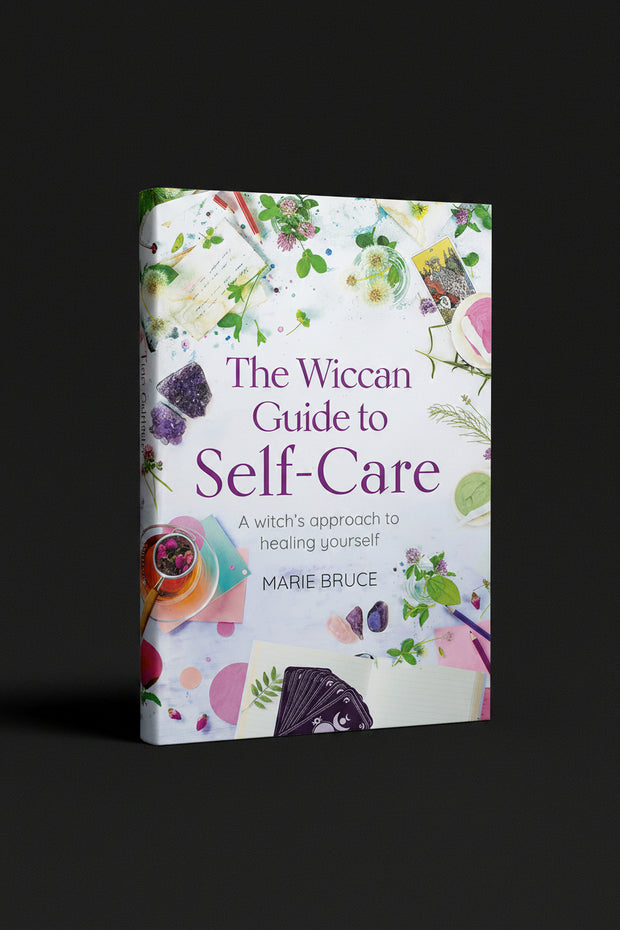
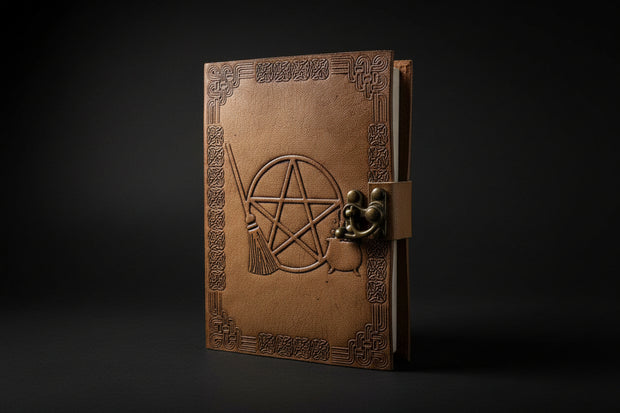
Use Printed Works to compare grounded historical and practical approaches. A journal can help define a ritual once, but it should not become a reassurance ledger reviewed repeatedly. The Deckle-Edge Book of Shadows Journal is an optional place for one stable practice statement, not a requirement for managing distress.
Frequently Asked Questions
Can a negative thought accidentally curse someone?
An involuntary thought is not the same as a deliberate curse or action. Do not treat mental noise as completed spellwork.
What if the thought happened while I held a ritual tool?
Physical contact with a tool does not convert every thought into intention. Continue or close according to the planned ritual.
Should I cleanse after an intrusive thought?
Not merely because the thought occurred. Clean physical contamination when present; do not create endless symbolic neutralizing rituals.
What if I dreamed about harming someone?
Dreams are not chosen actions or automatic predictions. Do not use the dream alone as evidence of intent.
Can I ask tarot whether the thought will come true?
Repeated reassurance readings can intensify the cycle. Put the cards away and use real-world evidence and professional support when distress persists.
Does this mean all magical belief is a mental-health problem?
No. Religious and magical beliefs are not diagnoses. The concern is distress, impairment, compulsive behavior, and assigning dangerous authority to unwanted thoughts.
A Thought Is Not a Contract
You do not need a perfectly controlled mind to pray, practice, or live safely. Unwanted thoughts are not spells. Define intention deliberately, keep rituals finite, pause reassurance-seeking divination, and seek qualified support when fear begins to control daily life.
Tools for this practice
Explore the products selected for this guide. Review each listing for what is included and how to use it.
Shop this guide · 3 items Collapse


Keep exploring the shop
You made it to the end of the guide. Keep exploring through related products, major departments, or the full catalog.


Leave a comment