


Privacy and Confidentiality in Spiritual Practice: Readings, Groups, Records, and Boundaries

Spiritual practice can involve grief, relationships, health fears, religious identity, family conflict, dreams, finances, sexuality, trauma, and deeply personal beliefs. A reading, class, ritual group, temple, coven, or private consultation may therefore receive information that could harm someone if it is exposed carelessly.
Privacy is not only good manners. It is part of consent, safety, trust, and responsible authority. At the same time, secrecy should never be used to conceal abuse, fraud, threats, unsafe conduct, or a person’s right to seek outside help.
Privacy, Confidentiality, and Secrecy Are Different
Privacy is a person’s ability to control access to personal information, space, identity, and practice.
Confidentiality is an agreement or professional duty to protect information entrusted to someone.
Secrecy means information is deliberately hidden. Secrecy can protect sacred material or vulnerable people, but it can also protect misconduct.
A useful principle is: privacy protects people; confidentiality protects trust; harmful secrecy protects power from accountability.
What Information Deserves Protection?
- legal names and contact details;
- birth dates, birth times, and addresses;
- photographs and recordings;
- health and medication information;
- relationship and sexual details;
- financial information;
- religious identity in an unsafe environment;
- grief, trauma, and family history;
- ritual records and personal revelations;
- group membership and initiation status;
- questions asked during divination;
- information about minors.
Not every piece of information needs the same level of protection. Collect only what the service or practice genuinely requires.
Before a Reading or Consultation
A reader or practitioner should explain:
- what information is collected;
- why it is needed;
- whether notes are kept;
- how appointments and payments are recorded;
- whether anyone else can access the information;
- whether sessions are recorded;
- the limits of confidentiality;
- how the client can request deletion or correction where applicable.
A client should not discover afterward that a session was recorded, discussed publicly, used for marketing, or shared with a training group.
Do Not Collect More Than You Need
A tarot or palm reading rarely requires a Social Security number, banking password, copy of identification, full medical history, or access to private accounts. Astrology may require birth information, but the practitioner should explain why exact time and place are relevant and how the data will be stored.
Excessive data collection increases risk and can be a sign of fraud. See Fake Psychics and Spiritual Scams for broader warning signs.
Confidentiality in Divination
A reading may reveal the client’s fears, hopes, relationships, or private questions. Ethical practice generally means:
- not sharing identifiable stories without permission;
- not posting spreads, messages, or screenshots publicly;
- not contacting third parties mentioned in the reading;
- not using private information to frighten or pressure the client;
- not pretending divination authorizes intrusion into another person’s privacy;
- storing notes securely and deleting them when no longer needed.
Read The Ethics of Divining About Other People for consent and third-party boundaries.
Third-Party Questions
Questions such as “What is my coworker hiding?” or “Is my ex’s partner cheating?” involve people who did not consent to the reading. Divination cannot verify private facts, crimes, health conditions, or intentions.
Reframe toward the client:
- What behavior am I observing?
- What boundary do I need?
- What information should I request directly?
- What assumption may be shaping my interpretation?
- What action protects my safety and dignity?
Confidentiality does not justify making unsupported accusations in private.
Privacy in Ritual Groups
Groups should establish rules before personal material is shared.
- Are names and membership private?
- May participants discuss the ritual outside the group?
- Are photographs allowed?
- Can a participant decline touch, disclosure, trance, or a role?
- Who stores attendance and contact information?
- What happens when someone leaves?
- How are complaints reported?
- Which information must be disclosed for safety or legal reasons?
“What is said here stays here” is not enough. The group needs clear exceptions for threats, abuse, emergencies, and safeguarding concerns.
Photographs, Livestreams, and Social Media
A visually striking altar or group ritual can tempt immediate posting. Obtain specific permission before photographing or publishing:
- faces;
- names or usernames;
- private homes and addresses;
- ritual texts;
- initiation material;
- personal petitions;
- memorial photographs;
- children;
- objects owned by another participant.
Consent to attend is not consent to appear online. Consent to one photograph is not permission for permanent advertising use.
Testimonials and Client Stories
Remove enough detail that the person cannot be recognized—or obtain explicit permission for the exact wording and use. Changing only the first name may be insufficient in a small community.
Do not pressure clients to provide a testimonial immediately after an emotionally intense session. Do not offer better spiritual outcomes in exchange for positive reviews.
Confidentiality in Teaching and Supervision
Teachers may discuss cases for training, but identifying details should be removed and participants should know whether their information may be used. A student’s mistakes, trauma, or private questions should not become entertainment.
When a teacher claims that all concerns must remain inside the group, review Spiritual Teachers and Gurus: Red Flags.
Spiritual Records and Journals
A ritual journal may contain information about both the writer and other people. Protect it according to the risk:
- use initials or roles instead of full names;
- keep private petitions separate from material intended for teaching;
- lock or safely store physical books;
- use strong passwords and device security;
- avoid cloud-sharing links that remain public;
- redact screenshots before sharing;
- dispose of sensitive drafts securely.
Our Ritual Recordkeeping guide provides a full documentation method.
Privacy in a Retail or Public Reading Space
Readings conducted in a shop, festival, fair, or open room require realistic expectations. The practitioner should explain whether conversations may be overheard and whether a more private option exists.
Practical steps include:
- spacing waiting clients away from the table;
- using low voices without creating secrecy or suspicion;
- avoiding full names when unnecessary;
- storing appointment sheets out of public view;
- not leaving completed forms or notes on the table;
- offering a private space when available;
- allowing the client to stop or redirect a sensitive topic.
Minors and Vulnerable People
Services involving minors require extra care, clear guardian policies, appropriate consent, and compliance with local law. Do not ask a child to keep the reading secret from a safe guardian. Do not use spiritual authority to obtain private photographs, sexual information, money, or unsupervised access.
Adults who are intoxicated, cognitively impaired, in immediate crisis, or unable to consent should not be pressured into disclosure, payment, ritual, or recording.
Limits of Confidentiality
No practitioner should promise absolute secrecy in every circumstance. Laws and professional duties vary, but urgent concerns may involve:
- immediate danger to a person;
- abuse or exploitation of a child or vulnerable adult;
- credible threats of violence;
- medical emergency;
- court orders or legal requirements;
- fraud, theft, stalking, or coercion.
Explain applicable limits before the service rather than inventing them after a concern arises. Spiritual practitioners who are not licensed professionals should not imply legal privileges they do not possess.
When Secrecy Becomes a Red Flag
Secrecy is dangerous when someone says:
- you may not speak with family, therapists, doctors, lawyers, or former members;
- reporting misconduct will cause a curse or divine punishment;
- payment arrangements must be hidden;
- sexual contact is a confidential initiation requirement;
- you must delete evidence or messages;
- the leader alone decides what is true;
- leaving the group will expose or endanger you;
- questions prove spiritual unworthiness.
Privacy should never prevent a person from seeking help, documenting harm, or reporting a crime.
How to Share Spiritual Content Responsibly
- Ask whether the story belongs only to you.
- Remove identifying details.
- Obtain specific consent when another person may be recognized.
- Separate education from gossip.
- Do not publish during an active conflict.
- Preserve evidence privately when misconduct may require reporting.
- Review old posts and remove information that no longer needs to remain public.
A Simple Confidentiality Statement
“Information shared during this service will be treated as private and used only to provide the service, maintain necessary business records, and meet applicable safety or legal obligations. Sessions will not be recorded, published, or used in marketing without separate permission.”
This is a general example, not legal advice. Businesses should create policies appropriate to their services and jurisdiction.
Tools for Private Records
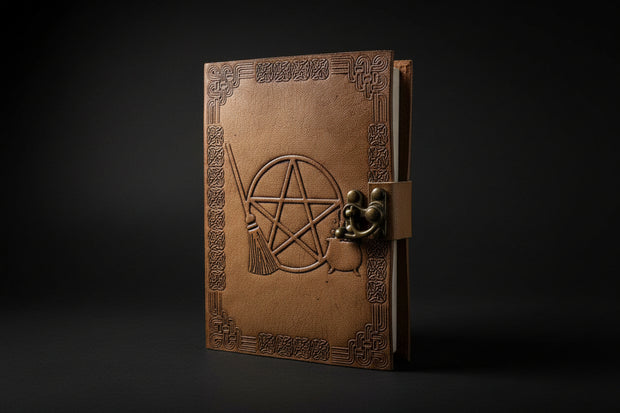
For written practice, the Pentagram Broom Leather Journal offers a compact dedicated record. Storage & Chests can help organize physical tools and documents. A locked cabinet, plain notebook, or secure digital file may provide better privacy depending on the situation.
Frequently Asked Questions
Can a reader tell friends about a session without using my name?
Details may still identify you, especially in a small community. The reader should obtain permission or remove enough information that recognition is unlikely.
Should spiritual groups keep membership secret?
Some members may need privacy for safety. The group should protect identities without using secrecy to prevent accountability or outside support.
Can a practitioner record a session for notes?
Only with clear permission and an explanation of storage, access, retention, and deletion. Consent should not be assumed.
Is a private journal completely safe?
No storage method is perfect. Use security proportionate to the sensitivity of the information and avoid recording unnecessary details.
Does confidentiality mean a practitioner must hide abuse?
No. Confidentiality should not conceal immediate danger, exploitation, criminal conduct, or safeguarding concerns. Applicable laws and duties vary.
Can I ask for my records to be deleted?
You can ask. The practitioner or business may need to retain certain financial, legal, or appointment records, but should explain what is kept and why.
Trust Requires Boundaries
Spiritual privacy is not created by mystery. It is created through clear consent, limited data collection, secure records, respectful communication, and accountability. Protect what people entrust to you—and never use secrecy to prevent them from protecting themselves.
Tools for this practice
Explore the products selected for this guide. Review each listing for what is included and how to use it.
Shop this guide · 1 item Collapse

Keep exploring the shop
You made it to the end of the guide. Keep exploring through related products, major departments, or the full catalog.
 RELATED TO THIS GUIDE
Ritual Supplies & Altar Tools
Shop this topic
RELATED TO THIS GUIDE
Ritual Supplies & Altar Tools
Shop this topic


Leave a comment