


Ritual Timing Without Astrology: Practical, Symbolic, and Calendar-Based Methods

Ritual timing is often presented as a complicated system of moon phases, planetary days, zodiac signs, and exact hours. Those systems can be meaningful, but they are not required for a structured practice. A ritual can be timed through availability, sequence, season, repetition, anniversaries, deadlines, household rhythms, or the simple moment when action is needed.
The best timing method is one you understand and can use consistently without delaying necessary action or creating fear about an imperfect calendar.
What Does Ritual Timing Do?
Timing can serve several different functions:
- Practical: choosing a time when the space, body, and materials are ready.
- Symbolic: connecting the ritual with beginning, ending, growth, release, or transition.
- Devotional: observing a religious festival, sacred day, or established community schedule.
- Psychological: creating a clear boundary between intention and action.
- Repetitive: building rhythm through daily, weekly, or seasonal return.
- Evaluative: setting a defined review date.
These functions may overlap, but they should not be confused with a guarantee that one moment will force an outcome.
Method 1: Use Practical Readiness
The most dependable ritual time is often when you can work safely and attentively.
Choose a time when:
- you are not dangerously tired or intoxicated;
- you have enough privacy for the intended work;
- children and animals can be protected from materials;
- smoke and flame are permitted and supervised;
- you have time to close and clean up;
- the real-world action connected with the goal can follow.
A rushed ritual performed at an “ideal” hour may be less useful than a calm, complete ritual performed when your life allows it.
Method 2: Time the Ritual to the Action
Place the ritual immediately before, during, or after the practical step it supports.
- Perform confidence work before rehearsing or attending an interview.
- Write a prosperity petition while building the budget or sales plan.
- Complete a protection ritual after installing locks or documenting a concern.
- Perform a release ritual after returning belongings or ending access.
- Bless tools when they are cleaned and prepared for use.
This method prevents ritual from becoming a substitute for action.
Method 3: Use a Deadline or Review Date
Some workings benefit from a fixed period:
- seven days of focused practice;
- thirty days of habit support;
- one month of devotional observation;
- until an application deadline;
- from the beginning to the end of a project;
- until a clearly named boundary is established.
Define the beginning, repetition schedule, and review point before starting. A fixed period reduces compulsive checking and prevents indefinite maintenance.
Method 4: Use Weekly Rhythm
A weekly schedule is easy to remember and does not require astrological knowledge. Choose a day because it fits the household, work schedule, religious community, or purpose.
Examples:
- weekly altar cleaning;
- Sunday planning and household blessing;
- midweek study;
- Friday gratitude or relationship reflection;
- monthly financial review on the same weekday;
- a regular rest day with no divination or spellwork.
The meaning comes from repetition and chosen association rather than a universal rule.
Method 5: Use the Calendar
Civil calendars can provide effective ritual structure:
- the first day of the month for planning;
- the final day for review and release;
- the start of a quarter for business or financial goals;
- a birthday for annual reflection;
- a move-in date for household remembrance;
- the anniversary of a loss for memorial practice;
- a community holiday or religious observance.
Calendar dates can carry personal or collective meaning without claiming cosmic influence.
Method 6: Work With Natural and Seasonal Change
Seasonal timing can be observed directly:
- first frost;
- first planting;
- harvest;
- migration of local birds;
- opening or closing of a garden;
- storm season;
- changes in daylight;
- local community rhythms.
Use the ecology and climate where you actually live rather than copying a seasonal script from another hemisphere or region.
For a broader discussion of transition points, read Liminal Time: Dawn, Dusk, Midnight, and Seasonal Turning Points.
Method 7: Use Time of Day
Time of day can carry ordinary and symbolic associations:
- Morning: beginning, clarity, preparation, commitment.
- Midday: visibility, action, accountability, public work.
- Evening: transition, review, household practice, release from work.
- Night: privacy, contemplation, dreams, silence.
- Dawn and dusk: thresholds and change.
These are flexible associations. Do not sacrifice sleep or safety because midnight appears more dramatic.
Method 8: Use Sequence Instead of Clock Time
Some rituals are best timed by what comes before and after:
- clean the room;
- prepare tools;
- ground;
- open the working;
- perform the central action;
- close;
- clean up;
- take the practical next step;
- review later.
The sequence creates ritual time even when the clock time changes.
See Crafting Pagan Rituals for a broader ritual structure.
Method 9: Use Repetition
Repetition can establish rhythm through:
- one prayer each morning;
- one candle session each week;
- a seven-day petition;
- a monthly review;
- a seasonal cleaning;
- a repeated phrase during a single working.
Choose a schedule you can sustain. Repetition should deepen familiarity and commitment, not produce fear that missing one session will cause punishment.
Method 10: Use Immediate Need
Some situations should not wait for a preferred day, phase, or symbolic hour. Act immediately when:
- there is a fire, gas, electrical, medical, or security concern;
- a boundary needs to be communicated;
- legal or financial deadlines are approaching;
- someone is in immediate danger;
- perishable offerings or hazardous materials must be removed;
- urgent professional help is needed.
Ritual may accompany the response, but it should never delay it.
Timing for Different Types of Work
Beginning
Use the first day of a project, a morning, a move-in date, a chosen weekly start, or the moment the materials and plan are ready.
Growth and maintenance
Use a recurring schedule tied to the behavior: payday, inventory day, weekly cleaning, study night, or a regular devotional period.
Release and ending
Use the actual end of the relationship, project, lease, season, habit cycle, or obligation. Symbolic closure is strongest when it reflects a real transition.
Protection
Install practical safety first, then bless or mark the boundary. Repeat during routine maintenance rather than waiting for fear to peak.
Divination
Choose a calm time with a clear question and a limit on repetition. Avoid reading when intoxicated, severely distressed, or unable to tolerate uncertainty.
What if the Ritual Is Interrupted?
Pause safely, address the interruption, and decide whether the central action was completed. A changed time does not automatically invalidate the work. Our guide What to Do When a Ritual Is Interrupted explains when to pause, close, or restart.
How to Choose Among Several Timing Methods
Use this order:
- Safety: when can the ritual be performed without unnecessary risk?
- Action: when does it best connect with the practical step?
- Tradition: does the religious or magical system have established timing?
- Symbolism: which transition, day, or season supports the meaning?
- Sustainability: can the schedule actually be maintained?
- Review: when will you evaluate the result?
A Ritual-Timing Worksheet
- Purpose:
- Practical action:
- Earliest safe time:
- Symbolic timing:
- Tradition-specific requirement:
- Duration:
- Repetition schedule:
- Closing date:
- Review date:
- Reason not to delay:
Common Timing Mistakes
- Waiting so long for perfect timing that the opportunity passes.
- Using a timing rule without knowing its source.
- Sacrificing sleep for dramatic nighttime practice.
- Beginning a repeated ritual without an end condition.
- Changing the schedule every time anxiety rises.
- Treating a missed day as spiritual punishment.
- Ignoring local season and climate.
- Using ritual timing to avoid professional deadlines or urgent care.
Tools for a Timed Working
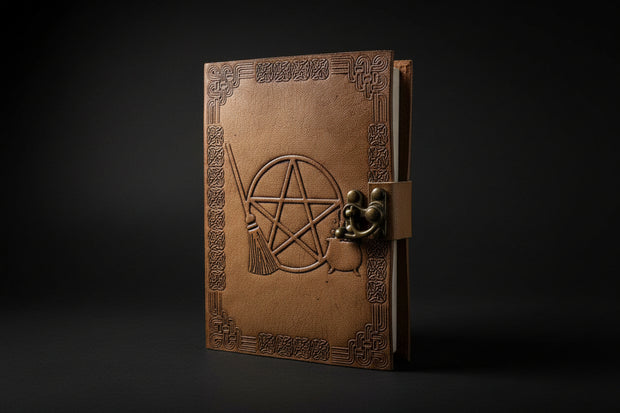
Explore Candles for clearly bounded sessions, Ritual Supplies for structured practice, and the Pentagram Broom Leather Journal for schedules and outcome reviews. The tool should fit the timing method rather than dictate it.
Frequently Asked Questions
Do I need moon phases to time a ritual?
No. Moon timing is one optional system. Practical, calendar-based, seasonal, religious, and repetition-based methods can all provide structure.
Is midnight more powerful?
Midnight can carry symbolic meaning, but there is no need to disrupt sleep or create a safety problem. Use it only when it fits the purpose and your circumstances.
What if I miss the planned date?
Choose the next safe and useful time. Record the change instead of treating the missed date as failure.
How long should a repeated working last?
Set a duration appropriate to the goal and include a review point. Longer is not automatically stronger.
Can I perform a ritual early?
Yes, when preparation, action, or safety makes the earlier time more appropriate. Symbolic timing should serve the work, not control it.
Timing Should Support the Work
Ritual timing is useful when it organizes attention, action, repetition, and review. Choose a method you can explain, perform safely, and evaluate honestly. A workable time is better than a perfect time that never arrives.
Tools for this practice
Explore the products selected for this guide. Review each listing for what is included and how to use it.
Shop this guide · 1 item Collapse

Keep exploring the shop
You made it to the end of the guide. Keep exploring through related products, major departments, or the full catalog.
 RELATED TO THIS GUIDE
Ritual Supplies & Altar Tools
Shop this topic
RELATED TO THIS GUIDE
Ritual Supplies & Altar Tools
Shop this topic


Leave a comment