


The Adversary Archetype in Western Religious Thought

The Adversary is one of the most persistent figures in Western religious thought. The role changed over time from accuser and tester to cosmic enemy, fallen angel, conspiratorial tempter, literary rebel, and modern symbol of personal autonomy.
Modern Satanism did not inherit one unchanged figure from antiquity. It reinterpreted centuries of scriptural, theological, artistic, and political development.
The Hebrew Bible: Adversary as Role
The Hebrew term often translated as satan can mean adversary, opponent, or accuser. In the Book of Job, “the satan” appears within the divine council and tests Job under divine permission.
This figure is not yet the fully independent ruler of evil familiar from later Christian theology.
Second Temple Developments
Later Jewish apocalyptic literature developed stronger ideas of cosmic opposition, rebellious angels, demonic powers, and conflict between good and evil.
During this period, adversarial figures became more individualized and cosmologically independent in some texts.
Early Christianity and the Enemy of Salvation
Christian texts increasingly present Satan as tempter, deceiver, ruler of demons, and enemy of divine salvation.
Later theology connected several originally distinct images—including the serpent, the fallen angel, Lucifer, and the Devil—into a more unified adversarial figure.
Medieval Demonology and Hidden Conspiracy
Medieval and early modern Christian authorities portrayed Satan as the organizer of heresy, witchcraft, inverted ritual, and hidden anti-Christian communities.
Historians have shown that many descriptions of organized devil worship reflected clerical theories and persecutory accusations rather than documented self-identified Satanic religions.
Romantic Reversal: Satan as Rebel
Literature transformed the adversary again. Milton’s Paradise Lost and later Romantic and Decadent writers portrayed Satan or Lucifer as tragic, defiant, intellectually ambitious, or resistant to tyranny.
These interpretations supplied modern religious Satanism with an alternative image: the adversary as liberator or symbol of self-determination.
The Adversary in Modern Satanism
Non-Theistic Satanism
Satan may represent individual sovereignty, carnality, skepticism, opposition, and refusal of spiritual submission.
Theistic Satanism
Satan may be understood as a real deity or spiritual intelligence associated with knowledge, liberation, initiation, or adversarial power.
Luciferianism
Lucifer is often interpreted through illumination, inquiry, rebellion, and self-development. Some practitioners distinguish Lucifer from Satan, while others connect them.
The Adversary as Archetype
As an archetypal figure, the adversary can represent:
- Questioning authority
- Testing claims and moral certainty
- Refusal of compulsory submission
- Shadow, temptation, conflict, or forbidden knowledge
- Identity formed through opposition
- The cultural fear of dissent
Calling the adversary an archetype does not determine whether the practitioner also believes in a real spiritual being.
Why the Adversary Endures
Every system of authority creates boundaries around obedience, legitimacy, and acceptable belief. The adversary personifies the challenge to those boundaries.
The figure changes with the culture: prosecutor, rebel, tempter, revolutionary, liberator, or inner critic. Structural opposition remains the common thread.
Frequently Asked Questions
Was Satan always understood as God’s independent enemy?
No. Earlier Hebrew material presents an adversarial role that differs from later Christian cosmic dualism.
When did Lucifer become identified with Satan?
The identification developed through later Christian interpretation rather than originating as one fixed biblical identity.
Why do modern Satanists reclaim the adversary?
The figure can symbolize autonomy, dissent, skepticism, liberation, or resistance to imposed authority.
Related Reading
Selected References
- Cohn, Norman. Europe’s Inner Demons.
- Dyrendal, Asbjørn, James R. Lewis, and Jesper Aa. Petersen. The Invention of Satanism.
- Faxneld, Per. Satanic Feminism.
- van Luijk, Ruben. Children of Lucifer.
Tools for this practice
Explore the products selected for this guide. Review each listing for what is included and how to use it.

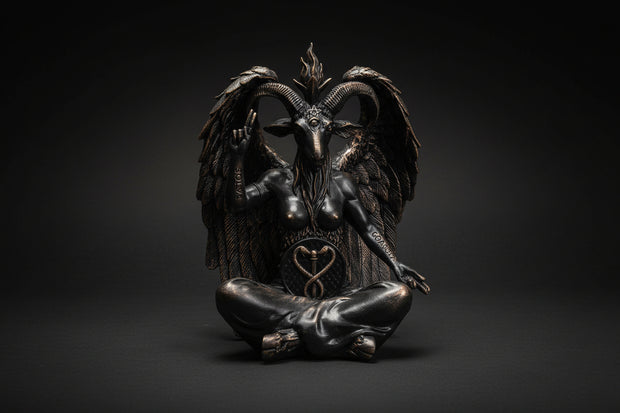
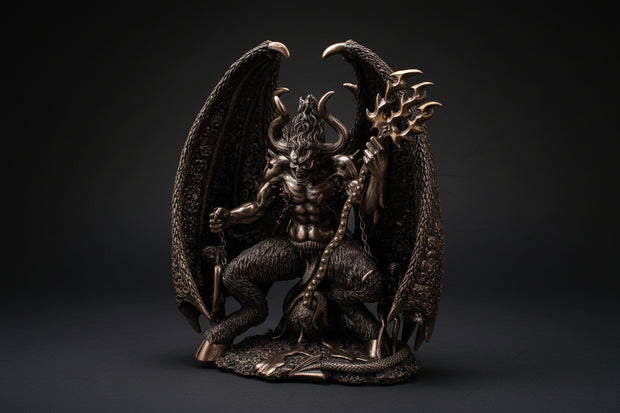

Shop this guide · 4 items Collapse


Keep exploring the shop
You made it to the end of the guide. Keep exploring through related products, major departments, or the full catalog.


Leave a comment