


Seeds, Berries, Peels & Spices in Ritual Practice

Part 7 of the Ritual Botanical Field Guide.
Fennel seed, hawthorn berries, rosehips, orange peel, star anise, cloves, and cinnamon are often grouped as “kitchen magic.” Botanically, they are not one kind of ingredient. A seed holds an embryo, a berry or hip surrounds seeds, peel forms a fruit boundary, and the familiar star anise “seed pod” is actually a star-shaped fruit.
This guide focuses on plant structure, symbolic fit, and storage rather than repeating the familiar correspondence list in our Spice Rack Magic guide. The ritual associations below vary by culture and source.
Know What Part You Are Holding
| Material | Plant-part category | Common modern ritual frame |
|---|---|---|
| Fennel | Seed-like dried fruit | Discernment, protection, confidence |
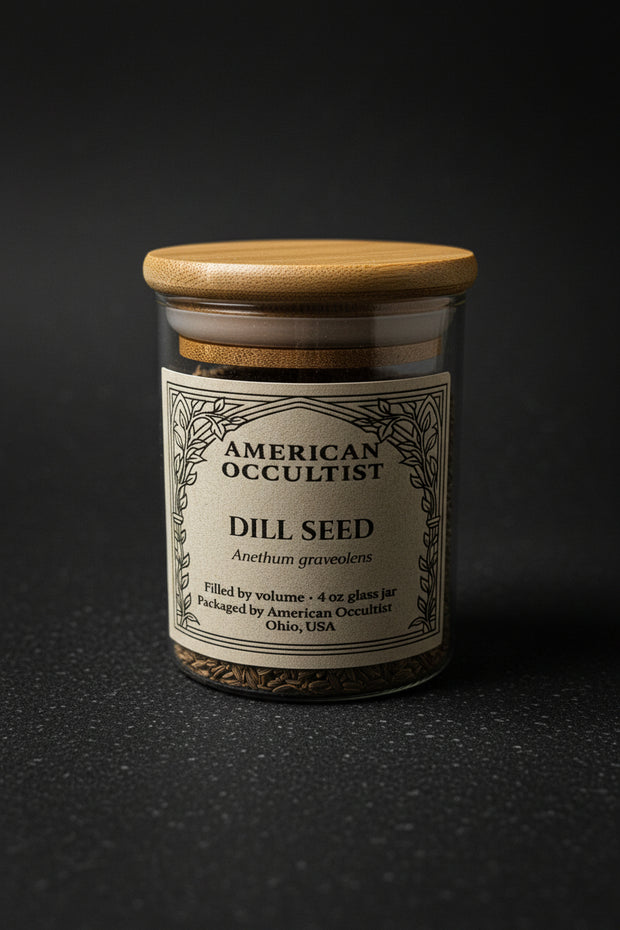
| Dill | Seed-like dried fruit | Household protection, luck, boundaries |
| Hawthorn | Berry-like fruit | Thresholds, heart symbolism, guarded blessing |
| Elderberry | Berry | Protection, reciprocity, lineage, seasonal change |
| Rosehip | Accessory fruit | Enduring affection, resilience, what remains after bloom |
| Orange peel | Fruit rind | Brightness, prosperity, welcome, outward expression |
| Star anise | Fruit | Direction, clarity, luck, star symbolism |
| Allspice | Dried unripe berry | Momentum, resources, broad warm support |
| Clove | Dried flower bud | Protection, binding, concentrated resolve |
| Cinnamon | Inner bark | Heat, speed, attraction, activation |
Even common culinary names can hide the plant part. This does not invalidate their ritual use; it makes the symbolism more interesting and the label more accurate.
Fennel and Dill: Small Materials for Boundaries and Direction
Fennel Seed is often associated with discernment, protective confidence, and the ability to see through confusion. Dill Seed commonly appears in household luck, protection, and boundary work.
Both are sold and spoken of as seeds, although botanically the common dried “seeds” are fruits. For ritual purposes, their many small units can support symbolism involving numerous opportunities, repeated actions, or incremental growth. That shared physical feature does not make their histories identical.
Small seeds and fruits roll easily. Keep them in a closed vial or fold them into a sealed paper packet rather than scattering them across an altar.
Hawthorn and Elderberry: Folklore Requires Context
Hawthorn Berries are frequently connected with thresholds, protected affection, heart symbolism, and relationships with the unseen in British and Irish folklore and later occult writing. Those traditions can include cautions as well as blessings; reducing hawthorn to “love berries” loses the guarded aspect.
Elderberries belong to broader elder-tree folklore concerning protection, reciprocity, lineage, and seasonal transition. Elderberry and elderflower come from different parts of the plant and need not serve the same symbolic role.
Do not use ritual berries as food, syrup, wine, or medicine. Familiar recipes apply to correctly identified food-grade materials and their own preparation requirements, not to an apothecary jar sold for ritual use.
Rosehips: What Remains After the Flower
Rosehips form after a rose flower is pollinated. That life-cycle position gives them a useful symbolism distinct from rose petals: affection that endures after display, resilience, maturity, seeds carried into a next phase, or the practical result of something once in bloom.
Choose rose petals when the ritual emphasizes expression, invitation, beauty, or the visible bloom. Choose rosehips when it emphasizes continuation, consequence, durability, or a future held inside the fruit.
Orange Peel: Boundary and Brightness
Dried Orange Peel — Cut & Sifted is the outer boundary of a fruit, not simply “orange flavor.” Modern practitioners frequently use it for welcome, brightness, prosperity, confidence, or outward movement. Its physical role as rind can also support protection or keeping what is valuable contained.
Dried peel can retain aromatic oils, but that does not make it safe for skin, baths, pets, or burning. Use the exact product according to its stated ritual purpose.
Star Anise and Allspice: Names Can Mislead
Star Anise is a fruit whose geometry naturally invites symbolism of direction, navigation, clarity, luck, or multiple paths. Count the points if that detail matters to a working, but do not reject a naturally imperfect fruit as spiritually defective.
Allspice is not a blend of every spice. It is the dried unripe berry of a particular plant. Modern magical sources often frame it around resources, warm momentum, success, or broad support. Its name is a reminder that product identity should be checked rather than guessed.
Clove and Cinnamon: Not Seeds
Cloves are dried flower buds. Their compact, pointed form and strong scent contribute to modern associations with protection, concentrated resolve, interruption, or binding. They can be sharp enough to puncture thin packets, so use a rigid vial when practical.
Cinnamon Chunks are pieces of bark. Modern occult sources frequently connect cinnamon with heat, speed, attraction, prosperity, and activation. That makes it a poor fit when the desired symbolism is slow cooling, stillness, or quiet release.
Both are fully covered as familiar pantry materials in the spice-rack guide. They appear here only to clarify why a flower bud and a bark do not become seeds simply because they share a spice jar.
Choosing by Plant Structure
- Seed-like materials: beginnings, repetition, multiplication, or many small steps.
- Berries and hips: fruition, guarded value, continuation, or seasonal completion.
- Peel: boundaries, presentation, protection, or what faces outward.
- Star-shaped fruit: direction, pattern, choices, and navigation.
- Bud: concentrated possibility before opening.
- Bark: structure, boundaries, durability, and protection.
These patterns are prompts, not fixed correspondences. Species-specific folklore should override a convenient category rule when you are working within that tradition.
Storage: Watch for Moisture and Pantry Pests
Seeds, dried fruit, peel, and spices can attract insects even when they are not intended as food. Keep them in clean, dry, tightly closed containers. Label the date and source, inspect for moisture, webbing, unusual dust, or insects, and isolate a questionable jar from the rest of the collection.
Do not mix a ritual jar back into culinary supplies. Our storage guide explains how to separate categories and preserve original labels.
Frequently Asked Questions
Is star anise a seed pod?
It is commonly called a seed pod, but the star is a dried fruit containing seeds. The botanical distinction can add useful symbolic detail.
Are cloves seeds?
No. Cloves are dried flower buds.
Is allspice a spice blend?
No. Allspice is a single botanical product, commonly sold as dried berries.
What is the ritual difference between rose petals and rosehips?
Petals can emphasize bloom, display, and invitation. Rosehips can emphasize what follows the bloom: endurance, fruition, and future potential.
Can ritual seeds and berries be planted or eaten?
Do not assume either use. Dried ritual products may be nonviable and are not sold as food or planting stock.
Next in the series: Mugwort vs. Wormwood.
Tools for this practice
Explore the products selected for this guide. Review each listing for what is included and how to use it.



Shop this guide · 4 items Collapse


Keep exploring the shop
You made it to the end of the guide. Keep exploring through related products, major departments, or the full catalog.
 RELATED TO THIS GUIDE
Ritual Herbs
Shop this topic
RELATED TO THIS GUIDE
Ritual Herbs
Shop this topic


Leave a comment