


Sigil Creation Tools: Alphabet and Numeric Sigil Systems

Sigils can be created with nothing more than a written intention and a pencil. Many practitioners remove repeated letters, overlap the remaining forms, and refine the result by hand. Structured sigil tools offer another option: they use an alphabet, number sequence, grid, or plotting system to create repeatable starting designs.
These systems do not replace intention, judgment, or ritual practice. They organize the construction stage so that the practitioner can compare several designs and understand how each one was produced.
What Is a Sigil Creation Tool?
A sigil creation tool is any framework used to convert language into a symbolic structure. It may be as simple as a handwritten letter-reduction method or as formal as a mapped alphabet and plotting grid.
Most systems perform some version of the following steps:
- accept a written intention;
- simplify or normalize the wording;
- convert letters into mapped positions or numbers;
- connect those positions into a line-based structure;
- allow the practitioner to refine the result into a final sigil.
Freehand Letter-Reduction Methods
The most accessible approach is entirely manual.
- Write one clear intention.
- Remove spaces and repeated letters.
- Combine the remaining letter shapes.
- Rotate, overlap, mirror, or simplify the design.
This method gives the practitioner complete creative control, but two attempts may produce very different results. That variation can be useful for intuitive work, though it may make comparison and repetition more difficult.
Alphabet-Based Sigil Systems
An alphabet engine assigns each letter to a fixed point, path, or position. The practitioner traces the simplified intention through those points to create a structured line design.
Alphabet systems may use:
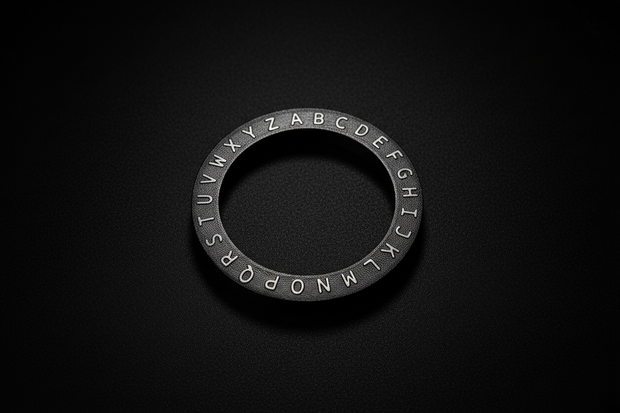
- the standard A–Z sequence;
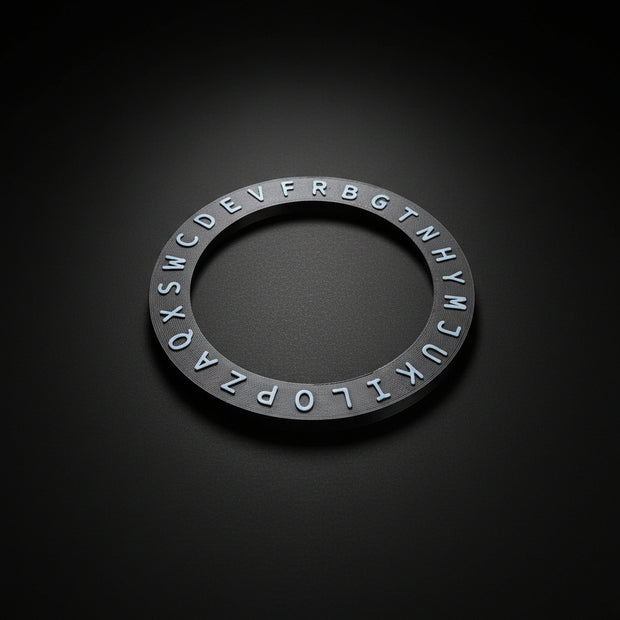
- a deliberately rearranged alphabet;
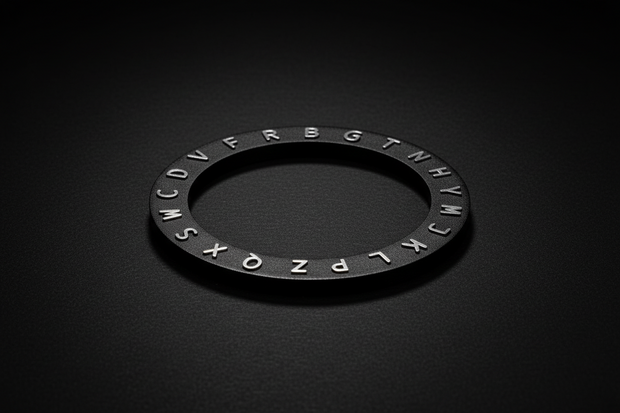
- a reduced alphabet that removes vowels or selected letters;
- a personal or traditional magical alphabet.
Changing the alphabet changes the geometry of the final symbol even when the intention remains the same.
Numeric Sigil Systems
A numeric engine converts letters into numbers before the design is plotted. Several letters may share a digit, or letters may cycle through a repeated numeric sequence.
Numeric systems are useful when a practitioner wants:
- a geometric result that is less visibly connected to ordinary letters;
- a repeatable conversion method;
- an easy way to compare ordered and rearranged number sequences;
- a design that can be plotted on a wheel, grid, or numbered field.
Ordered and Rearranged Engines
An ordered engine follows a familiar sequence, such as A–Z or 0–9. A rearranged engine changes that order before the intention is converted.
Neither is inherently stronger. An ordered system is easier to study and reproduce. A rearranged system creates less predictable forms and may feel more abstract.
The useful question is not which engine is universally best. It is which one produces a design suited to the practitioner’s purpose and medium.
The Sigil Forge Systems
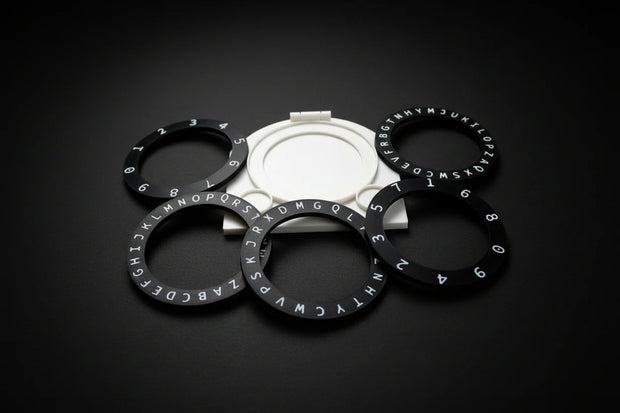
The Sigil Forge collection provides several structured approaches:
- Classic Edition — an ordered alphabet framework;
- Cypher Edition — a rearranged alphabet framework;
- Chaos Edition — a reduced, consonant-focused alphabet framework;
- Codex Ordinem — an ordered numeric framework;
- Codex Discordia — a rearranged numeric framework.
The Sigil Forge Master Set combines the available engines for side-by-side experimentation.
To compare the full range in one place, browse the complete collection of sigil-making tools and Sigil Forge systems.
How to Compare Two Sigil Tools
Use the same intention in both systems and keep every other step consistent.
- Write and finalize the statement.
- Apply the same letter-removal rule.
- Generate one design with each engine.
- Save both unedited results.
- Compare line density, symmetry, repeated points, and ease of reproduction.
- Refine each design separately before choosing one.
This process shows how the mapping system—not a change in intention—affects the visual structure.
Choosing the Right Tool for the Medium
- Candle carving: choose bold lines and limited detail.
- Journal work: finer and more complex forms may be practical.
- Household display: prioritize balance and visibility.
- Small charms: use a design that remains legible at reduced size.
- Repeated practice: choose a method you can reproduce consistently.
The generated structure is a starting point. Simplifying it for actual use is part of the creative process.
What a Generator Cannot Do
A sigil tool cannot decide whether an intention is clear, ethical, realistic, or connected to practical action. It cannot charge or activate the symbol, and it cannot guarantee an outcome.
Before using any engine, refine the wording with How to Write Effective Sigil Intentions. After construction, continue with the complete guide to creating, charging, and activating sigils.
Once the design is finished, compare methods for charging sigils and ways to activate sigils so the construction stage stays separate from the charging and activation stages.
A Practical Workflow
- Define one intention.
- Choose a freehand, alphabet, or numeric method.
- Generate the initial structure.
- Remove clutter and refine the form.
- Test whether it can be drawn or carved in the intended medium.
- Charge and activate the final sigil.
- Record the method used so it can be repeated or compared later.
Sigil creation tools are creative and ritual frameworks. They do not guarantee results and should not replace practical, medical, mental health, legal, financial, safety, or emergency action.
Tools for this practice
Explore the products selected for this guide. Review each listing for what is included and how to use it.
Shop this guide · 4 items Collapse


Keep exploring the shop
You made it to the end of the guide. Keep exploring through related products, major departments, or the full catalog.
 RELATED TO THIS GUIDE
Ritual Supplies & Altar Tools
Shop this topic
RELATED TO THIS GUIDE
Ritual Supplies & Altar Tools
Shop this topic


Leave a comment