


How to Write Effective Sigil Intentions

Before a sigil is drawn, the practitioner must decide exactly what the symbol will represent. This is the foundation of the entire process. A beautifully designed sigil cannot correct an intention that is vague, contradictory, or overloaded with unrelated goals.
A useful sigil statement gives the ritual one clear direction. It should be easy to understand, easy to visualize, and connected to actions the practitioner can actually take.
Why the Wording Matters
A sigil is a symbolic compression of an intention. The original sentence guides the design, the charging process, the activation method, and the way the symbol is used afterward.
Unclear wording can create several problems:
- the symbol represents several goals at once;
- the desired outcome is difficult to visualize;
- the charging stage becomes unfocused;
- the practitioner cannot tell what practical action should accompany the work.
Refining the sentence before creating the symbol makes every later stage easier.
Use One Intention at a Time
A statement such as “I attract confidence, money, protection, recognition, and success” contains too many separate goals. Each one may require different actions, symbols, and methods of evaluation.
Create separate sigils instead:
- one for calm confidence;
- one for consistent work habits;
- one for a household boundary;
- one for a specific financial behavior or opportunity.
A focused sigil is easier to design, charge, remember, and use.
Keep the Statement Direct
Strong sigil intentions are usually short and specific. They describe the state or behavior the practitioner intends to support.
Compare these examples:
- Vague: “I want things to improve.”
- Clearer: “I complete my planned work with steady focus.”
- Vague: “I want to be less nervous.”
- Clearer: “I speak with calm clarity during presentations.”
The clearer versions identify an observable situation and a desired response.
Present-Tense Language
Many modern sigil systems use present-tense wording because it frames the intention as an active pattern rather than a distant wish.
For example:
- “I act with calm confidence.”
- “My home remains peaceful and protected.”
- “I maintain steady concentration while studying.”
This is a practical convention rather than a universal law. Use wording that feels natural, but remove unnecessary hesitation and ambiguity.
Focus on the Desired State
When possible, describe what you are building rather than repeatedly naming what you fear.
- Instead of “I am not anxious,” try “I breathe steadily and speak clearly.”
- Instead of “I stop procrastinating,” try “I begin my scheduled work on time.”
- Instead of “No conflict enters my home,” try “My home maintains respectful boundaries and calm communication.”
This wording gives the practitioner a clear image and a practical behavior to reinforce.
Avoid Conditional and Uncertain Language
Words such as “maybe,” “someday,” “hopefully,” and “I will try” can make the statement harder to define. They describe uncertainty rather than a focused condition.
Replace “I hope to improve my concentration” with “I maintain steady concentration during my scheduled work period.”
The goal is not to pretend that an outcome is guaranteed. It is to make the ritual instruction clear.
Connect the Intention to Practical Action
Sigils are most useful when they reinforce something the practitioner is prepared to do.
- A study sigil can accompany a written schedule, a cleared desk, and silenced notifications.
- A confidence sigil can accompany preparation, rehearsal, and deliberate breathing.
- A prosperity sigil can accompany budgeting, applications, sales work, or skill development.
- A household protection sigil can accompany locks, lighting, boundaries, and appropriate emergency planning.
The sigil becomes a ritual anchor for action rather than a substitute for it.
Test the Statement Before Drawing
Ask four questions:
- Does this statement describe one primary outcome?
- Can I picture what the outcome looks like in practice?
- Is the wording short enough to remember?
- What action will I take alongside the sigil?
If those questions have clear answers, the statement is usually ready for construction.
Examples of Focused Sigil Intentions
Protection
“My home maintains clear and peaceful boundaries.”
Confidence
“I speak and act with calm confidence.”
Focus
“I maintain deep focus during my scheduled work.”
Communication
“My words are clear, respectful, and understood.”
Consistency
“I complete the daily actions that support my goal.”
Preparing the Statement for Construction
Once the sentence is finalized, it can be converted into a symbol. A common method removes spaces and repeated letters before combining the remaining forms. Other systems use magical alphabets, grids, numbers, or personal marks.
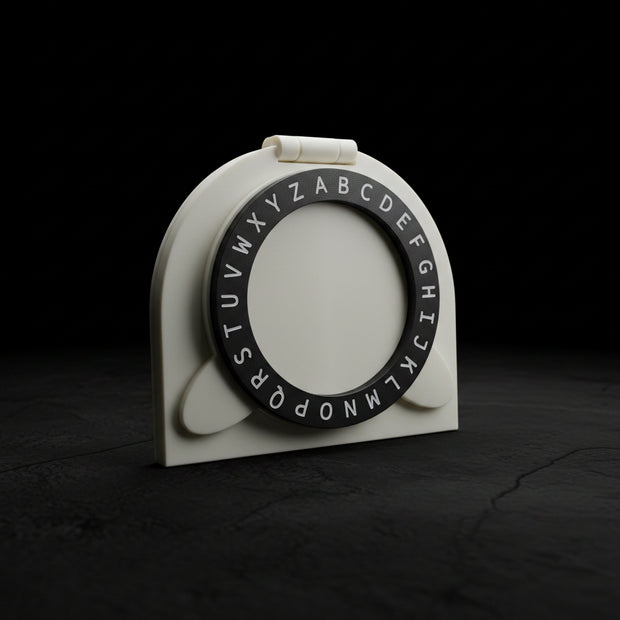
If you prefer a repeatable construction system instead of building the design entirely freehand, compare the sigil-making tools and Sigil Forge methods available in the complete collection.
The construction method can vary without changing the importance of the original statement. Clear language remains the structural foundation of the work.
Continue the Sigil Process
After writing the intention, continue with the full guide to creating, charging, and activating sigils. Then compare charging methods and activation methods before choosing a process that fits the purpose of the symbol.
Sigil work is a spiritual and symbolic practice. It does not guarantee an outcome and should not replace practical, medical, mental health, legal, financial, or safety-related action.
Tools for this practice
Explore the products selected for this guide. Review each listing for what is included and how to use it.


Shop this guide · 4 items Collapse


Keep exploring the shop
You made it to the end of the guide. Keep exploring through related products, major departments, or the full catalog.
 RELATED TO THIS GUIDE
Ritual Supplies & Altar Tools
Shop this topic
RELATED TO THIS GUIDE
Ritual Supplies & Altar Tools
Shop this topic


Leave a comment