


Home Protection Sigil: A Practical Method for Home Wards

A home-protection sigil is a practitioner-created symbol used as a ritual focus for a household boundary, such as a door, window, room, altar space, vehicle, or carried object. It gives a protective intention a visible form so you can place it, revisit it, and connect it to ordinary household boundaries and safety habits.
Quick answer: write one clear household intention, turn it into a personal symbol, charge or focus the sigil through a safe ritual action, place it at a meaningful and permitted boundary, review it periodically, and retire it when it no longer fits the home. Pen and paper are enough for the basic method.
Protection sigils are spiritual and symbolic tools. They do not create a physical barrier and should never replace locks, lighting, smoke detectors, emergency planning, medical care, veterinary care, legal assistance, or professional help when a real threat exists.
Related tools: If you use physical anchors alongside the method below, browse Protection & Warding Tools. A hand-drawn sigil on ordinary paper is sufficient for the core practice.
What a Home-Protection Sigil Is — and What It Is Not
In modern practice, a home-protection sigil is best understood as a symbolic anchor for a household intention. It may represent privacy, peace, safety, clear boundaries, alert judgment, or the protected use of a room.
A ward is the broader boundary or protective working. A sigil is the visual symbol used to represent and reinforce that working. A ward might be expressed through prayer, cleansing, charms, threshold practices, objects, or repeated household routines. A sigil is one adaptable way to give that boundary a specific form.
This distinction matters because a sigil should not be treated as a guaranteed supernatural security system. It can support focus, structure, ritual attention, and a sense of boundary for practitioners who use that kind of work. It cannot promise to prevent crime, stop misfortune, block all harmful influence, replace emergency services, or keep someone physically safe by itself.
Protection Sigil vs. Warding Sigil
The terms often overlap, but they are not always identical.
| Term | Best use | Example |
|---|---|---|
| Protection sigil | A symbol for protection connected to a person, object, room, vehicle, or situation. | A small card carried in a wallet or bag. |
| Warding sigil | A symbol tied to a defined boundary, place, or ongoing protective role. | A removable symbol placed near the inside of an apartment door. |
These are practical distinctions rather than universal rules. Different traditions and practitioners may use the words differently.
Step 1: Write a Clear Household Intention
Begin with one focused statement. A useful home-protection intention should be specific enough to guide both ritual action and ordinary behavior.
Examples include:
- “My home maintains clear and peaceful boundaries.”
- “Only invited and respectful conduct is welcome in this space.”
- “I recognize danger clearly and respond with sound judgment.”
- “This ritual space remains private, calm, and protected.”
- “This threshold reminds me to protect the peace of my home.”
Avoid impossible or fear-based wording. “Nothing bad can ever happen here” is too broad and encourages false certainty. “I maintain clear boundaries and respond wisely” is more usable because it connects the sigil to actions you can actually take.
Step 2: Turn the Intention Into a Sigil
You can use any sigil-making method that fits your practice. For a simple beginner method:
- Write the intention in one short sentence.
- Remove repeated letters if that is part of your method.
- Combine the remaining letters into a single abstract mark.
- Simplify the shape until it is easy to recognize and redraw.
- Place the final symbol on paper, a removable card, or another object you are allowed to use.
Some practitioners prefer enclosed, symmetrical, vertical, or stable-looking shapes for protection work because those forms can suggest containment, boundary, or steadiness. Those design choices are optional. The most important requirement is that you recognize the symbol and understand the boundary it represents.
If you prefer a structured method, you can also build a sigil from meaningful numbers, such as a date, house number, room number, measurement, code, or other personal sequence. Keep this optional; the beginner method does not require a tool or a numerical system.
Step 3: Charge or Focus the Sigil Safely
“Charging” a sigil is a practitioner term for focusing attention, intention, or ritual energy on the symbol before placing or using it. It should not be presented as scientifically proven protection or guaranteed spiritual force.
Use non-burning methods first, especially in apartments, shared homes, homes with pets or children, or households with smoke sensitivity. Safe focusing methods can include:
- holding the sigil and breathing steadily for several minutes;
- reading the intention aloud;
- placing a hand over the sigil while meditating or praying;
- ringing a bell or using sound if that fits your practice;
- placing the sigil on an altar during a quiet ritual period;
- pairing the sigil with a practical action, such as checking a lock, replacing a battery, or cleaning the threshold.
A simple sequence is:
- Clean and inspect the physical area.
- Review the practical boundary connected to the sigil.
- Focus on the symbol for several minutes.
- State the protection intention.
- Place the sigil in its intended location.
- Complete one ordinary safety action connected to that location.
If candle work, incense, resin incense, or smoke is part of your tradition, keep it optional and use strict mundane safety. Use a heat-safe burner or holder, keep the work directly supervised, ventilate the area, keep smoke away from children, pets, and birds, and avoid smoke-based methods when respiratory sensitivity or household rules make them unsuitable. For broader beginner fire-safety framing, see Magic 101: Candle Magic and Simple Spells for Beginners.
Step 4: Where to Place a Home-Protection Sigil
Placement should match the boundary named in the intention. Common locations include:
- near the inside of a front or back door;
- beside a window;
- near a household alarm panel or key area;
- inside a private journal or household book of practice;
- on an altar or near a ritual-room entrance;
- on a card kept in a wallet, bag, or vehicle;
- on a removable plaque, frame, or object rather than directly on property.
Use removable or non-damaging placement in rented spaces. Do not mark public property, shared property, culturally significant objects, another person’s belongings, or structural surfaces without permission.
If you want a fuller household protection routine beyond a sigil, Shield Your Home: Simple Protection Spells for a Safe Household covers threshold wards, contained candle work, and protective jars.
Protection Sigil for a Front Door
A front door is a natural placement for a household ward because it marks the main transition between public and private space. Place the sigil on the inside of the door, on a removable card or plaque beside the entrance, behind a framed object, or near the key area. If the entrance is shared or rented, use a removable placement rather than marking the door itself.
A front-door protection sigil should complement ordinary measures such as working locks, lighting, alarms, and clear household boundaries rather than replace them.
Hidden and Visible Wards
Hidden wards
A hidden sigil may be placed inside a drawer, behind a framed image, in a journal, or on the reverse of a removable object. This approach supports privacy and prevents visitors from handling the symbol.
Visible wards
A visible sigil may be displayed as framed art, an altar plaque, a threshold symbol, or a decorative household object. Visibility can serve as a daily reminder of the behavior and boundaries the household intends to maintain.
Neither method is inherently stronger. Choose the approach that fits the people who share the space.
Historical Context: Protective Marks at Household Boundaries
Historical buildings sometimes contain marks interpreted as ritual protection marks, apotropaic marks, or “witch marks.” Historic England documents examples found near entrances, doorways, windows, fireplaces, and other boundary points in buildings.
That historical context can help explain why thresholds and openings often matter in protection practices: doors, windows, hearths, and entrances are symbolic transition points. However, modern home-protection sigils should not be presented as a direct continuation of every historical mark.
There is also real uncertainty around interpretation. Some hexafoils, daisy wheels, pentangles, Marian marks, burn marks, or scratched symbols are interpreted as protective. Others may be secular geometry, decoration, masons’ marks, carpenters’ marks, practical construction marks, or later reinterpretations. Do not assume every old mark in a building is magical.
Anchor the Sigil to an Object
Long-term wards are often easier to maintain when the sigil is attached to something removable and durable. Options include:
- a wooden or ceramic plaque;
- a stone kept indoors near a threshold;
- a mirror frame;
- a removable door ornament;
- a household key dish;
- a card kept in a private household book;
- a charm or pouch carried by the practitioner.
A durable object keeps the sigil from being accidentally erased and makes periodic inspection easier. It also avoids damaging walls, doors, trim, rented property, or shared surfaces.
Combine the Sigil With Practical Protection
A protection working is most responsible when it reinforces real boundaries and safety measures rather than replacing them.
- Use functioning locks and appropriate lighting.
- Keep emergency numbers and plans accessible.
- Maintain smoke and carbon-monoxide detectors.
- Set clear interpersonal boundaries.
- Document harassment or threats and contact appropriate help.
- Use veterinary, medical, mental health, legal, or emergency services when needed.
The sigil can mark and reinforce these commitments; it cannot replace them. If your practice also uses household botanicals symbolically, Top Five Protection Herbs for Magic compares common protection herbs with beginner guidance and safer contained uses.
Refreshing, Removing, or Retiring a Protection Sigil
Protection sigils may remain in place for months or years. Review them periodically rather than assuming they require constant attention.
Good times to review a home ward include seasonal cleaning, moving, changes in household membership, the start or end of a relationship, a major life transition, or any moment when the original intention no longer feels accurate.
Maintenance may include:
- dusting or repairing the object;
- redrawing a faded symbol;
- repeating the intention;
- checking whether the boundary is still relevant;
- moving the sigil to a better permitted location;
- checking the practical safety measure associated with that area.
Retire a sigil when its purpose changes, the household changes, or the symbol no longer represents the intended boundary. Remove it deliberately, thank or close the practice according to your tradition, and dispose of or repurpose the material responsibly.
Paper may be torn, recycled, or stored when appropriate. Objects may be cleaned and reused. Do not abandon ritual materials in waterways, parks, cemeteries, roadsides, public places, or natural areas.
Optional Tools for a More Structured Practice
The free method above is complete on its own. Pen and paper are enough to create, focus, place, refresh, and retire a home-protection sigil.
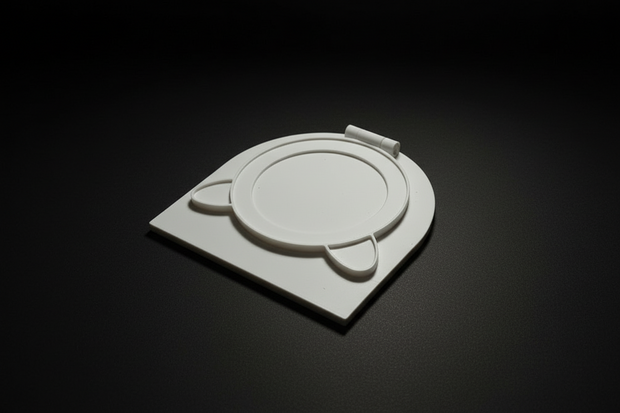
If you want a more structured sigil-making setup, the Sigil Forge Companion Holder can be used as an optional mechanical support for holding Sigil Forge paper steady during construction.
If your method uses numbers, dates, house numbers, measurements, codes, or personally meaningful numerical sequences, the Sigil Forge Codex Ordinem is the more structured numerical option. If you are working in a chaos-oriented or more experimental numerical style, the Sigil Forge Codex Discordia may fit that advanced path better.
For ward-refresh or symbolic home-cleansing work, Peaceful Home Spiritual Cleansing Water may be used as optional external ritual support where label directions and household surfaces allow. Treat it as symbolic support, not as guaranteed protection or a cleaning substitute.
If smoke is appropriate for your household, Peace in the Home Resin Incense may be used as optional atmosphere or ritual support during a home-cleansing or ward-refresh practice. Use smoke only with ventilation, heat-safe equipment, direct supervision, and caution around respiratory sensitivity, children, pets, and birds.
No tool, incense, ritual water, or product is required for the sigil to be meaningful in your practice.
Safety Notes for Incense, Candles, Cleansing Water, Pets, Children, and Surfaces
Keep ritual materials compatible with the actual home you live in.
- Do not leave candles, charcoal, incense, resin incense, or heated materials unattended.
- Use heat-safe burners and stable surfaces.
- Ventilate smoke-based rituals and keep them brief when needed.
- Avoid smoke around birds, sensitive pets, children, and anyone with respiratory sensitivity.
- Follow label directions for ritual waters and external-use products.
- Patch-test before using any water or spray near painted finishes, fabrics, porous surfaces, polished surfaces, floors, or furniture.
- Do not spray ritual water on pets, children, electronics, food-contact surfaces, or surfaces where slipping could become a hazard.
- Do not use ritual products as medical, veterinary, legal, security, or emergency substitutes.
Home-Protection Sigil Checklist
- Choose one household boundary: a door, window, room, altar area, vehicle, or carried object.
- Write one clear intention for that boundary.
- Create a simple symbol from the intention.
- Focus or charge the sigil through breath, prayer, meditation, sound, or another safe method.
- Place the sigil on a removable object near the boundary.
- Pair the placement with one ordinary safety action.
- Review the ward every few months or after a major household change.
- Refresh, move, remove, or retire the sigil when the intention no longer fits.
A home-protection sigil works best as a clear symbolic practice: it names the boundary, focuses the practitioner, and reminds the household to maintain both ritual and practical care. Use it as a warding focus, not as a promise that danger cannot happen or that ordinary safety no longer matters.
If you have tried the free pen-and-paper method and want more structure, start with the Sigil Forge Companion Holder for sigil construction, then add a numerical sigil tool, cleansing water, or incense only if that support genuinely fits your household and practice.
Related Protection & Warding Tools
For readers building a physical home-warding setup, browse Protection & Warding Tools or Sigil Making Tools. These can support a symbolic practice alongside ordinary locks, lighting, maintenance, and other practical home-safety measures.
Tools for this practice
Explore the products selected for this guide. Review each listing for what is included and how to use it.



Shop this guide · 4 items Collapse


Keep exploring the shop
You made it to the end of the guide. Keep exploring through related products, major departments, or the full catalog.
 RELATED TO THIS GUIDE
Ritual Supplies & Altar Tools
Shop this topic
RELATED TO THIS GUIDE
Ritual Supplies & Altar Tools
Shop this topic


Leave a comment