


Tarot Reading vs. Palm Reading: Which Should You Choose?

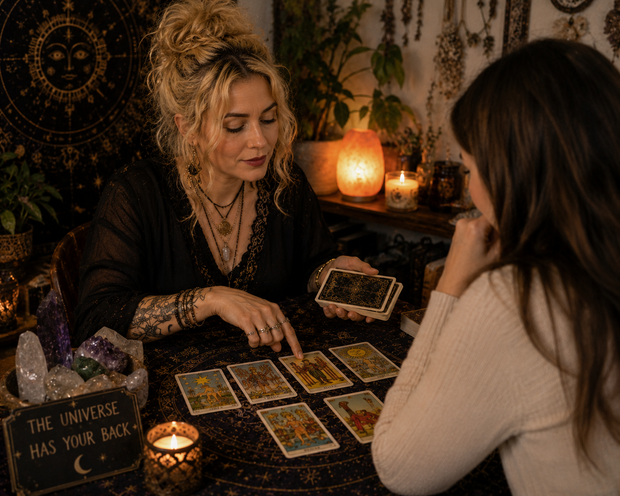
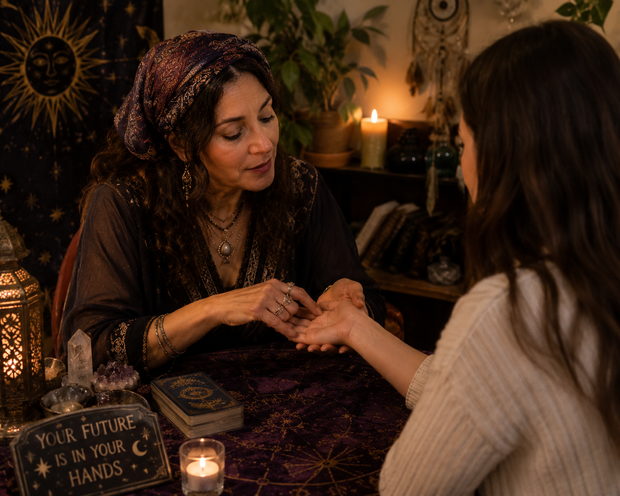
Tarot and palmistry are both forms of divination, but they create different kinds of conversations. Tarot usually begins with cards selected for a question or period of time. Palmistry begins with the visible structure and markings of the hands. Neither is automatically better; the useful choice depends on what you want to explore and how you prefer to participate.
The Main Difference
| Tarot Reading | Palm Reading |
|---|---|
| Uses a deck of symbolic cards | Uses the hands as the primary text |
| Often organized around a current question | Often explores broader traits and patterns |
| Can use a new spread for a new situation | Usually compares stable and changing hand features |
| No physical contact is generally needed | May involve viewing or repositioning the hands |
| Images and positions shape the interpretation | Lines, mounts, fingers, shape, and texture shape the interpretation |
Choose Tarot for a Specific Situation
A tarot reading may be the stronger fit when you want to explore:
- a decision with several options;
- the current condition of a project or relationship;
- patterns influencing the next few weeks or months;
- possible consequences of different choices;
- a structured set of follow-up questions.
Cards can create a fresh symbolic arrangement for each question. This makes tarot flexible, but it also means repeated readings on the same issue can become a search for reassurance rather than new information.
Prepare with How to Prepare for Your First Tarot Reading.
Choose Palmistry for a Broader Personal Reading
A palm reading may be the stronger fit when you are interested in:
- traditional interpretations of hand shape and lines;
- personal tendencies and communication style;
- how the reader compares the two hands;
- features associated with work, relationships, or temperament;
- a reading that begins with the body rather than a separate tool.
Palmistry is often experienced as a more continuous portrait than a question-specific spread. It should still be treated as interpretation, not a medical diagnosis or fixed map of fate.
Prepare with How to Prepare for Your First Palm Reading.
Compare the Kind of Question You Have
| Your Goal | Likely Starting Point |
|---|---|
| I need perspective on a current decision | Tarot |
| I am curious about traditional hand symbolism | Palmistry |
| I want to compare several possible paths | Tarot |
| I want a broad personal overview | Palmistry |
| I do not want physical contact | Tarot, or request touch-free palmistry |
| I want to learn a divination system myself | Either, depending on the system that interests you |
Privacy and Consent
Both readings involve personal information. Tarot questions can reveal relationship, financial, family, and emotional concerns. Palm readings may feel intimate because the reader studies your hands and may request to reposition them.
You may decline a subject, refuse touch, ask that photographs not be taken, or end a line of questioning. A reader should not use either method to claim unquestionable access to another person’s private thoughts. Read The Ethics of Divining About Other People.
Which Reading Is More Predictive?
Neither method can guarantee the future. Both can be practiced in predictive styles, psychological styles, spiritual styles, or combinations. Ask the reader how the session is approached before expecting exact dates or fixed outcomes.
A useful reading identifies patterns, choices, conditions, and questions you can carry into ordinary life. It does not remove your responsibility to gather evidence and make decisions.
Which Can Be Repeated More Often?
Tarot can be applied to new questions frequently, but the same question should not be repeated until a preferred answer appears. Palmistry is often revisited after enough time or life change has occurred to make comparison meaningful. There is no universal schedule.
See How Often Should You Get a Tarot or Palm Reading?.
Can You Book Both?
Yes, but decide what each session is meant to contribute. One approach is to use palmistry for the broad portrait and tarot for a current decision. Another is to choose one first, reflect on it, and book the other later only when it addresses a genuinely different question.
More tools do not automatically create more certainty. Leave room to act on what you already learned.
Explore In-Store Readings
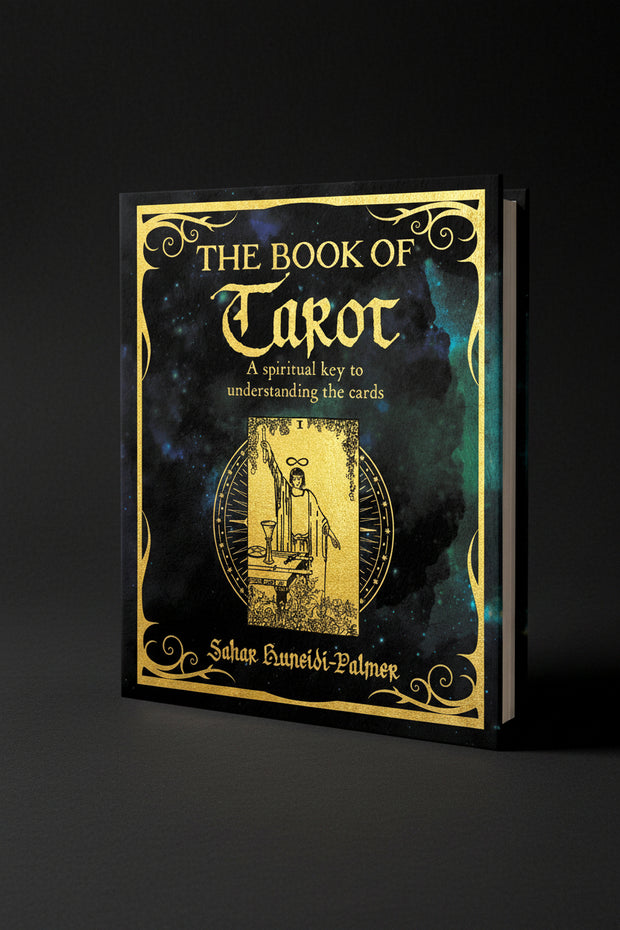
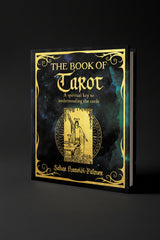
Compare current options through our Tarot Readings, Palm Readings, and complete In-Store Services pages. Those interested in learning tarot can browse the Occult Tarot Deck, while palmistry students can examine a Palmistry Hand Statue.
Frequently Asked Questions
Is tarot better for yes-or-no questions?
Tarot can be adapted to yes-or-no formats, but questions about conditions, choices, and likely consequences usually provide more useful information.
Does palmistry reveal my entire future?
No. Palmistry is a traditional interpretive system, not a complete or infallible record of future events.
Which reading is more private?
Privacy depends on the questions, setting, and reader. Tarot normally requires no touch, while palmistry can be requested without touch when needed.
Can Christians or people from other religions receive a reading?
People approach readings from many beliefs or from simple curiosity. Decide according to your own convictions and boundaries; no belief or practice should be forced on you.
Do I need experience with divination?
No. The reader should explain the method and answer reasonable questions about the process.
What if I choose the wrong type?
There is no permanent wrong choice. Select the method that best fits your present goal and evaluate the experience afterward.
Choose the Conversation You Need
Choose tarot when a current question, decision, or changing situation is central. Choose palmistry when traditional hand symbolism and a broader personal portrait interest you. In either case, maintain consent, realistic expectations, and the freedom to make your own decisions.
Tools for this practice
Explore the products selected for this guide. Review each listing for what is included and how to use it.
Shop this guide · 3 items Collapse
Keep exploring the shop
You made it to the end of the guide. Keep exploring through related products, major departments, or the full catalog.


Leave a comment