


What Does Liminal Mean in Witchcraft? Thresholds, Times & Liminal Spaces

Liminal means transitional: at a threshold between a former condition and a new one. In witchcraft, the word may describe a doorway, a time such as twilight, the middle of a ritual, or a period of personal change. It does not automatically mean haunted, paranormal, or dangerous.
That distinction matters because three different ideas now circulate under the same label: the anthropological concept of liminality, the modern occult use of thresholds, and the internet aesthetic of empty hallways and abandoned rooms. They overlap, but they are not interchangeable.
Where does the word liminal come from?
Liminal comes from the Latin limen, meaning threshold. Merriam-Webster defines it in terms of an intermediate or transitional state, place, or condition.
The concept became important in anthropology through Arnold van Gennep’s study of rites of passage. He described a common three-part pattern:
- Separation: a person leaves an earlier role or condition.
- Transition: the person is no longer what they were but has not fully entered the new role.
- Incorporation: the person returns to ordinary social life with a recognized new status.
The middle phase is the liminal one. Victor Turner later developed the idea further, including the temporary suspension of ordinary rank and the intense group connection he called communitas. The EBSCO overview of liminality provides a useful introduction to that intellectual history.
What is a liminal space?
In its broadest sense, a liminal space is used for passage rather than permanent occupation: a doorway, bridge, gate, stairwell, airport, waiting room, shoreline, or road junction. Its identity depends on what it connects. A doorway is meaningful because it separates and joins two rooms; a shoreline is continually negotiated by land and water.
Popular “liminal space” photography uses empty schools, hotels, malls, and corridors to evoke nostalgia or unease. That aesthetic is not the same thing as ritual liminality. An empty hallway can look uncanny without functioning in a rite of passage, while a joyful wedding ceremony can be deeply liminal without looking eerie.
What does liminal mean in witchcraft?
Modern witches commonly use the term in three related ways:
- Physical thresholds: doors, windows, gates, property lines, crossroads, bridges, caves, wells, and shores.
- Temporal thresholds: dawn, dusk, midnight, a new year, a seasonal turning point, or the period surrounding a major life change.
- Ritual thresholds: the interval after a rite has opened but before it has closed, or the symbolic movement from an old identity toward a new one.
These are interpretive categories, not proof that a literal portal has opened. A practitioner may treat a boundary as spiritually significant while still recognizing ordinary architecture, psychology, light conditions, expectation, and cultural convention.
Is threshold magic the same as liminality?
No. Liminality describes an in-between condition. Threshold magic is a family of practices performed at or around boundaries. A threshold ward, for example, is usually intended to regulate entry; a rite of passage uses a threshold to mark transformation. One protects a boundary, while the other dramatizes movement across it.
Our existing guide to threshold magic and boundary wards covers removable wards, household safety, and practical security. A Threshold Clearing Bundle can support that kind of contained household practice, but the objects do not make a doorway supernatural or replace locks, lighting, smoke alarms, or other real protections.
What is not automatically liminal?
Darkness, age, abandonment, fog, silence, and unusual architecture can make a place feel uncanny, but atmosphere alone does not establish a transition. A graveyard is not merely “between worlds” in every religion. A mirror is reflective, not automatically a gateway. Three o’clock in the morning is not a universal supernatural hour.
The best question is not “Does this look occult?” but “What two conditions, roles, places, or times does this connect?” If there is no meaningful before and after, boundary, passage, or suspended status, liminal may be functioning only as an aesthetic adjective.
Frequently asked questions
Are liminal and subliminal the same?
No. Both descend from the idea of a threshold. Liminal concerns the threshold or an in-between state; subliminal usually means below a threshold of conscious perception.
Can a person be liminal?
A person can be in a liminal period, such as graduation, relocation, initiation, divorce, retirement, bereavement, or another change in recognized role. It is better to describe the situation than to romanticize people as permanently mysterious outsiders.
Is liminality dangerous?
Not inherently. Transitions can feel uncertain, and some physical locations—roads, abandoned buildings, shorelines, caves, or isolated places—carry ordinary hazards. Address those hazards directly instead of attributing them to liminality.
Are dreams liminal?
Falling asleep and waking are transitions in consciousness, so practitioners often describe them as liminal. That symbolic description does not make every dream prophetic or every half-awake perception an external message.
Do I need a deity or special tool?
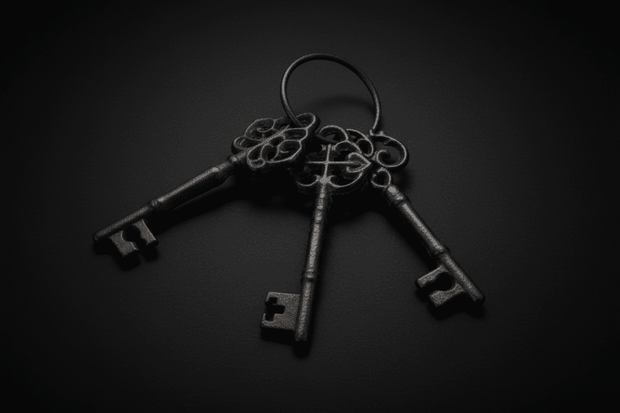
No. Liminality is a framework for understanding passage. Deities, candles, bells, keys, mirrors, and ritual supplies acquire meaning through a particular tradition or deliberate practice; they do not create liminality by themselves.
From here, the most useful questions are specific. Our series continues with why crossroads are treated as liminal, how liminal times differ, and a three-part ritual for marking life transitions.
Tools for this practice
Explore the products selected for this guide. Review each listing for what is included and how to use it.

Shop this guide · 4 items Collapse


Keep exploring the shop
You made it to the end of the guide. Keep exploring through related products, major departments, or the full catalog.
 RELATED TO THIS GUIDE
Ritual Supplies & Altar Tools
Shop this topic
RELATED TO THIS GUIDE
Ritual Supplies & Altar Tools
Shop this topic


Leave a comment