


What Retrogrades Actually Mean in Astrology: Mercury, Venus, Mars, and the Outer Planets

Few astrology terms create as much immediate anxiety as retrograde. A delayed message becomes “Mercury retrograde.” A difficult conversation becomes “Venus retrograde.” A broken appliance, missed exit, or forgotten password can quickly be treated as evidence that a planet is causing chaos.
The reality is more grounded. Retrograde motion is an apparent change in a planet’s movement across the sky as viewed from Earth. The planet does not physically reverse its orbit. The effect comes from the changing positions and speeds of Earth and the other planet. Astrology then gives symbolic meaning to that apparent reversal.
Astrology is an interpretive practice, not a scientifically proven system for predicting events. Retrogrades can be useful as prompts for review and observation, but they should not become excuses, guarantees, or reasons to avoid necessary decisions.
What Does Retrograde Motion Mean Astronomically?
Most planets normally appear to travel eastward through the zodiac against the background stars. At certain points, a planet appears to slow, stop, move backward, stop again, and then resume forward motion. These apparent stopping points are called stations.
For outer planets, retrograde motion occurs when faster-moving Earth overtakes them in its orbit. The visual effect is similar to passing a slower vehicle: from inside the faster vehicle, the other one may briefly appear to move backward even though both continue forward.
This distinction matters. The astronomical event is observable. The spiritual or astrological meaning assigned to it is symbolic.
What Does Retrograde Mean in Astrology?
Many astrologers interpret a retrograde as a period when the functions associated with a planet become more internal, reflective, delayed, revised, repeated, or less straightforward. Words beginning with “re” are often used: review, reconsider, revise, reconnect, repair, renegotiate, or release.
That does not mean nothing new can begin. It means that extra attention, flexibility, and follow-through may be useful. The natal chart, current transits, and real circumstances matter more than a social-media warning about one planet.
For broader chart context, see How to Read a Birth Chart for Beginners.
Mercury Retrograde
Mercury is associated in astrology with communication, information, writing, learning, transportation, schedules, devices, trade, and short-distance movement. During Mercury retrograde, astrologers often pay attention to misunderstandings, revisions, delayed information, renewed conversations, and overlooked details.
Practical responses include:
- Proofread important messages and documents.
- Confirm dates, addresses, and appointment times.
- Back up essential files.
- Allow extra travel time when possible.
- Ask questions before assuming intent.
- Revisit unfinished writing, study, or administrative work.
These are sensible habits at any time. Mercury retrograde can simply act as a recurring reminder to use them.
Venus Retrograde
Venus is associated with relationships, attraction, values, pleasure, aesthetics, money, reciprocity, and self-worth. Venus retrograde periods are often interpreted as invitations to reassess what and whom a person values.
Past relationships or old preferences may return to attention, but their reappearance does not prove they should be restored. A more useful question is what the return reveals. Has your value system changed? Is an old pattern still appealing, or merely familiar? Are financial and relational choices aligned with what you now consider worthwhile?
Mars Retrograde
Mars is associated with action, drive, conflict, assertion, competition, desire, and the use of force. When Mars is retrograde, astrologers may describe motivation as uneven, redirected, internalized, or in need of strategic revision.
This is not a command to become passive. It can be a time to examine how action is being taken. Is effort scattered? Is anger communicating a boundary that has not been stated? Does a conflict require direct action, patient planning, or disengagement?
Jupiter Retrograde
Jupiter is associated with growth, belief, opportunity, education, meaning, confidence, law, and worldview. Its retrograde period is often interpreted as an inward review of beliefs and definitions of success.
Rather than assuming external expansion will stop, consider whether growth needs to become more selective. Which opportunity is genuinely meaningful? Which belief has become too broad, inflated, or disconnected from experience?
Saturn Retrograde
Saturn is associated with responsibility, limits, time, discipline, authority, and durable structure. Saturn retrograde may be read as a period for reviewing obligations, boundaries, systems, and internalized authority.
It can be especially relevant during a Saturn return, when Saturn may cross its natal degree multiple times. Repeated contact is not repeated punishment. It can represent several stages of the same structural review.
Uranus, Neptune, and Pluto Retrograde
The outer planets spend substantial portions of each year retrograde, so their retrogrades are not rare emergencies. Astrologers generally treat them as slower collective or generational processes, becoming more personally noticeable when they closely contact a natal planet or angle.
- Uranus retrograde: internal change, restlessness, liberation, disruption, and reconsideration of independence.
- Neptune retrograde: reflection on imagination, ideals, spirituality, confusion, projection, and boundaries.
- Pluto retrograde: long-term examination of power, control, compulsion, loss, and transformation.
These keywords are interpretive possibilities, not guaranteed events.
What Is a Retrograde Shadow Period?
Astrologers sometimes track the degrees a planet will cross before, during, and after retrograde. The pre-retrograde shadow begins when the planet first enters the zodiac territory it will later revisit. The post-retrograde shadow ends when the planet moves beyond that territory after turning direct.
This framework is used to follow a developing sequence: an issue appears, is reconsidered during retrograde, and is addressed again afterward. Not every practitioner uses shadow periods, and they should not be treated as an endless extension of danger.
Natal Retrograde Planets
A planet can also be retrograde in a birth chart. Natal retrogrades are often interpreted as making that planet’s functions more internalized, unconventional, delayed, private, or subject to personal revision. This does not make the planet broken.
A natal Mercury retrograde, for example, does not mean someone cannot communicate. It may be interpreted as a distinctive thinking process, greater internal editing, or a need to develop communication in an individual way. As explained in Are There Bad Astrology Placements?, complexity is not the same as defect.
What Not to Do During a Retrograde
The most important caution is not to surrender judgment to the transit. Avoid:
- Blaming every inconvenience on a planet.
- Ignoring medical, legal, financial, or technical expertise.
- Staying in unsafe situations because the timing seems astrologically imperfect.
- Assuming an ex-partner’s return proves destiny.
- Using retrograde language to avoid accountability.
- Postponing every new beginning out of fear.
A Practical Retrograde Check-In
- Name the planet and the real-life topic you associate with it.
- Write down observable facts before adding interpretation.
- Identify what needs review, correction, clarification, or completion.
- Decide what action is available now.
- Record the result so you can evaluate the interpretation later.
This keeps astrology connected to discernment rather than superstition.
Frequently Asked Questions
Does Mercury retrograde cause technology to break?
There is no scientific evidence that Mercury’s apparent retrograde motion causes device failures. Astrologers may use the period symbolically to emphasize communication and technical review, but ordinary maintenance and probability still apply.
Can I sign a contract during Mercury retrograde?
Yes. Read it carefully, ask questions, preserve copies, and seek qualified legal advice when appropriate. Those practices matter more than avoiding a calendar period.
Should I avoid starting a relationship during Venus retrograde?
No universal rule is necessary. Move at a reasonable pace, communicate clearly, and evaluate the relationship by behavior and compatibility rather than astrology alone.
Are retrogrades always negative?
No. Many astrologers associate them with reflection, retrieval, repair, and insight. Even delays can reveal missing information or improve a decision.
Why are outer planets retrograde so often?
The apparent motion results from the relative orbital positions of Earth and the planet. Because the outer planets move slowly, their retrograde periods last longer and occur regularly.
Review Without Fear
A retrograde is not a cosmic ban on living. Astronomically, it is a change in apparent motion. Astrologically, it can serve as a symbolic period of review. Used with common sense, it encourages attention and reflection. Used fearfully, it can turn ordinary uncertainty into paralysis. The choice is not whether to live under a retrograde, but whether to meet the period with clearer observation.
Track Patterns Instead of Blaming Planets
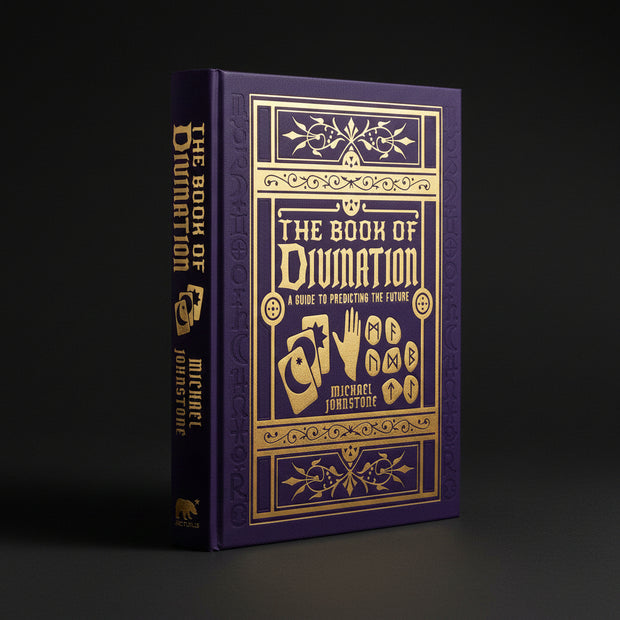
Use the Book of Divination or our Divination Tools collection to record dates, observations, revisions, and results. These tools support symbolic study; they do not prove that a retrograde caused an inconvenience or forbid necessary action.
Tools for this practice
Explore the products selected for this guide. Review each listing for what is included and how to use it.
Shop this guide · 1 item Collapse

Keep exploring the shop
You made it to the end of the guide. Keep exploring through related products, major departments, or the full catalog.


Leave a comment