


Why Repetition Matters in Ritual: Rhythm, Discipline, Habit, and When to Stop

Repetition gives ritual rhythm. A prayer becomes familiar, a gesture becomes easier, a weekly practice becomes part of household life, and a multi-day working creates a defined period of attention. Repetition can build skill and commitment—but it can also become compulsive checking when every anxious thought demands another candle, cleansing, reading, or restart.
The important question is not whether repetition is powerful in the abstract. It is what the repetition is designed to do, how long it will continue, and what tells you the cycle is complete.
What Repetition Can Do
Repeated ritual can serve several practical and symbolic functions:
- Learning: making unfamiliar words, movements, or sequences easier to remember.
- Attention: returning to a chosen purpose over time.
- Discipline: practicing even when the experience is not dramatic.
- Devotion: maintaining a relationship through regular prayer, offerings, study, or service.
- Timing: creating a seven-day, monthly, seasonal, or annual container.
- Habit support: pairing ritual with a real behavior.
- Community: allowing a group to gather through a shared calendar.
- Evaluation: providing enough repeated observations to compare results.
These functions are meaningful without assuming that doing something more times automatically makes it metaphysically stronger.
Repetition Is Not the Same as Intensity
A quiet practice repeated weekly can become more stable than one overwhelming ritual performed once. Consistency allows the practitioner to notice details, improve technique, and reduce the pressure to manufacture a dramatic emotional peak.
Intensity can be appropriate for certain rites, but it should not be confused with effectiveness. Exhaustion, sleep loss, pain, smoke exposure, financial strain, and emotional flooding are not proof that the work is deep.
Three Main Types of Ritual Repetition
Repetition within one ritual
A phrase, chant, gesture, circuit, bell strike, breath, or petition may be repeated several times during one session. The number can come from tradition, symbolism, rhythm, or practical duration.
Repetition across several days
A candle, prayer, petition, cleansing, or devotional act may continue for a fixed series such as three, seven, nine, or thirty days. The value lies partly in maintaining a defined period rather than seeking instant certainty.
Recurring maintenance
Some practices return weekly, monthly, seasonally, or annually: altar cleaning, household blessing, memorial observance, divination review, or religious festival.
Each type needs a different end condition. A seven-day working should end after seven days unless intentionally revised. A weekly devotional practice may continue until the practitioner freely changes it.
Why Numbers Repeat in Ritual
Numbers can carry religious, cultural, mathematical, personal, or aesthetic associations. Three, seven, nine, thirteen, forty, and other numbers appear in many distinct traditions, but their meanings are not interchangeable.
Before using a number, ask:
- Does it come from the tradition I am following?
- Is it connected with a text, deity, festival, or community practice?
- Is it a personal structure I chose for convenience?
- Can I safely complete that number of repetitions?
“Repeat nine times” is not automatically stronger than three. More repetition can simply create more fatigue and more opportunities for distraction.
Repetition as Skill Practice
Ritual contains learnable skills: reading aloud, handling tools safely, remembering a sequence, focusing attention, singing, meditation, movement, recordkeeping, and closing a space.
Repeat the skill before adding more complexity. A beginner may benefit from practicing one opening and closing several times rather than collecting ten elaborate rituals that never become familiar.
Use Ritual Recordkeeping to document which parts become clearer and which remain difficult.
Repetition and Habit
A ritual can become a cue for action:
- lighting an LED candle before writing;
- speaking a financial intention before reviewing accounts;
- ringing a bell before weekly cleaning;
- holding a stone before practicing a boundary statement;
- writing a petition before completing an application.
The ritual does not perform the behavior for you. It marks the transition into the behavior and helps make the sequence easier to remember.
Planned Repetition vs. Anxiety-Driven Repetition
Planned repetition has a purpose, schedule, and ending. Anxiety-driven repetition begins because the practitioner feels unable to tolerate uncertainty.
| Planned repetition | Anxiety-driven repetition |
|---|---|
| The schedule is chosen before beginning. | The ritual is repeated whenever fear rises. |
| Missing a session can be recorded and addressed calmly. | Missing a session feels dangerous or unforgivable. |
| There is a defined review date. | Results are checked constantly. |
| The method can be changed when evidence requires it. | Changing the method feels like inviting harm. |
| Practical action continues alongside ritual. | Ritual replaces action and reassurance never lasts. |
If repetition brings only brief relief before another urgent need to repeat, pause. More ritual may strengthen the reassurance loop rather than resolve the concern.
See Can Doubt Ruin a Spell? for guidance on doubt, checking, and letting go.
How to Design a Repeated Working
- Name the purpose. What should the cycle support?
- Choose the unit. One phrase, one session, one day, one week, or one season.
- Choose the number. Use tradition, symbolism, or a practical schedule you can explain.
- Set a maximum duration. Decide when the cycle ends.
- Name the practical action. What will you do outside ritual?
- Define the review. What evidence will you examine?
- Plan missed sessions. Continue, reschedule, or close—without panic.
What to Do if You Miss a Day
A missed session does not automatically ruin the work. Choose one of three responses:
- Continue: resume at the next planned time and note the gap.
- Extend: add one session at the end when the exact count matters to your chosen structure.
- Close and restart: appropriate when the tradition specifically requires an uninterrupted sequence and you freely choose to begin again.
Do not restart repeatedly because ordinary life interrupted an optional personal practice. A sustainable method must be able to survive reality.
When Repetition Supports Devotion
Devotional practice often relies on return rather than novelty. Regular prayer, offerings, hymns, study, and acts of service can deepen familiarity and relationship.
Routine does not mean every session will feel emotionally powerful. Quiet consistency can be part of the devotion. At the same time, no deity, spirit, teacher, or community should use missed practice to justify threats, financial pressure, or demands that harm your health.
When Repetition Supports Protection
Protection is often better maintained through routine than emergency escalation:
- check locks regularly;
- clean entrances;
- review boundaries;
- replace damaged charms;
- update passwords;
- inspect smoke detectors;
- repeat a simple household blessing on a manageable schedule.
Repeated cleansing without correcting the physical or interpersonal source of a problem may create activity without protection.
When Repetition Supports Divination
Repeated practice can improve familiarity with a deck, rune set, or symbolic system. Repeating the same question, however, usually produces noise.
Better repetition:
- one daily card with a written reflection;
- the same spread used monthly for comparison;
- regular study of one symbol;
- scoring predictions after a defined deadline.
Less useful repetition:
- drawing until the desired answer appears;
- consulting several tools about the same fear;
- adding unlimited clarifiers;
- checking another person’s thoughts repeatedly.
Read How to Ask Better Divination Questions for healthier limits.
Signs It Is Time to Stop
End or pause the repetition when:
- the planned cycle is complete;
- the goal has been reached or is no longer wanted;
- new evidence requires a different plan;
- the practice is harming sleep, finances, health, or relationships;
- the materials have become unsafe;
- the ritual creates escalating fear;
- you are repeating only to feel certain;
- the real-world action has been avoided.
Stopping does not erase what was learned. A deliberate ending is part of good ritual structure.
A Simple Closing Review
- How many sessions were planned and completed?
- What changed in skill, attention, or behavior?
- What observable outcome occurred?
- What remained outside your control?
- Which part should be continued as routine?
- Which part should not be repeated?
Our guide What Happens After You Cast a Spell? provides a broader post-working review.
Tools for Sustainable Repetition
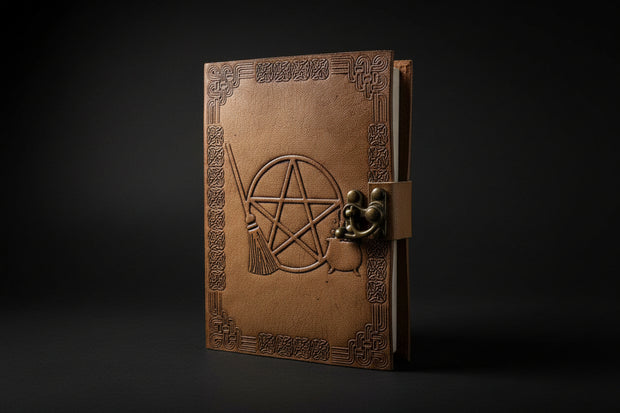
A dedicated record such as the Pentagram Broom Leather Journal can track schedules, missed sessions, and outcomes. Explore Ritual Supplies for simple, reusable tools rather than rebuilding an elaborate setup for every session.
Frequently Asked Questions
How many times should I repeat a phrase?
Use a number connected with your tradition or choose a practical count that maintains attention without strain. There is no universal strongest number.
Does missing one day break a ritual?
Not automatically. Follow the rules of the specific tradition or record the gap and continue your personal practice calmly.
Is a longer ritual cycle more powerful?
Not necessarily. Longer cycles require more maintenance and can increase fatigue. Match duration to purpose.
Can repetition become harmful?
Yes. Pause when it becomes compulsive, financially damaging, physically unsafe, or a replacement for professional help and practical action.
Should I repeat a spell that did not work?
Review the original goal, method, timeframe, and practical actions first. Repeating unchanged work without new information may only repeat the same problem.
Return With Purpose
Repetition matters because it creates rhythm, learning, and continuity—not because quantity automatically overpowers reality. Decide the purpose, schedule, and ending before you begin. Repeat what builds skill and meaning, and stop when repetition becomes fear.
Tools for this practice
Explore the products selected for this guide. Review each listing for what is included and how to use it.
Shop this guide · 1 item Collapse

Keep exploring the shop
You made it to the end of the guide. Keep exploring through related products, major departments, or the full catalog.
 RELATED TO THIS GUIDE
Ritual Supplies & Altar Tools
Shop this topic
RELATED TO THIS GUIDE
Ritual Supplies & Altar Tools
Shop this topic


Leave a comment