


Choosing a Baphomet Statue or Altar Symbol: Size, Meaning & Placement

Baphomet can appear on an altar as a statue, engraved tile, printed sigil, candle, medallion, or votive holder. The best form depends on the practitioner’s purpose, available space, privacy needs, budget, and fire-safety requirements—not on a universal rule.
No Baphomet image is required for Satanism. The familiar goat-headed figure and the Sigil of Baphomet have related modern uses, but they are different visual forms with distinct histories.
What Does Baphomet Represent?
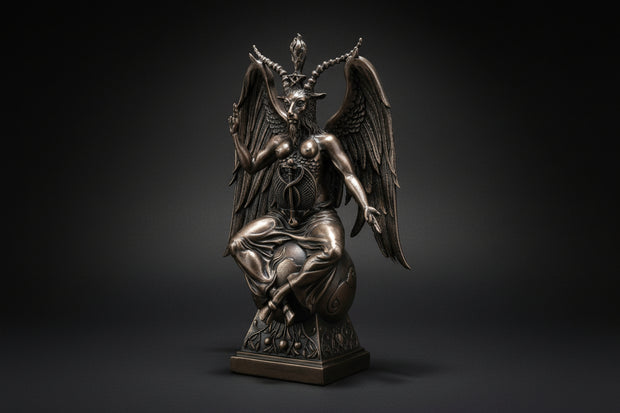
Éliphas Lévi’s nineteenth-century Baphomet image combined human, animal, male, female, celestial, and earthly features. Modern interpretations often emphasize polarity, balance, transformation, embodied existence, forbidden knowledge, or reconciliation of apparent opposites.
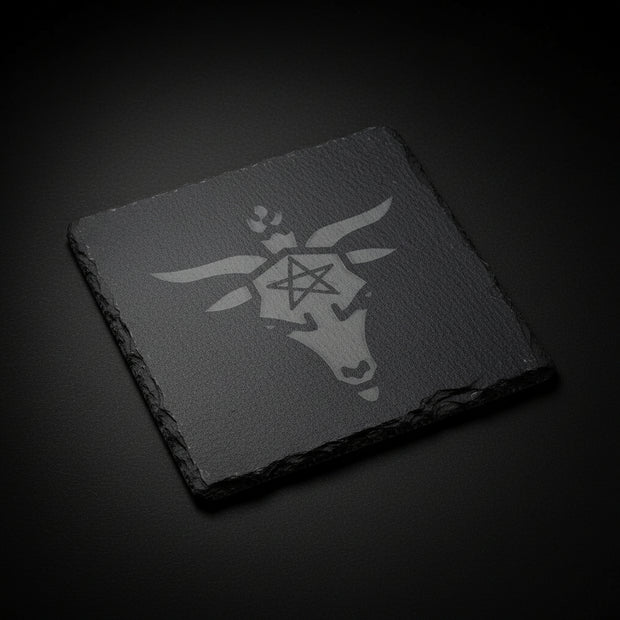
The Church of Satan later popularized the Sigil of Baphomet, a goat’s head within an inverted pentagram surrounded by Hebrew letters spelling Leviathan. For the full history, see Sigil of Baphomet Meaning.
Baphomet is not understood identically in every occult, Satanic, artistic, or political context. Avoid presenting one modern interpretation as the only historically correct theology.
Choosing the Form of the Symbol
Engraved Altar Tile
A flat Baphomet engraved slate altar tile is useful when surface space is limited or the complete sigil is more important than a three-dimensional figure. It can lie flat beneath a non-scratching object or stand upright in a compatible display holder.
Miniature Statue
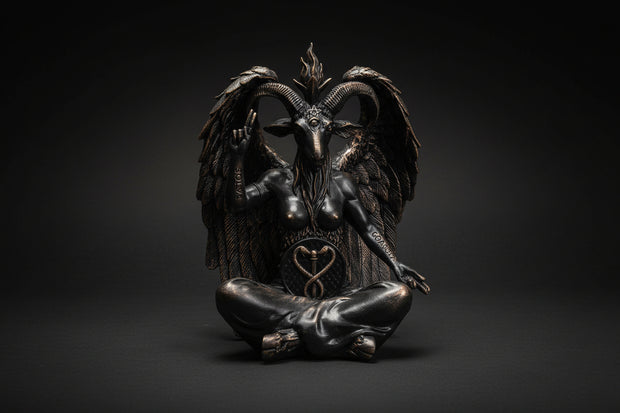
A mini Baphomet statue creates a recognizable focal point without dominating a shelf or small altar. It is easier to store than a larger figure, although it is still a fragile object that needs protective packing.
Medium Statue
An 8-inch Baphomet statue works as a central display piece when there is enough depth and height around it. Measure the actual shelf, including clearance above horns and wings, before purchasing.
Votive Holder
A Baphomet votive holder combines symbolic imagery with a light source. Confirm the compatible candle type, place it on a heat-resistant surface, and keep the figure away from cloth, books, shelves, and decorations.
Sculptural Candle
A Baphomet sculptural candle can be displayed unlit or burned as a consumable ritual object. If lit, place it on a wide fireproof plate that can contain dripping wax and never leave it unattended.
How to Choose the Right Size
- Measure first. Record shelf width, depth, height, and the space required to handle the object safely.
- Decide the visual hierarchy. A central statue needs more negative space than a secondary symbol.
- Consider storage. A piece used only during ritual needs a padded container large enough for projecting details.
- Account for weight. Confirm that shelves, wall mounts, and display stands can support the object.
- Protect privacy. A tile or small figure is easier to put away than a large sculptural piece.
- Leave flame clearance. No statue or tile should crowd a candle, incense burner, or heated surface.
Placement on a Satanic Altar
Central Focal Point
Place one statue, tile, or printed symbol at the back center so it remains visible without reducing the working area. A clear focal point is usually stronger than several competing Baphomet objects.
Flat Working Surface
An altar tile may define the center of the working surface, but avoid placing liquids, oily tools, abrasive objects, or hot containers directly on it unless the care instructions permit it.
Paired Lighting
Candles may stand to either side with generous clearance. Read Satanic Candle Colors and Fire Safety before adding live flame.
Temporary Setup
Place the symbol only for the duration of a ritual, then return it to padded storage. Temporary setups are fully valid and can be safer in shared homes.
Material and Care Considerations
- Dust detailed resin with a soft dry brush rather than soaking it.
- Lift statues from their base instead of horns, wings, limbs, or decorative projections.
- Use felt or another non-scratching barrier between slate and delicate furniture.
- Keep ritual oils away from porous stone, paint, and resin unless care directions permit contact.
- Allow candle wax and holders to cool completely before moving them.
- Photograph the original arrangement if you want to recreate a temporary altar later.
Choose by Purpose, Not Pressure
For historical study, a printed image may be sufficient. For a compact altar, a tile or mini statue is usually practical. For a permanent display, a larger statue may suit the space. For candle-focused practice, a votive holder or sculptural candle can connect the imagery with ritual lighting.
Buying the largest or most elaborate object does not make a practice more sincere. The symbol should support attention and meaning without creating debt, clutter, or unsafe conditions.
Frequently Asked Questions
Does a Satanic altar need a Baphomet statue?
No. A journal, mirror, personal artwork, printed sigil, or another meaningful object can serve as the focal point.
Is Baphomet the same as Satan?
Not in every system. Their relationship varies across historical, occult, artistic, and modern Satanic interpretations.
Should a Baphomet statue face a particular direction?
No universal directional rule exists. Choose a placement that is stable, visible, and meaningful within the practitioner’s own framework.
Can a Baphomet candle be kept without burning it?
Yes. A sculptural candle can be treated as a display object. If it is burned, fire safety and the product directions take priority.
Related Reading
Tools for this practice
Explore the products selected for this guide. Review each listing for what is included and how to use it.

Shop this guide · 4 items Collapse


Keep exploring the shop
You made it to the end of the guide. Keep exploring through related products, major departments, or the full catalog.


Leave a comment