


How to Write a Ritual From Beginning to End

A ritual is more than a list of ingredients followed by a dramatic final action. It is a sequence that moves participants from ordinary preparation into a defined sacred, symbolic, devotional, or magical activity—and then returns them safely to ordinary life.
Writing the entire sequence before beginning reduces forgotten tools, unclear transitions, unsafe improvisation, and rituals that open strongly but never truly close.
Begin With One Clear Purpose
Write the purpose in one sentence. Avoid combining every concern into one working.
Useful forms include:
- to mark the end of a difficult season;
- to dedicate a new journal to study;
- to offer gratitude within a devotional practice;
- to establish a household boundary;
- to support courage before a practical action;
- to celebrate a seasonal observance;
- to formally close an earlier working.
The purpose should describe what the ritual is for without promising impossible control over other people or guaranteed outcomes.
Name the Ritual’s Context
Before writing steps, identify:
- the tradition, author, community, or personal system;
- whether the ritual is devotional, magical, commemorative, initiatory, seasonal, or educational;
- whether it is solitary or shared;
- whether participants already understand the symbols;
- what authority or training the rite requires;
- what must remain private;
- what practical action accompanies the ritual.
A personal modern ritual should be labeled as such. A translated historical rite should preserve its source, omissions, and adaptations.
Set the Constraints Before the Materials
List the limits of the actual space:
- available time;
- mobility and energy;
- fire and smoke rules;
- ventilation;
- pets and children;
- noise and privacy;
- budget;
- cleanup and disposal;
- participant consent and accessibility;
- emergency exits and safe movement.
A ritual designed for the room you have is stronger than one copied from an idealized temple setting.
Build the Ritual in Seven Parts
1. Preparation
Preparation includes research, gathering materials, cleaning the area, checking safety, notifying participants, arranging accessibility, and deciding what happens if the ritual is interrupted.
Create a checklist:
- tools and materials;
- spoken text or music;
- water and fire extinguisher where needed;
- stable holders and heat-resistant surfaces;
- allergy and fragrance information;
- offering and disposal plan;
- phone, door, lighting, and privacy settings;
- aftercare supplies;
- recordkeeping method.
2. Entry or transition
The transition tells the body and attention that the ritual is beginning. It may involve washing hands, changing lighting, sounding a bell, taking measured breaths, crossing a marked threshold, reading an opening statement, or simply becoming silent.
Keep it proportionate. A five-minute personal rite may need one breath and one sentence, not a ceremonial procession.
3. Opening
The opening establishes the ritual’s scope. Depending on the tradition, it may include:
- naming the purpose;
- prayer or invocation;
- casting a circle;
- acknowledging directions, elements, ancestors, deities, or place;
- stating consent and group boundaries;
- lighting a candle;
- creating silence.
Do not include beings, quarters, deities, or authorities merely because an opening feels incomplete without them. Use only what belongs to the method.
4. Central action
This is the work the ritual exists to perform. It might be an offering, anointing, written petition, symbolic release, oath, blessing, divination, meditation, chant, shared meal, burial, dedication, or creation of an object.
Write the action in precise order. Include quantities, handling instructions, spoken words, pauses, and who performs each step.
5. Integration or response
After the main action, allow time for the meaning to settle. This may involve silence, journaling, a final prayer, sharing observations, receiving an oracle within an established method, or simply watching a candle for a defined period.
Do not force a sign, message, or emotional climax. A ritual can be complete without dramatic sensation.
6. Closing
The closing ends the ritual relationship or formal space that was opened. Reverse only the steps that the tradition actually requires.
A closing may include:
- thanks and dismissal;
- formal release of a circle or boundary;
- extinguishing flame;
- closing prayer;
- removing temporary symbols;
- stating that the rite is complete;
- returning attention to the room.
Read What to Do When a Ritual Is Interrupted and write a shortened closing that can be used if needed.
7. Cleanup, aftercare, and record
Cleanup is part of the ritual plan, not an afterthought. Extinguish and cool materials, remove spoiled food, secure blades, clean oil, store tools, ventilate smoke, and dispose of remnants responsibly.
Then attend to physical needs: water, food, medication, rest, quiet, conversation, or ordinary activity. Record what happened before interpretation hardens into certainty.
Use Ritual Recordkeeping for a complete log.
Write Transitions Between Parts
Many rituals feel awkward because the individual actions are meaningful but the movement between them is unclear. Write one sentence or gesture that connects each section.
Examples:
- “The space is prepared; I now state the purpose of this working.”
- “With the offering placed, I enter a period of silence.”
- “The central work is complete; I now thank those addressed and close the rite.”
Transitions prevent the practitioner from wondering what comes next while holding flame, liquid, or a ritual tool.
Use Spoken Words You Understand
Ritual language can be formal without becoming obscure. Do not use an unfamiliar language, title, or divine name solely for atmosphere.
Good ritual text should be:
- pronounceable or supported by reliable pronunciation guidance;
- clear about who is being addressed;
- appropriate to the source tradition;
- brief enough to speak safely while handling materials;
- free of promises you do not intend to keep;
- editable for accessibility and breath.
Design the Central Action Around Function
Choose each material because it does something necessary. Our guide Spell Substitutions explains how symbolic and physical functions differ.
A central action may need:
- a focus: written purpose, image, name, object, or spoken statement;
- a transformation: folding, tying, dissolving, lighting, covering, planting, or moving;
- a boundary: container, circle, cloth, cord, threshold, or stated limit;
- a witness: participant, record, deity, ancestor, community, or personal conscience;
- a completion signal: sealed vessel, final word, extinguished flame, closed book, or removed marker.
Not every ritual needs all five.
Plan Timing Without Becoming Dependent on It
Choose timing that supports the purpose and actual completion of the rite. Consider privacy, energy, daylight, work schedules, household routines, seasonal meaning, and tradition-specific calendars.
See Ritual Timing Without Astrology for practical methods.
Write a Failure and Interruption Plan
Before beginning, decide what happens if:
- a candle goes out;
- a container breaks;
- someone feels ill;
- a pet or child enters;
- the smoke alarm activates;
- a participant withdraws consent;
- the intended material is missing;
- strong distress appears;
- the ritual must end early.
Safety ends the ritual when necessary. An emergency is not a spiritual test.
Group Ritual Roles
For group work, assign roles in advance:
- facilitator;
- reader or caller;
- fire and safety monitor;
- music or timing support;
- offering handler;
- accessibility support;
- cleanup lead;
- recordkeeper where consent allows.
No role should grant uncontrolled authority over touch, sexuality, money, medication, personal disclosure, or participation.
A Reusable Ritual-Writing Template
- Title:
- Purpose:
- Tradition or source:
- Participants and consent:
- Time and location:
- Safety constraints:
- Materials and their functions:
- Preparation:
- Entry transition:
- Opening:
- Central action:
- Integration:
- Closing:
- Cleanup and disposal:
- Aftercare:
- Interruption plan:
- Record and review date:
Tools for Writing and Performing a Ritual
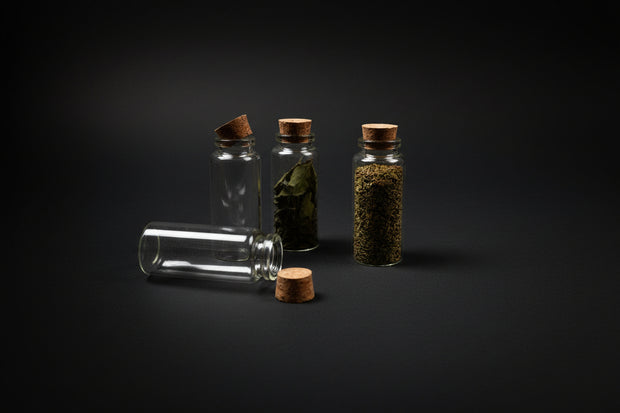
Use Journals to draft complete sequences and preserve revisions. Browse Ritual Supplies, Altar Tools, and Bottles & Jars only after assigning a clear function to each item. The Glass Spell Bottle with Cork can serve as a containment vessel when the method calls for one; it is not required merely because the working is called a spell.
Frequently Asked Questions
How long should a ritual be?
Long enough to complete its purpose safely. A complete five-minute rite is stronger than an hour of unnecessary repetition.
Does every ritual need a circle?
No. Circle casting belongs to particular methods and traditions. Use it when the practice calls for it, not as a universal requirement.
Do I need to memorize the words?
No. Reading from a prepared page can improve accuracy and safety. Arrange the text so it can be read without reaching across flame or liquid.
What if I feel nothing?
Emotional intensity is not the sole measure of completion. Review whether the planned actions were performed and whether the practical purpose was supported.
Can I combine rituals from different books?
You can create a clearly labeled eclectic or personal ritual, but preserve sources and do not present the combination as an inherited historical rite.
Write the Ending Before You Begin
A complete ritual knows how it enters, what it does, and how it ends. Begin with one purpose, design each action around function, write the transitions, include safety and interruption plans, and treat cleanup and aftercare as part of the rite itself.
Tools for this practice
Explore the products selected for this guide. Review each listing for what is included and how to use it.
Shop this guide · 1 item Collapse

Keep exploring the shop
You made it to the end of the guide. Keep exploring through related products, major departments, or the full catalog.
 RELATED TO THIS GUIDE
Ritual Supplies & Altar Tools
Shop this topic
RELATED TO THIS GUIDE
Ritual Supplies & Altar Tools
Shop this topic


Leave a comment