


Exploring Paganism After Christianity: Fear of Hell, Guilt, and Religious Conditioning

Someone can stop accepting a religious teaching intellectually and still feel fear, guilt, or bodily alarm when exploring another path. Thoughts such as “What if I am wrong?” or “What if I am punished?” may persist because beliefs, family relationships, habits, identity, and learned fear do not always change at the same speed.
Exploring Paganism after Christianity does not require declaring war on Christianity, choosing a deity immediately, or forcing yourself through panic. It can begin with history, observation, values, and private study. You may also decide that Paganism is not your path, combine elements carefully, remain Christian, become religiously unaffiliated, or leave the question open.
Fear does not prove a doctrine is true
A strong emotional reaction proves that the subject matters to your nervous system and personal history. It does not by itself prove that a punishment, deity, spirit, or supernatural threat is present. Fear can continue after a person’s conscious interpretation changes.
Research on conditioned fear shows that learned fear can return even after new learning reduces it. That does not diagnose anyone or explain every religious experience, but it offers one reason a familiar warning can still feel urgent after a person no longer endorses it intellectually.
Separate belief, fear, and social consequence
Write three different questions:
- What do I currently believe?
- What am I afraid might happen?
- What real social or material consequences could occur if others knew?
These answers may differ. You might no longer believe in eternal punishment while still fearing it emotionally. You might feel spiritually curious while facing a genuine risk of family conflict, housing loss, employment problems, or social isolation. Practical safety deserves as much attention as theology.
You do not need to adopt a new identity immediately
Reading about Pagan religions does not make you Pagan. Owning a tarot deck does not create a vow. Visiting an occult store does not initiate you. Lighting a candle does not automatically dedicate you to a deity.
Use temporary language if labels feel premature:
- I am studying modern Paganism.
- I am exploring non-Christian religious history.
- I am learning about devotional practices.
- I am questioning beliefs I inherited.
- I am not ready to name my path.
A label should describe your developing position, not imprison it.
Study before making devotional commitments
Begin with broad religious literacy:
- What does Paganism mean in modern usage?
- How do reconstructionist, revivalist, eclectic, and nature-centered paths differ?
- Which traditions have living communities and cultural boundaries?
- What is historical evidence, and what is modern adaptation?
- How do prayer, offerings, ritual, ethics, and community function in each path?
Use Paganism 101 and Syncretism vs. Eclecticism vs. Reconstructionism before choosing a devotional system from social-media fragments.
Do not use divination to force certainty
Repeatedly asking tarot, pendulums, dreams, or signs whether a deity accepts you can intensify fear. Ambiguous results may become proof of rejection, punishment, possession, or danger.
Pause divination when you are:
- asking the same question repeatedly;
- unable to tolerate an unclear answer;
- using every coincidence as evidence;
- checking whether you have offended a deity;
- pulling cards until they feel safe;
- afraid that stopping the reading will cause harm.
Read When Not to Use Divination and Is It a Sign, Synchronicity, or Coincidence?.
You do not need a patron deity
Online Pagan spaces can create the impression that everyone receives dramatic signs, is “claimed” by a deity, or must identify a patron immediately. Many practitioners begin with seasonal observance, household practice, historical study, nature, ancestors, ethics, or prayer without a patron relationship.
You may learn about a deity without making an offering. You may pray once without promising lifelong devotion. You may stop a devotional experiment respectfully if it increases fear or no longer fits.
See Do You Need a Patron Deity?.
Different Christian backgrounds produce different transitions
“Christianity” includes many churches, theologies, cultures, family systems, and personal experiences. One person may leave a high-control congregation; another may retain a positive Christian identity while exploring folk practice or comparative religion. Another may be converting because of theological conviction rather than harm.
Do not assume that every former Christian has trauma, that every church teaches hell the same way, or that all Christian symbols must be discarded. Let the person describe their own history.
Christianity and occult practice are not one simple category
Historical and modern practices may include Christian prayer, saints, angels, Psalms, ceremonial magic, folk Christianity, mysticism, astrology, divination, or healing customs. Different churches and practitioners judge these combinations differently.
Study the specific tradition rather than using “Christian witchcraft” as a single explanation for every practice. You may also decide that mixing systems feels theologically inconsistent for you.
Build an exploration ladder
Move from low-commitment study toward practice only as comfort and understanding grow.
| Stage | Possible activity | Commitment level |
|---|---|---|
| 1. Information | Read history, listen to academic lectures, compare definitions | None |
| 2. Observation | Track seasons, visit a museum, notice local ecology | Minimal |
| 3. Reflection | Journal values, fears, and unanswered questions | Private and reversible |
| 4. Nondevotional ritual | Light a battery candle, meditate, mark a seasonal transition | Temporary |
| 5. General prayer | Address the sacred without naming a deity | Exploratory |
| 6. Specific study | Learn one deity or tradition through reliable sources | Focused but not vowed |
| 7. Devotional practice | Offer prayer or a modest offering with clear boundaries | Chosen and reviewable |
| 8. Formal commitment | Initiation, oath, membership, or long-term vow | High; requires informed consent |
You can stop at any stage. Curiosity does not obligate progression.
Use reversible practices first
A reversible practice is easy to stop without damage, secrecy, debt, or fear. Examples include:
- reading a primary or scholarly source;
- keeping a seasonal journal;
- taking a walk and observing local changes;
- using a temporary cloth and one symbolic object;
- writing a prayer without making a vow;
- attending a public lecture or workshop;
- visiting a store without buying anything;
- speaking with practitioners from more than one community.
Avoid expensive initiations, permanent tattoos, large purchases, promises of secrecy, or lifelong vows during the earliest stage of exploration.
Fear of hell and reassurance loops
Repeatedly asking friends, clergy, Pagan practitioners, or online communities to guarantee that hell is not real may provide brief relief without resolving the underlying uncertainty. No honest person can provide laboratory certainty about every theological claim.
A more sustainable question is: “How do I want to live while uncertainty exists?” You can evaluate evidence, ethics, relationships, and personal experience without demanding total certainty before taking any reflective step.
Guilt about family and identity
Changing beliefs can feel like betraying parents, grandparents, culture, or a former version of yourself. Yet respect for family does not require pretending to believe what you do not believe. At the same time, disclosure is not always safe or necessary.
You can preserve meaningful customs, music, food, language, holidays, or moral values while changing theology. You can also set boundaries around practices that cause harm.
Privacy can be a safety decision
Do not disclose a changing religious identity when doing so could threaten housing, financial support, safety, custody, medical care, or employment. Privacy is not dishonesty when another person has not earned access to your inner life.
Use secure browsing, neutral book covers, library access, discreet storage, or digital notes when needed. Read Privacy and Confidentiality in Spiritual Practice.
Watch for replacement authority
Leaving one rigid system can make a person vulnerable to another teacher who promises certainty, secret status, or protection from punishment. Warning signs include:
- claims that only one teacher can interpret your experiences;
- pressure to cut off family or outside information;
- escalating fees for initiation, cleansing, or curse removal;
- demands for sexual access, labor, money, or secrecy;
- threats that leaving will anger a deity or destroy your life;
- discouraging medical or mental-health care;
- presenting questions as evidence of spiritual failure.
Use Spiritual Teachers and Gurus: Red Flags.
When professional support may help
A licensed mental-health professional may be useful when fear, shame, intrusive thoughts, nightmares, panic, or family conflict causes significant distress or interferes with daily life. Seek someone who can respect the client’s beliefs without trying to convert them toward or away from a religion.
Professional support does not decide theology. It can help a person examine fear, boundaries, identity, relationships, and coping without turning every symptom into a supernatural message.
A grounded thirty-day exploration plan
Week 1: History and definitions
Read one broad introduction to Paganism and write which paths interest you and why.
Week 2: Belief inventory
Separate current beliefs, inherited teachings, fears, values, and practical risks.
Week 3: One reversible practice
Choose a seasonal observation, journal exercise, general prayer, or temporary nondevotional ritual.
Week 4: Review
Ask what you learned, what increased fear, what felt meaningful, and what requires more evidence. Do not make a vow merely to complete the month.
Frequently asked questions
Does fear of hell mean I still believe in it?
Not necessarily. Emotional fear, intellectual belief, habit, and social conditioning can change at different rates.
Am I betraying my family by exploring Paganism?
Changing or questioning belief is not automatically betrayal. Family relationships and safety may still require thoughtful boundaries and privacy.
Do I need to renounce Christianity before learning about Paganism?
No. Study does not require a ritual renunciation. Your religious identity and theological conclusions are yours to determine.
Can I keep Christian practices I still value?
Yes, if they remain meaningful and ethically compatible for you. Be honest about which tradition each practice comes from and where theological tensions exist.
Will a Pagan deity punish me for being uncertain?
No reader or social-media creator can verify a deity’s private judgment. Begin with study and clear boundaries rather than fear-driven divination.
Should I tell my family?
Only when disclosure is safe and useful. You are not obligated to reveal private beliefs to someone who may retaliate or remove essential support.
What if I decide Paganism is not for me?
Then the exploration still provided information. A respectful temporary practice or period of study does not require permanent identity.
Exploration does not require panic or certainty
Begin with Printed Works, the Pagan Path, and our workshops and classes when relevant. Move slowly, protect your safety, distinguish fear from evidence, and make commitments only after you understand what they mean.
Tools for this practice
Explore the products selected for this guide. Review each listing for what is included and how to use it.

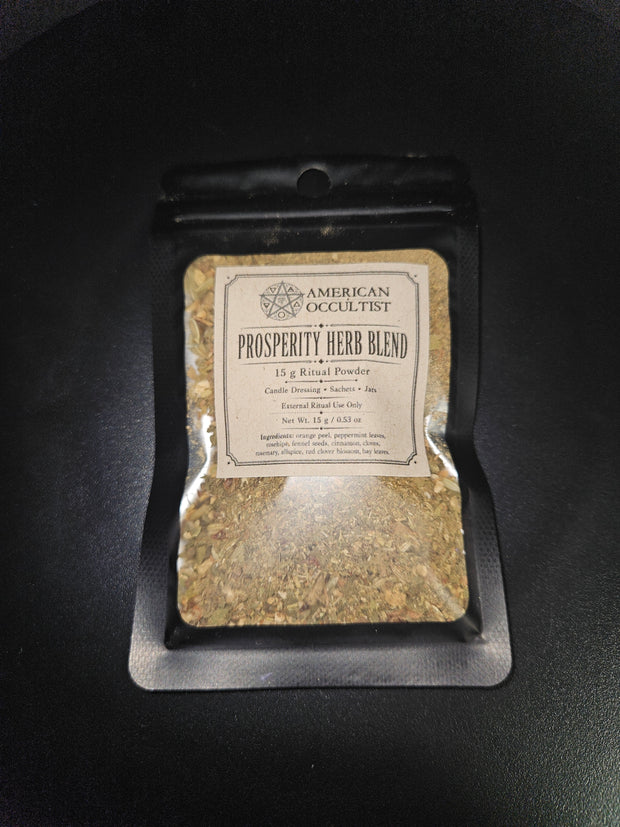
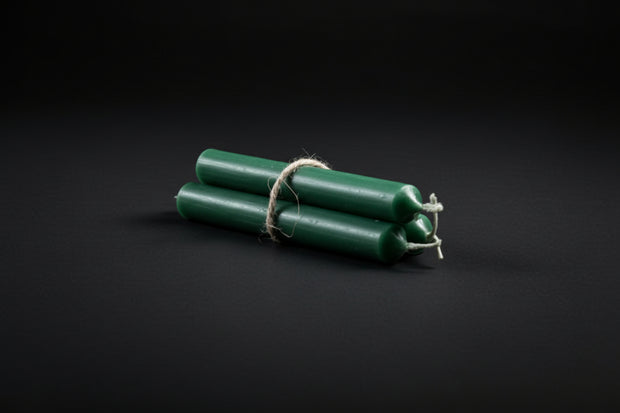

Shop this guide · 4 items Collapse



Keep exploring the shop
You made it to the end of the guide. Keep exploring through related products, major departments, or the full catalog.
 RELATED TO THIS GUIDE
Ritual Supplies & Altar Tools
Shop this topic
RELATED TO THIS GUIDE
Ritual Supplies & Altar Tools
Shop this topic


Leave a comment