


Hellenic Paganism for Beginners: Greek Gods, Offerings, Kharis, and Home Practice

Hellenic Paganism is a modern religious path centered on the gods, customs, and sacred traditions of ancient Greece. It may also be called Hellenic polytheism, Hellenismos, or the revival and reconstruction of ancient Greek religion. Modern practitioners commonly honor Greek deities through prayer, offerings, household worship, festival observance, ethical reflection, and careful study of historical sources.
Beginning this path does not require a marble temple, an expensive collection of statues, fluency in Ancient Greek, or a dramatic supernatural experience. It requires patience, respect, and the willingness to distinguish historical evidence from modern adaptation. This guide explains the foundations of Hellenic Paganism for beginners and offers a practical way to begin a small, sustainable home practice.
For a broader introduction to contemporary Pagan religions, begin with Paganism 101. To compare this path with other historically focused traditions, read Beyond Wicca: Exploring Reconstructionist Pagan Paths.
What Is Hellenic Paganism?
Hellenic Paganism is a modern revival or reconstruction of religious traditions practiced throughout the ancient Greek world. The path is polytheistic: the gods are usually approached as distinct divine beings with individual identities, relationships, epithets, histories, and areas of influence.
Ancient Greek religion was not one perfectly standardized system. Religious life differed between city-states, islands, colonies, households, sanctuaries, historical periods, and local cults. Athens, Sparta, Delphi, Crete, and other communities did not follow one universal calendar or identical set of rituals. There was no single scripture or central authority defining correct belief for every Greek person.
Modern Hellenic practitioners therefore work with incomplete and sometimes conflicting evidence. Surviving hymns, literature, inscriptions, archaeology, calendars, philosophy, and historical scholarship provide valuable foundations, but they do not preserve every household prayer or regional custom. Responsible reconstruction combines research with clearly identified modern adaptation.
Reconstruction, Revival, and Personal Devotion
Not every Hellenic practitioner uses the same method. Some attempt a close reconstruction of practices documented in a particular place and period. Others build a revival tradition informed by history but adapted openly for modern homes, work schedules, laws, and ethical standards. Some maintain a simpler devotional practice focused on one or several Greek gods.
These approaches can coexist when their boundaries are clear:
- Historically documented practice is supported by ancient evidence or reliable scholarship.
- Modern reconstruction fills unavoidable gaps by comparing available evidence.
- Modern adaptation changes a practice deliberately to make it safe, lawful, accessible, or practical today.
- Personal religious experience may guide an individual but should not be presented as proof of ancient custom.
A beginner does not need to solve every scholarly disagreement before praying. Begin modestly, document your sources, and remain willing to revise your understanding.
Core Ideas in Hellenic Practice
Kharis: Relationship and Reciprocal Goodwill
Kharis is often discussed as reciprocal goodwill between humans and gods. Prayer, offerings, praise, remembrance, and devotional attention help cultivate an ongoing relationship. This is not a mechanical exchange in which a particular gift forces a deity to deliver a particular result.
Reciprocity means participating in a relationship with gratitude and consistency. A glass of clean water offered attentively may be more appropriate than an expensive object given in panic. The goal is not to purchase divine favor but to practice respect, hospitality, and remembrance.
Eusebeia: Reverence in Action
Eusebeia is commonly translated as piety, reverence, or proper religious conduct. In a modern home practice, it may be expressed through honest prayer, responsible offerings, care for a shrine, study, hospitality, and conduct that does not disgrace the values being honored.
Hellenic Paganism does not require one universal moral code accepted by every practitioner. Ethical reflection may draw from ancient philosophy, myths, civic ideals, household responsibilities, and modern commitments to consent, justice, safety, and human dignity.
Purification and Ritual Readiness
Ancient Greek religious practice included many ideas about purification and ritual condition. Modern discussions sometimes use the word miasma too broadly, treating ordinary emotions, illness, grief, menstruation, sexuality, or everyday mistakes as evidence that a person is spiritually dirty. That approach can produce unnecessary fear and shame.
For a beginner home rite, ritual readiness can be simple: wash your hands, clean the offering vessel, straighten the shrine, and take a moment to settle your attention. More elaborate purification methods should be researched within their historical setting rather than copied from unsourced online rules.
The Greek Gods Are More Than Correspondence Lists
The Greek pantheon includes many gods, local powers, heroes, spirits, and divine figures. Modern beginners often encounter simplified lists that assign each deity a single purpose. These lists can help with initial orientation, but they flatten complex divine identities.
- Zeus is associated with sovereignty, order, weather, hospitality, oaths, protection, and numerous local functions.
- Hera is connected with queenship, marriage, legitimacy, women, civic identity, and divine authority.
- Athena is associated with wisdom, strategy, crafts, cities, disciplined skill, and protection.
- Apollo is connected with prophecy, music, healing, purification, archery, order, and many regional cults.
- Artemis is associated with wilderness, animals, hunting, protection, transition, childbirth, and young people.
- Aphrodite concerns beauty, desire, attraction, sexuality, relationship, power, and social bonds.
- Hermes is connected with travel, communication, trade, boundaries, luck, cleverness, and the movement between worlds.
- Hestia represents the hearth, household continuity, shared fire, and the ritual center of domestic and civic life.
- Demeter and Persephone are associated with grain, agriculture, seasonal transition, loss, return, mystery traditions, and the relationship between life and death.
- Dionysos is connected with wine, theater, ecstasy, vegetation, transformation, liberation, and altered boundaries.
- Poseidon is associated with the sea, earthquakes, horses, power, and regional civic identities.
Hades rules the underworld and the dead but is not usually counted among the Twelve Olympians because his realm is below rather than on Olympus. That does not make him evil or forbidden. Modern practitioners may honor Hades, Persephone, chthonic gods, heroes, and the dead with careful research into the different customs associated with them.
Why Epithets Matter
An epithet identifies a particular aspect, location, relationship, or function of a deity. Athena Polias, for example, is not simply “Athena with another nickname”; the epithet points toward a specific civic and devotional context. Zeus Xenios emphasizes hospitality and protection of guests, while Apollo Paian concerns healing.
Beginners do not need to memorize hundreds of epithets. Choose one deity, study several historically attested titles, and notice how each title changes the way the deity was approached. Epithets provide more depth than generic color, crystal, or herb correspondences.
Building a Simple Hellenic Home Shrine
A home shrine can be permanent or temporary. It may occupy a shelf, a small table, a cabinet, or a box that is opened during prayer. A respectful shrine does not need to imitate an ancient temple.
A basic setup may include:
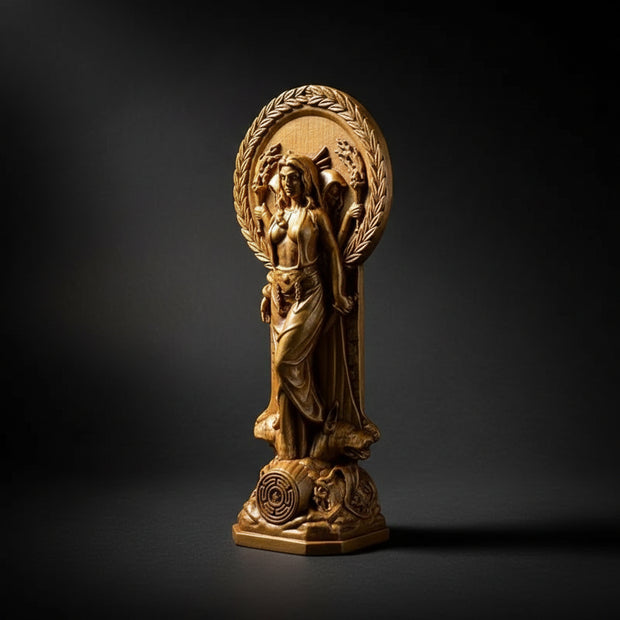
- A printed image, small statue, written name, or symbol representing the deity
- A clean cup for water or another libation
- A small plate or bowl for food offerings
- A candle, oil lamp, or flameless light
- An incense holder when smoke is safe and permitted
- A notebook for prayers, sources, festivals, and observations
Hestia is often given special recognition because the hearth formed the center of household and civic religious life. Some modern practitioners begin and end rites with Hestia, reflecting ancient patterns in which she received an honored portion. Practices varied historically, so treat this as a well-supported devotional pattern rather than a rule that invalidates every prayer performed differently.
Our guide to building a deity altar offers additional help with placement, privacy, accessibility, and maintaining a functional devotional space.
Offerings and Libations
Offerings may express gratitude, hospitality, praise, remembrance, or participation in a festival. They do not need to be rare or expensive.
Practical Beginner Offerings
- Clean water
- Wine, diluted wine, grape juice, tea, or another appropriate nonalcoholic drink
- Bread, grain, fruit, olives, honey, or a portion of a meal
- Incense or fragrant herbs when smoke is safe
- Flowers or responsibly gathered seasonal greenery
- Music, hymns, poetry, art, study, or acts of service
A libation is a poured liquid offering. In a modern indoor practice, you can pour a small amount into a dedicated cup rather than onto the floor. After the rite, dispose of it through ordinary household methods unless your tradition provides a safe alternative.
Do not leave wine, food, salt, wax, glass, coins, ribbons, or incense remains outside without considering wildlife, land ownership, fire restrictions, and local law. Respectful disposal is part of the offering process. Read our guide to food offerings, libations, and responsible disposal for a fuller framework.
How to Structure a Hellenic Prayer
Ancient prayers varied, but a useful modern structure includes:
- Address the deity: Use the deity’s name and a relevant epithet.
- Identify the context: State why you are approaching and, when appropriate, acknowledge previous devotion.
- Offer praise: Name qualities, myths, places, or powers associated with the deity.
- Present the offering: State what is being given.
- Give thanks or make a request: Speak clearly without demanding a guaranteed result.
- Close respectfully: Offer gratitude and complete the rite.
A Simple Modern Prayer
Hestia, keeper of the hearth and center of the home, receive this clean water with my respect. Bring steadiness to this household and clarity to the work begun here. I give thanks for shelter, warmth, and the bonds that hold a home together. Be honored in this place.
This is a modern devotional prayer, not a translation of an ancient text. You may adapt it while keeping the address, praise, offering, purpose, and closing clear.
A Simple Hellenic Home Ritual for Beginners
The following rite is historically inspired but intentionally adapted for a modern home. It is not presented as an exact ancient temple ceremony.
What You Need
- A clean cup of water
- A small food offering, flower, or written hymn
- An image, statue, symbol, or written name of the deity
- An optional candle, LED light, or incense
- A notebook
1. Prepare Yourself and the Space
Wash your hands, clear the surface, and place the offerings in clean vessels. Secure long sleeves and loose fabric. Keep flame and incense away from pets, children, drafts, dried plants, and flammable decorations.
2. Establish the Ritual Center
Light the candle or switch on the safe light. Address Hestia with a short greeting, or simply recognize the household hearth and the space in which you are practicing.
3. Address the Chosen Deity
Say the deity’s name and one researched epithet. Briefly state why that title fits the prayer. You might address Athena Ergane when honoring skilled work, Hermes Hodios before travel, or Zeus Xenios when reflecting on hospitality.
4. Offer and Pray
Present the water and food, flower, hymn, or other offering. Speak praise, gratitude, and any request. Avoid promising extreme sacrifices or commitments in a moment of emotion.
5. Sit in Attention
Spend a few quiet minutes reflecting on the prayer. Silence does not mean rejection, and an ordinary thought is not automatically a divine message.
6. Close the Rite
Thank the deity and Hestia. Extinguish flame completely. Record the date, deity, epithet, offering, prayer, and any practical action you intend to take. Dispose of the offering safely at an appropriate time.
Festivals and the Ancient Greek Calendar
Ancient Greek religious calendars were local. Different communities used different month names, year beginnings, festival schedules, and methods of adjustment. Many calendars were lunar or lunisolar rather than fixed to the modern Gregorian calendar.
Modern Hellenic practitioners may:
- Follow a reconstructed Attic calendar associated with ancient Athens
- Study a different regional calendar
- Observe selected festivals on practical modern dates
- Create a small household calendar based on documented themes
- Honor deities through monthly or weekly devotional routines rather than a complete festival cycle
No beginner needs to adopt every Athenian festival. Choose one celebration, research its historical location and purpose, and identify every modern change you make. A calendar should support devotion rather than become a source of constant anxiety.
Signs, Dreams, and Divine Communication
You do not need a sign before honoring a Greek deity. Interest, respect, and a sincere desire to learn are sufficient reasons to begin a prayer or offering.
Not every animal, song, number, weather event, dream, or social-media post is a message. Research the deity’s historical symbols, consider ordinary explanations, record repeated patterns, and avoid making major medical, legal, financial, or relationship decisions based only on perceived omens.
Our grounded guide to signs, omens, and deity communication provides a practical discernment process.
Cultural Respect and Modern Greek Identity
Ancient Greek religion belongs to history, but Greece is not only an ancient setting. Modern Greek people, language, landscapes, communities, and cultural institutions are living realities. Respectful practice should not reduce Greece to mythology, ruins, costumes, or an imagined spiritual ancestry.
Greek ancestry is not generally required to study or practice an open modern Hellenic devotional path. At the same time, ancestry does not remove the need for research, humility, or respect. Support legitimate museums, scholars, translators, archaeological work, and modern Greek cultural voices when possible.
Never purchase artifacts that may have been looted or illegally exported. A newly made statue, print, replica, or handwritten name is more appropriate than an object removed from an archaeological or funerary context.
Hellenic Paganism Is Not Automatically Wicca or Witchcraft
A Hellenic polytheist may also practice witchcraft or identify as Wiccan, but those systems are not interchangeable. Ancient Greek religion had magic, divination, healing, curse tablets, mystery traditions, household protections, and many other practices, yet Hellenic religion as a whole should not be reduced to spellcraft.
Do not automatically place Greek gods into a Wiccan Goddess-and-God framework, assign them to the four quarters, or assume every deity wants to participate in modern spells. Learn the religious context first. Any blended practice should be described honestly as modern and personal.
A 30-Day Beginner Plan
Week One: Learn the Framework
- Read an introductory overview of ancient Greek religion from a reputable academic or museum source.
- Learn the meanings of polytheism, reconstruction, kharis, epithet, libation, and household cult.
- Write down what draws you to the path and what you still do not understand.
Week Two: Study One Deity
- Choose one deity rather than attempting to honor the entire pantheon immediately.
- Read myths alongside information about historical worship and local cults.
- Research two or three epithets and select one relevant to your devotional purpose.
Week Three: Begin a Small Practice
- Prepare a clean shrine or temporary ritual surface.
- Offer water and a short prayer two or three times during the week.
- Record what you did without forcing every feeling into a supernatural interpretation.
Week Four: Build Consistency
- Repeat the same simple rite.
- Read one translated hymn and compare it with your own prayer.
- Research one festival or household observance.
- Decide what schedule is realistic for the following month.
Common Beginner Mistakes
Trying to Honor Every God Immediately
The pantheon is vast. A small practice centered on Hestia and one chosen deity is easier to sustain and research responsibly.
Treating Myths as a Literal Rulebook
Myths are religious, literary, political, philosophical, and cultural works. Different versions contradict one another. Study how a deity was worshipped in addition to reading stories about that deity.
Using Only Social Media
Short videos and posts can introduce useful terms, but they often remove regional context and scholarly uncertainty. Compare practitioner material with books, translations, inscriptions, museums, and current scholarship.
Confusing Fear With Reverence
Respect does not require constant terror that a minor mistake will anger a god. Correct what you can, learn, apologize when appropriate, and continue more carefully.
Making Unsustainable Promises
Do not promise daily offerings, lifelong vows, large donations, or difficult abstentions before understanding what you can maintain. Consistent modest devotion is more responsible than an impressive practice abandoned through exhaustion.
Frequently Asked Questions
Do I Need Greek Ancestry to Practice Hellenic Paganism?
No ancestry requirement is generally applied to open modern Hellenic devotional practice. Respect for living Greek culture, historical context, and responsible sourcing remains essential.
Do I Need to Speak Ancient Greek?
No. You may pray in the language you understand best. Learning pronunciation, names, epithets, and key terms can deepen study, but fluency is not a prerequisite for sincere devotion.
Do I Need a Patron Deity?
No. The modern idea that every Pagan must identify one exclusive patron is not a universal requirement. You may build relationships gradually and honor different gods according to household, festival, life, and devotional contexts.
Can I Honor Hades?
Yes. Hades is a Greek god and ruler of the underworld, not a Satan figure. Research chthonic worship, funerary boundaries, offerings, and local traditions rather than relying on modern villain imagery.
Can Hellenic Paganism Be Combined With Wicca?
Some individuals combine them, but they are distinct religions and ritual systems. Clearly identify modern blending and avoid presenting Wiccan structures as documented ancient Greek practice.
What Is the Best First Offering?
Clean water is affordable, accessible, easy to dispose of responsibly, and suitable for a simple beginner libation. Pair it with a researched address and sincere prayer.
Beginning With Study, Hospitality, and Consistency
Hellenic Paganism begins more reliably with disciplined attention than with elaborate equipment. Learn the difference between ancient evidence and modern adaptation. Study one deity and one epithet. Prepare a clean space, offer water, speak clearly, and keep a record of what you learn.
The path becomes deeper through kharis: an ongoing pattern of recognition, gratitude, offering, prayer, and responsible action. You do not need to reconstruct the whole ancient world in your home. Begin with one well-researched act of hospitality and allow knowledge and devotion to grow together.
Tools for this practice
Explore the products selected for this guide. Review each listing for what is included and how to use it.


Shop this guide · 4 items Collapse


Keep exploring the shop
You made it to the end of the guide. Keep exploring through related products, major departments, or the full catalog.


Leave a comment