


How to Store Incense, Resins, Powders, and Charcoal Safely

Incense storage affects scent, burn behavior, identification, and safety. Sticks can absorb neighboring fragrance, cones can crumble, resin can soften into a sticky mass, powders can become airborne, herbs can attract pests, and charcoal can become unreliable after humidity exposure.
The goal is not to preserve fragrance forever. It is to keep each product identifiable, dry, contained, separate from ignition sources, and safe around people and animals.
Separate Incense by Form
Different incense forms need different storage.
- Sticks: long, fragile, and highly prone to scent transfer.
- Cones: compact but easily chipped or crushed.
- Loose resin: hard, brittle, sticky, or oily depending on type and temperature.
- Powdered incense: airborne, spill-prone, and difficult to identify after transfer.
- Loose herbs and woods: vulnerable to moisture, pests, and mistaken identity.
- Charcoal discs: ignition material that must remain dry and separated from flame.
- Prepared blends: require a complete ingredient list and batch record.
Do not pour all incense into one decorative jar. Once mixed, ingredients, smoke characteristics, and safety information may be impossible to recover.
Keep the Original Label
Retain:
- exact product name;
- brand or maker;
- incense form;
- ingredients when disclosed;
- fragrance and allergen information;
- burning directions;
- ventilation and fire warnings;
- lot or batch code;
- purchase and opening dates;
- supplier contact information.
“Dragon’s Blood,” “Frankincense,” or “Temple Incense” may describe a fragrance, resin, blend, or marketing name. The label should make the actual form clear.
Use Cool, Dry, Dark Storage
Store incense away from:
- bathrooms, sinks, humidifiers, and damp basements;
- windows and direct sunlight;
- stoves, radiators, and hot vehicles;
- active altars with candles or charcoal;
- pet food and human food;
- medication and culinary herbs;
- children and animals.
Stable indoor storage helps prevent condensation, softened resin, faded packaging, and mold.
Control Fragrance Transfer
Incense fragrance moves into paper, cloth, wood, decks, books, candles, and nearby incense. Strong products can overwhelm subtler ones.
Use:
- original sealed packaging;
- individual lidded containers;
- separate compartments for strong scents;
- a closed cabinet away from textiles and paper collections;
- clear labels outside every inner bag or tube.
Do not store heavily fragranced incense with unscented ritual herbs that may later be mistaken for food or tea.
Incense Sticks
Protect sticks from bending, crushing, and humidity.
- Keep them flat in rigid boxes or upright in stable closed tubes taller than the sticks.
- Do not force several brands into a short container.
- Separate bamboo-core sticks from solid sticks when burn methods differ.
- Keep broken pieces labeled rather than combining them into an unknown jar.
- Discard moldy or chemically contaminated sticks rather than burning them.
A broken stick is usually a handling issue, not a spiritual sign.
Incense Cones
Cones need crush protection and a dry container.
- Use shallow divided storage instead of a deep jar that requires digging.
- Keep backflow cones labeled separately from ordinary cones.
- Do not mix colors or fragrances when identification matters.
- Watch for crumbling, dampness, mold, and oil transfer.
- Keep packaging directions with the cones.
Backflow cones often produce heavier residue and should not be assumed interchangeable with ordinary cones.
Loose Resins
Resins can fracture, melt together, become sticky, or carry natural and added fragrance.
- Use clean dry jars with secure lids.
- Label the resin, source, batch, and whether it is pure or blended.
- Keep away from heat and direct sun.
- Use a dedicated spoon or scoop rather than fingers.
- Do not return material that touched charcoal, ash, another blend, or an altar surface.
- Keep strongly scented resins separated.
Natural-looking tears do not prove species, purity, origin, or ethical sourcing. Preserve supplier information.
Powders and Loose Blends
Fine incense spreads easily and creates an inhalation and contamination problem before it is ever burned.
- Use sealed, clearly labeled containers.
- Open over a washable tray.
- Scoop gently rather than pouring from height.
- Do not blow spilled powder.
- Keep away from fans and open windows during handling.
- Record every ingredient in a blend.
- Do not combine unknown powders.
A magical correspondence does not establish that a powder is safe to inhale or burn.
Loose Herbs and Woods
Keep ritual herbs identifiable and separate from culinary supplies.
- Retain botanical names and plant parts.
- Inspect for moisture, mold, insects, webbing, and unusual odor.
- Do not store fresh herbs in sealed incense jars.
- Do not assume every dried herb is suitable for smoke.
- Keep toxic or irritating plants secured and clearly marked.
Use How to Store Ritual Herbs for a complete labeling and rotation system.
Charcoal Discs
Charcoal is an ignition product. Keep it dry, intact, and away from sparks, children, pets, and active flame.
- Retain the sealed inner packaging when possible.
- Store in a cool, dry cabinet separate from incense ash and used discs.
- Do not store next to matches or lighters in a loose mixed box.
- Keep discs from crushing into dust.
- Do not use damp, moldy, contaminated, or badly crumbled discs.
- Never return a partly ignited or warm disc to storage.
Instant-light charcoal may contain ignition compounds and should be handled according to its directions. Store it as a fire-starting product, not as an ordinary stone or tablet.
Tongs and Handling Tools
Store charcoal tongs clean and dry beside—but not inside—the charcoal package. Resin spoons and scoops should remain separate from food utensils.
- Remove cooled resin and ash after use.
- Inspect tongs for looseness, corrosion, and poor grip.
- Do not use decorative tweezers that cannot hold a hot disc securely.
- Keep metal tools away from loose salt and moisture.
- Allow everything to cool before returning it to a box.
Used Charcoal and Ash Are Not Inventory
After burning, charcoal and ash must cool completely in a fire-safe container. A dark disc can remain hot internally.
Do not:
- place warm charcoal in a trash can;
- close it inside a wooden box;
- mix it with unused discs;
- leave it on soil or a public outdoor site;
- assume ash is safe for gardens when the burned material is unknown.
Follow the burner and charcoal instructions and local fire-disposal guidance.
Pest and Mold Checks
Natural plant material and paper packaging can attract insects or mold in damp conditions.
- Isolate the affected container.
- Inspect neighboring products.
- Do not burn moldy incense.
- Seal contaminated material before disposal.
- Clean the shelf without spraying chemicals near open incense.
- Review humidity and incoming-inspection practices.
Smoke does not make spoiled material safe.
Incense Around Pets and Sensitive People
Storage prevents accidental chewing and exposure, but safe storage does not make burning safe for every household. Birds, cats, dogs, reptiles, people with asthma, migraine, allergies, pregnancy, or sensory sensitivity may require smoke-free practice.
Keep incense locked away from cages, aquariums, bedding, food, and grooming areas. Read Incense Smoke and Pets before burning in an animal household.
Create an Incense Inventory
Record:
- product and form;
- brand or maker;
- ingredients or fragrance;
- date acquired and opened;
- quantity;
- storage location;
- burning method;
- required burner or charcoal;
- ventilation restrictions;
- condition at last review.
Use older acceptable stock first. Avoid buying repeated versions of the same fragrance while opened packages remain forgotten.
When to Discard Incense
Discard or quarantine products that are:
- unidentified;
- moldy or damp;
- infested;
- chemically contaminated;
- mixed with an unknown powder;
- missing essential directions;
- causing unexpected irritation;
- too damaged to burn in the intended holder.
Do not burn questionable material as a disposal method. Review How to Retire, Reuse, or Dispose of Ritual Tools Responsibly.
Build a Labeled Incense Supply
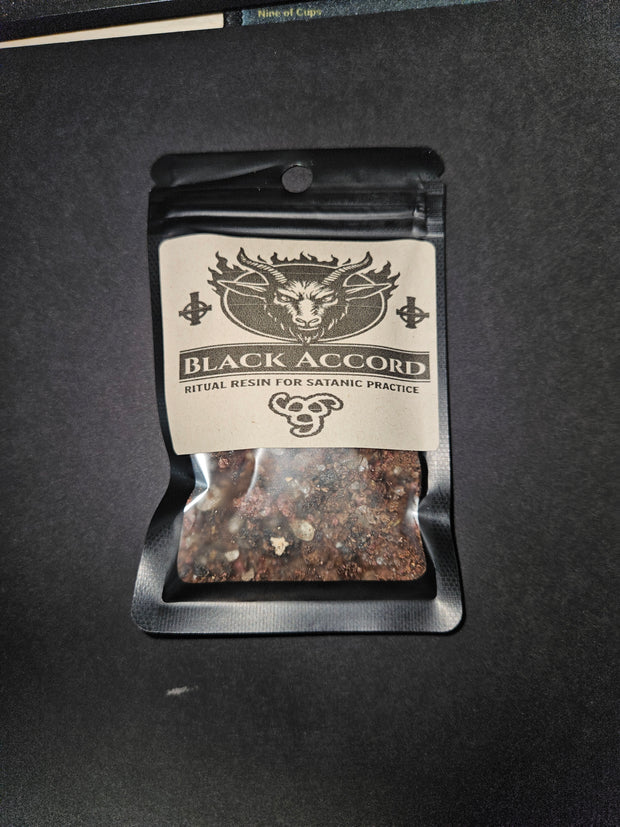
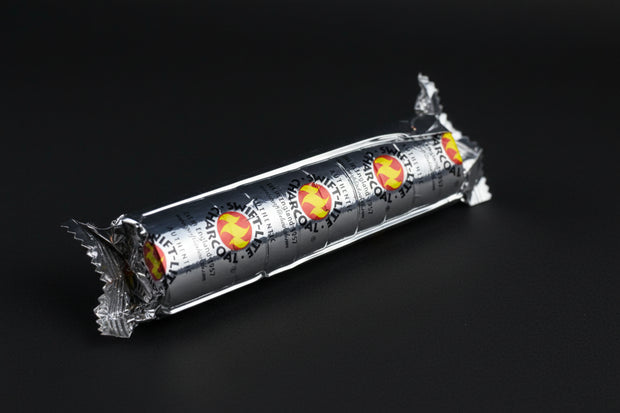
Browse the Incense collection by form and burning method. Keep products such as Copal Oro Resin and Black Accord Ritual Resin Blend in their own labeled containers. Store Ritual Charcoal Discs dry and separate from used charcoal, and use purpose-built Brass Charcoal Tongs to manage hot discs according to product directions.
Compare burn methods in Incense Sticks, Cones, Resins, and Powders Compared.
Frequently Asked Questions
Can incense sticks be stored together?
They can, but fragrances transfer and identification becomes difficult. Individual packaging is better.
Should resin incense be refrigerated?
Usually not unless the maker specifies it. Refrigeration can introduce condensation and food-contact concerns.
Does charcoal expire?
Performance can decline after moisture exposure or damaged packaging. Follow the product information and discard contaminated or crumbling discs safely.
Can I burn moldy incense to get rid of it?
No. Burning moldy or contaminated material can spread unwanted smoke and particles.
Can loose incense be stored in wood?
Use a sealed inner container. Bare wood absorbs fragrance, oil, and moisture and is difficult to clean.
Should incense be stored with ritual herbs?
Keep them separated and clearly labeled, especially when herbs might otherwise be mistaken for culinary or tea use.
Storage Begins Before the Match
Keep every incense form labeled, dry, protected from crushing, separated by fragrance and use, inaccessible to children and pets, and away from ignition sources. Good storage makes it easier to choose the correct burner, amount, ventilation, and disposal method before smoke enters the room.
Tools for this practice
Explore the products selected for this guide. Review each listing for what is included and how to use it.
Shop this guide · 2 items Collapse

Keep exploring the shop
You made it to the end of the guide. Keep exploring through related products, major departments, or the full catalog.
 RELATED TO THIS GUIDE
Candles & Incense
Shop this topic
RELATED TO THIS GUIDE
Candles & Incense
Shop this topic


Leave a comment