


Incense Sticks, Cones, Resins, and Powders Compared: Smoke, Burn Time, Uses, and Safety

Incense is often discussed as though every form works the same way. It does not. A stick, cone, loose resin, and incense powder may share aromatic ingredients, but the way each product is formed and burned changes the attention it requires, the holder it needs, the smoke it produces, and the pace of the experience.
The best form is not automatically the strongest, most traditional, or most spiritual. It is the form that fits your space, available time, tolerance for smoke, and purpose.
Choose Your Incense and Charcoal Path
- Choose the correct burner: Use Which Incense Burner Do You Need? before matching a decorative holder with sticks, cones, backflow cones, resin, charcoal, or botanical bundles.
- Begin using charcoal: Follow How to Use Charcoal Discs for Resin Incense.
- Choose the base beneath charcoal: Compare Sand, Salt, Ash, or Pebbles: What Goes Under Incense Charcoal?.
- Troubleshoot a disc: Read Why Won’t My Incense Charcoal Stay Lit?.
- Control the amount of resin: Use How Much Resin Should You Put on a Charcoal Disc?.
- Heat resin without charcoal: Compare Can You Burn Resin Incense Without Charcoal?.
- Fix a backflow burner: Read Backflow Incense Burner Troubleshooting.
- Protect pets and sensitive households: Continue with Incense Smoke and Pets and Fire Safety for Candles, Incense, Charcoal, and Ritual Burning.
- Do not confuse powders: Read Ritual Powder vs. Incense Powder.
Incense Types at a Glance
| Type | How It Burns | Typical Experience | Required Equipment | Cleanup |
|---|---|---|---|---|
| Stick incense | A formed stick smolders after lighting | Steady scent and a predictable session | Holder that securely catches ash | Loose ash and a short remaining stem |
| Standard cone incense | A compact cone smolders from the tip downward | Concentrated smoke over a shorter footprint | Heat-safe dish or cone burner | Ash shaped like the original cone |
| Backflow cone | A hollow cone directs cooled smoke downward | Visual smoke effect in a compatible burner | Backflow burner with aligned air channel | Ash plus oily residue on the burner |
| Resin incense | Small pieces heat on charcoal or an electric resin heater | Adjustable, layered aroma with active tending | Charcoal-safe burner and sand, or a suitable heater | Spent charcoal, ash, and melted resin residue |
| Incense powder | Loose aromatic powder smolders directly or over heat | Flexible portioning and short, controlled burns | Heat-safe burner appropriate to the method | Fine ash and possible residue |
Burn time varies by product size, density, airflow, moisture, formulation, and the method used. Product instructions should take priority over broad estimates.
Stick Incense: Simple, Steady, and Easy to Position
Stick incense is usually the easiest format for a beginner. The end is lit, allowed to flame briefly, and then extinguished so the material continues to smolder. A properly designed holder supports the stick and catches falling ash.
Two broad constructions are common. A cored stick forms incense material around a bamboo or wooden support. A coreless stick is composed of incense material throughout. The construction affects how the stick sits in a holder and may influence the final portion of the aroma, but neither style is universally better.
Stick incense works well when you want:
- a consistent scent while reading, meditating, journaling, or preparing an altar;
- a format that requires little adjustment after lighting;
- a clear beginning and end to a ritual period;
- an easy way to sample different aromatic blends.
A narrow ash catcher may be sufficient for a short, straight stick, while longer sticks need enough surface area to catch ash across the full burn path. See Which Incense Burner Do You Need? before pairing an unfamiliar stick with a decorative holder.
Standard Cones: Compact Form, Concentrated Heat
A standard cone has no support stick. It burns from the pointed top toward the broader base and can produce a concentrated plume from a small footprint. Because the burning material eventually reaches the base, the surface beneath it must tolerate heat.
Cones are useful when shelf space is limited or when a short, visually contained session is preferred. They should not be placed directly on wood, plastic, cloth, resin décor, or an altar tile unless the product is specifically designed as a heat-safe incense surface.
A cone burner should provide:
- a flat and stable base;
- a noncombustible surface beneath the cone;
- enough open space for oxygen to reach the smoldering material;
- clearance from lids, painted interiors, and nearby objects.
Backflow Cones: Designed for a Visual Smoke Path
Backflow cones are made with a channel through the center. When the smoke cools and the cone is correctly aligned with a compatible burner, it travels downward through the burner rather than rising in the usual way.
If you are deciding between the two common formats, the backflow cone versus incense stick comparison presents both products and compatible accessories without assuming they fit the same burner.
The effect depends on still air, proper alignment, a level surface, and a clean channel. A nearby fan, open window, clogged passage, or mismatched cone can interrupt the waterfall appearance. Backflow burners also collect residue because descending smoke carries condensed aromatic material across the surface.
Backflow incense is best chosen for the visual atmosphere as well as the scent. It is not a lower-smoke option. Read Backflow Incense Burner Troubleshooting and Cleaning before assuming that an incomplete cascade means the cone or burner is defective.
Resin Incense: Adjustable and Hands-On
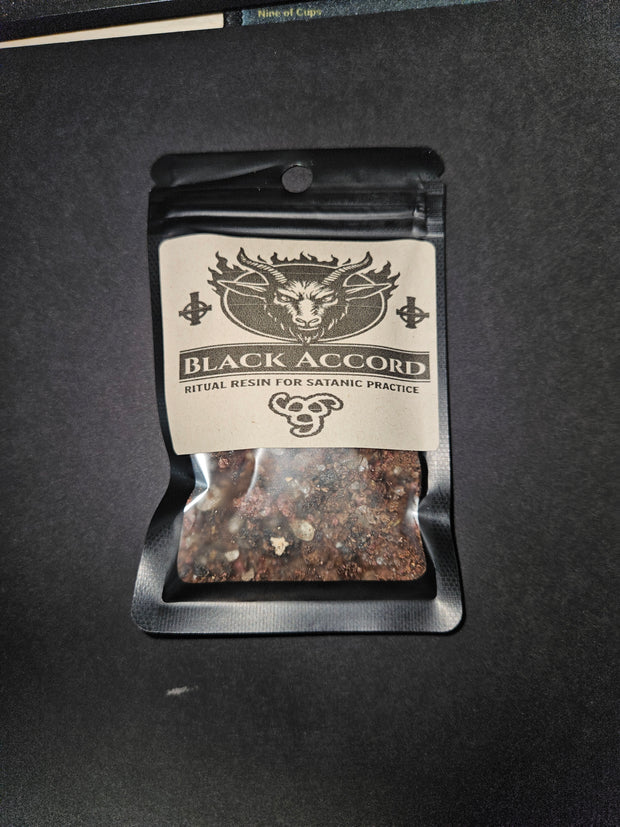
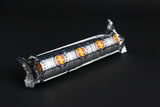
Resins such as frankincense, myrrh, copal, and dragon’s blood are sold as loose tears, grains, chunks, or blends. They do not usually sustain a smoldering burn by themselves in the same way a prepared stick does. They are heated on an ignited charcoal disc or in an electric heater made for aromatic resins.
Resin provides control because only a small amount needs to be added at one time. Different materials can be layered, and additional resin can be added as the earlier portion fades. That flexibility also means the user must remain present and manage the heat.
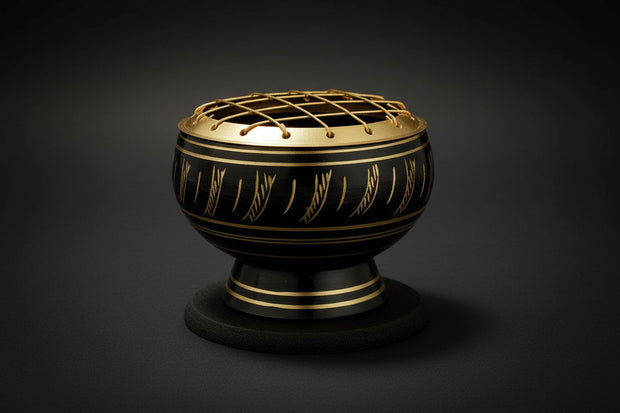
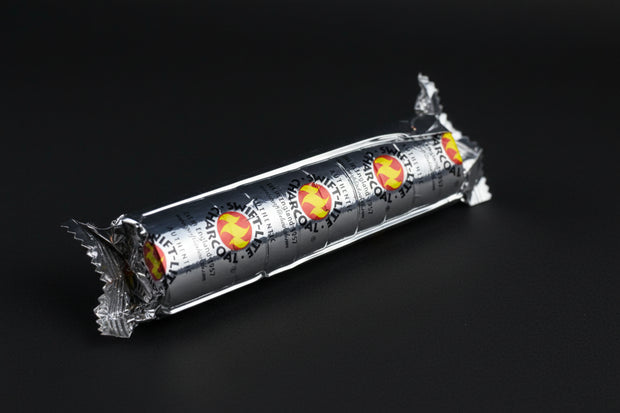
Charcoal becomes extremely hot and continues radiating heat after visible smoke decreases. Use a purpose-made burner containing a bed of sand or another manufacturer-approved insulating material. Never hold an ignited disc, place it on a decorative plate, or assume a thin metal bowl will protect the surface beneath it.
For the complete process, read How to Use Charcoal Discs for Resin Incense. Practitioners who want to avoid charcoal can compare suitable alternatives in Can You Burn Resin Incense Without Charcoal?.
Incense Powder: Flexible Portions and Several Methods
Incense powder may be burned in a small trail, shaped in a mold, placed on a prepared heat source, or used according to a manufacturer’s directions. The exact method depends on whether the powder is formulated to smolder independently or release aroma when heated.
This format gives the user control over quantity, but loose material can spill, scatter, or extinguish if packed improperly. Begin with a small amount and use a burner designed for loose incense. Do not substitute a ritual powder that was never intended to be burned.
That distinction is important enough to have its own guide: Ritual Powder vs. Incense Powder.
Which Type Produces the Most Smoke?
There is no dependable ranking that applies to every product. Ingredient composition, binder, density, portion size, airflow, and technique all matter. A large resin portion on very hot charcoal may overwhelm a small room, while a thin stick may feel mild. A heavily scented cone can be more noticeable than a small quantity of powder.
Instead of judging by form alone:
- start with the smallest practical amount;
- burn one product at a time when testing it;
- observe how the room feels before adding more;
- use ventilation that does not create a fire hazard or scatter ash;
- stop if smoke causes discomfort, coughing, headache, eye irritation, or breathing difficulty.
The U.S. Environmental Protection Agency identifies candle and incense burning as indoor sources of particulate matter and recommends proper ventilation when they are used indoors. Review the EPA’s current guidance on sources of indoor particulate matter.
Matching the Form to the Ritual
For a timed meditation or reading
A stick provides a clear, mostly hands-off interval. Choose a holder long enough to catch the ash.
For a compact altar session
A standard cone occupies little space, but the burner must isolate its concentrated heat from the altar surface.
For visual atmosphere
A backflow cone and compatible burner create movement that can support contemplation. Keep expectations focused on the mechanics of the design rather than assigning universal spiritual meaning to downward smoke.
For layered ceremonial aroma
Resin allows small additions and changing combinations throughout a longer working. It requires the greatest attention and heat management.
For short or precisely portioned use
A suitable incense powder can be measured in small amounts and shaped to fit the intended session.
Fire and Indoor-Air Safety
Every burning incense form is an active heat source. Keep burners stable, place them where they cannot be knocked over, and maintain generous clearance from cloth, paper, dried herbs, curtains, shelves, and other combustible objects. Never leave incense or charcoal unattended. Confirm that all heat and embers are fully extinguished before discarding ash.
Households with children, pets, respiratory sensitivities, shared ventilation, or smoke detectors close to the altar may need to use less material, improve ventilation, move the practice outdoors where lawful and safe, or choose a non-burning alternative.
Incense smoke should not be used to diagnose illness, purify hazardous contamination, or replace ventilation, cleaning, medical care, or professional remediation.
Cleanup and Storage
- Sticks: Allow ash to cool before emptying the holder. Remove the remaining support stem.
- Cones: Let the ash retain its shape until completely cool, then lift or brush it away.
- Backflow cones: Wipe residue according to the burner material. Avoid soaking painted or porous pieces unless the manufacturer permits it.
- Resins: Allow charcoal and burner contents to cool completely. Remove hardened residue with a method safe for the burner material.
- Powders: Use a soft brush for fine ash and prevent it from spreading onto fabrics or electronics.
Store all forms dry, sealed from strong competing odors, and away from direct heat. Label loose materials rather than relying on memory.
Choose by Method, Not by Hype
Sticks offer consistency. Cones provide compact concentrated burning. Backflow cones add a visual feature. Resins offer hands-on control. Powders provide flexible portions and methods. None is automatically more authentic or powerful.
Explore the Incense collection and Incense Burners collection, then choose the format whose heat, smoke, cleanup, and level of attention fit the way you will actually use it.
Tools for this practice
Explore the products selected for this guide. Review each listing for what is included and how to use it.

Shop this guide · 4 items Collapse


Keep exploring the shop
You made it to the end of the guide. Keep exploring through related products, major departments, or the full catalog.
 RELATED TO THIS GUIDE
Candles & Incense
Shop this topic
RELATED TO THIS GUIDE
Candles & Incense
Shop this topic


Leave a comment