


How to Choose Ingredients for a Spell or Ritual

A long ingredient list can make a spell look powerful while making its purpose harder to understand. More materials create more cost, more safety questions, more cleanup, and more opportunities for symbolic contradictions.
Strong ritual design begins with function. Every ingredient should earn its place by supporting the method, the tradition, the physical action, or the relationship involved.
Start With the Action, Not the Shopping List
Write one sentence describing what the ritual will actually do.
Examples:
- write and fold a petition, then store it for thirty days;
- anoint a candle before a confidence practice;
- offer water and prayer in a household devotion;
- create a boundary marker near an entrance;
- assemble a study talisman from sourced symbols;
- release a written statement through safe disposal.
The action tells you what forms are required. A stored petition needs paper, writing material, and a safe place. It does not automatically need twelve herbs, three stones, oil, glitter, wax, and smoke.
Assign Each Ingredient a Job
Use practical categories.
Focus
The item identifies the purpose: a petition, photograph used with consent, name paper, symbol, written goal, or designated object.
Carrier
The carrier holds or transports other materials. Examples include paper, water, oil, cloth, wax, a jar, bowl, pouch, or incense base.
Symbolic support
An herb, color, stone, scent, number, or image reinforces the ritual’s meaning within a specific system.
Transforming action
The material enables burning, tying, folding, dissolving, covering, planting, anointing, washing, or another physical change.
Boundary or container
A jar, box, circle, cord, cloth, threshold line, or written limit defines what belongs inside and outside the working.
Offering
The material is given within a devotional or relational context. An offering is not merely another “correspondence.”
Completion marker
A seal, knot, final candle, closed lid, signed record, or extinguished light shows that the planned sequence has ended.
One ingredient may perform more than one job. That is often a reason to simplify.
Name the Tradition or System
Ask where the ingredient choice came from:
- a named historical text;
- a living religion or community;
- a folk practice from a particular region;
- a modern magical author;
- a Wiccan, ceremonial, devotional, or eclectic system;
- a family or household custom;
- your own documented practice.
Do not blend sources invisibly. A modern personal correspondence can be useful without being described as ancient or universal.
Read How to Read Magical Correspondence Tables Critically before treating a chart as a complete ingredient-selection system.
Choose the Smallest Effective Set
Begin with the minimum materials required for the action. Add an ingredient only when you can state its job in one sentence.
A simple selection might include:
- one focus;
- one carrier or container;
- one or two symbolic supports;
- one completion action.
If two ingredients perform the same role, decide whether both are necessary. Repetition can be intentional, but accidental redundancy creates clutter.
Check Physical Compatibility
Materials interact. Consider what happens during the full life of the working.
- Fresh herbs can mold in sealed jars.
- Oil can weaken paper, stain cloth, or create fire hazards.
- Salt can corrode some metals and damage surfaces.
- Water can dissolve, rust, stain, or fracture sensitive materials.
- Wax can seal moisture inside a container.
- Powders can become airborne.
- Food offerings attract insects and animals.
- Sunlight can fade dyes, paper, photographs, and some minerals.
Test uncertain combinations in a small nonritual sample before placing them on an altar, body, floor, or valuable object.
Herbs: Identify Species and Route of Use
For each herb, record:
- common and botanical name;
- plant part;
- source;
- fresh or dried condition;
- symbolic reason for inclusion;
- whether it will be displayed, burned, infused, applied, or consumed;
- allergy, pet, pregnancy, medication, and toxicity concerns.
A plant safe in a sealed display is not automatically safe as tea, smoke, bath, or skin preparation. “Natural” is not a safety category.
Use How to Build a Materia Magica to create a sourced herbal record.
Oils: Know What Kind of Oil You Have
Ritual oil, fragrance oil, essential oil, infused oil, and carrier oil are different products. Check labeling and intended use.
Before choosing an oil, ask:
- Is it intended for skin, candles, objects, diffusion, or fragrance only?
- Does it require dilution?
- Can it increase flammability?
- Will it damage the object being anointed?
- Is the scent acceptable to everyone present?
- Can pets or children contact it?
See How to Use Ritual Oils in Witchcraft.
Candles: Choose Form Before Color
Decide the practical requirements first:
- burn time;
- holder size;
- stability;
- drip behavior;
- ventilation;
- whether the candle must burn completely or only mark a stage;
- whether open flame is allowed.
Then choose color and symbolism. A color association does not make an unstable candle safe.
Read Candle Color Meanings in Witchcraft for context without treating the chart as universal law.
Stones and Minerals: Choose for Form and Care
A stone can function as a focus, weight, boundary marker, reflective surface, carried reminder, or displayed symbol. Choose the form that fits the action.
- Tumbled stones are compact and easy to handle.
- Palm stones support touch-based meditation.
- Natural specimens preserve growth form and locality information.
- Spheres and towers are carved forms that affect display and handling.
- Soft, cleavable, soluble, or treated materials may need special care.
Review How to Cleanse and Charge Crystals Safely before adding water, salt, sunlight, heat, or oil.
Containers: Design for What Goes Inside
Choose a container based on:
- dry or wet contents;
- pressure and gas production;
- light sensitivity;
- expected storage time;
- risk of breakage;
- whether it must be reopened;
- labeling and safe disposal.
Do not seal fermenting, reactive, wet, decomposing, or unknown combinations in glass. A ritual bottle is not laboratory equipment.
Offerings: Relationship Before Aesthetic
An offering should fit the deity, ancestor, spirit, tradition, environment, and practical setting. Do not choose solely because the object looks impressive on social media.
Consider:
- whether the offering is historically or communally appropriate;
- whether it is consumed, shared, removed, buried, burned, or displayed;
- food safety and pests;
- environmental impact;
- household consent;
- your financial capacity.
Read How to Make Offerings to Deities and Ancestors.
Sourcing and Cultural Context
Ask who produced the material, where it came from, whether harvesting is legal, and whether the product description accurately represents a culture or tradition.
Retail availability does not grant permission to reproduce a restricted rite. “Ethically sourced” should have a specific meaning rather than serving as decorative marketing language.
See Ancient Marketing Myths in Spiritual Products.
Use a Compatibility Review
Before beginning, review the ingredients together:
- Does any item contradict the physical method?
- Will oil touch flame?
- Will moisture be sealed?
- Will salt contact metal or stone?
- Could scent, smoke, or pollen affect anyone present?
- Can the materials be safely stored and discarded?
- Are all ingredients correctly identified?
- Does each ingredient have a clear role?
- Is the cultural context compatible?
An Ingredient-Selection Worksheet
| Ingredient | Function | Source/System | Physical Behavior | Safety | Keep? |
|---|---|---|---|---|---|
| Focus item | Identifies purpose | Personal or traditional | Paper, object, image | Privacy and consent | Yes/No |
| Herb or scent | Symbolic support | Cited source | Dry, oily, airborne | Allergy/toxicity | Yes/No |
| Container | Boundary/storage | Method | Breakable/sealed | Pressure/moisture | Yes/No |
| Completion item | Marks ending | Ritual structure | Burned, tied, closed | Fire/handling | Yes/No |
Build From Verified Materials
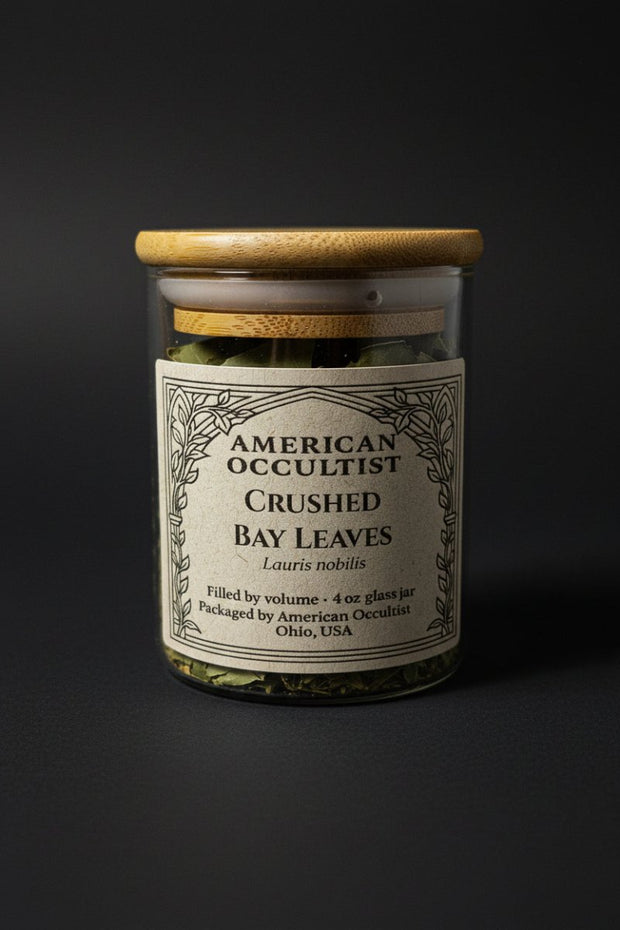
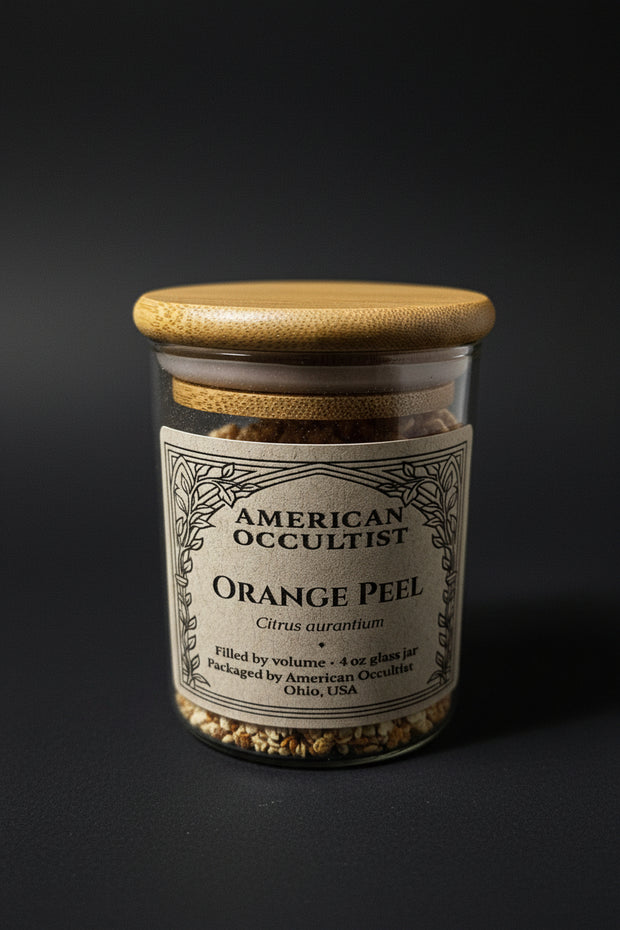
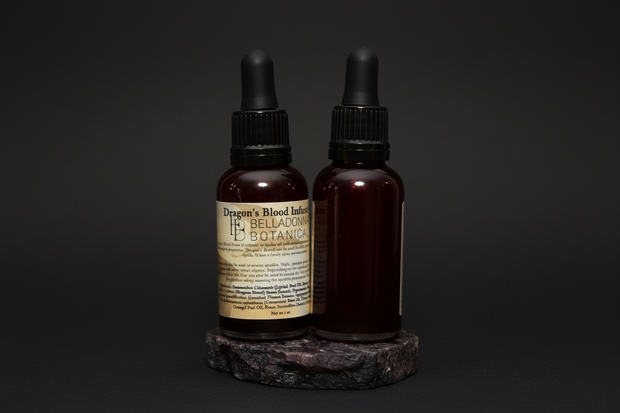
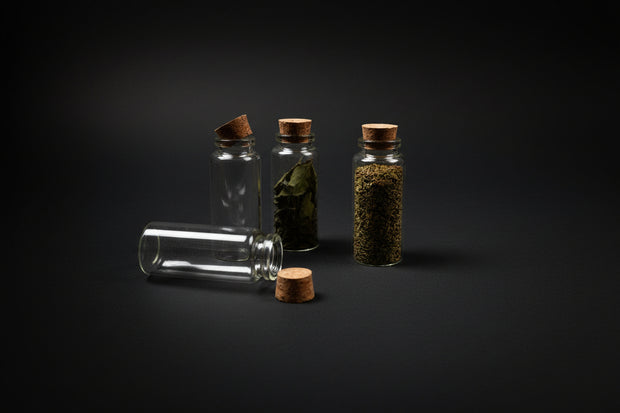
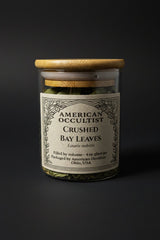
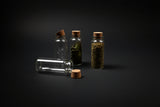
After planning the functions, browse Ritual Herbs, Ritual Oils, Candles, and Bottles & Jars. Useful options include the Bay Leaves Jar, Orange Peel Jar, Dragon’s Blood Ritual Oil, and Glass Spell Bottle with Cork. Choose only materials whose role, application, and safety you understand.
Frequently Asked Questions
How many ingredients should a spell have?
There is no universal number. Use the smallest set that completes the action and represents the chosen system clearly.
Does adding more herbs make a spell stronger?
Not automatically. More herbs can create conflicting symbolism, safety problems, spoilage, and unclear design.
Can I choose ingredients by intuition?
You can include personal associations in a clearly personal practice, but verify identity, physical behavior, safety, and cultural context.
Do all ingredients need a magical correspondence?
No. Some are present because they hold, bind, carry, protect a surface, mark time, or make the method physically possible.
Can I use food-grade herbs in every ritual preparation?
No. Food-grade status does not establish safety for smoke, concentrated oil, skin contact, pets, pregnancy, medication interactions, or every participant.
Every Ingredient Should Have a Reason
Choose ingredients by function, source, physical compatibility, and safety. A smaller working with a clear structure is easier to perform, explain, record, and revise than an impressive pile of materials whose roles were never defined.
Tools for this practice
Explore the products selected for this guide. Review each listing for what is included and how to use it.
Shop this guide · 4 items Collapse


Keep exploring the shop
You made it to the end of the guide. Keep exploring through related products, major departments, or the full catalog.
 RELATED TO THIS GUIDE
Ritual Herbs
Shop this topic
RELATED TO THIS GUIDE
Ritual Herbs
Shop this topic


Leave a comment