


How to Use Ritual Spoons, Scoops, and Tongs Safely

Small handling tools make ritual preparation more controlled. A spoon can transfer dried herbs without putting fingers into a jar. A scoop can keep loose resin portions consistent. Tongs can move hot charcoal without placing hands near the heat.
These tools are useful because of what they physically do—not because every decorative spoon is accurate, food-safe, heat-safe, or suitable for every material. Choose the tool by its job, construction, and exposure route.
Define the Function Before Choosing the Tool
A handling tool may be used to:
- transfer dried herbs;
- portion loose resin incense;
- move salt, soil, ash, or powder;
- dispense ritual oil;
- place offerings;
- hold hot charcoal;
- arrange small stones or petition papers;
- keep hands away from irritating or staining material.
One spoon should not automatically perform all of these tasks. Food, incense, oil, dirt, charcoal, and unknown powders require different boundaries.
Ritual Spoons Are Not Automatically Measuring Spoons
A decorative spoon may hold a visually consistent amount, but it is not necessarily calibrated to a teaspoon, gram, milliliter, or other standard.
Use a ritual spoon for:
- repeatable symbolic portions within one practice;
- transferring small amounts;
- avoiding direct hand contact;
- creating a deliberate sequence;
- keeping a jar cleaner.
Use a real measuring tool and scale when the formula requires accuracy. Do not make medical, culinary, skin-care, or combustion decisions based on an unverified decorative spoonful.
Separate Food and Nonfood Tools
A spoon that has touched incense resin, charcoal, ritual oil, cemetery dirt, unknown herbs, pigments, wax, or nonfood powder should remain nonfood.
Create visible categories:
- Food-only: kept in the kitchen and never used for ritual-only substances.
- Dry ritual herbs: used only for correctly identified nonfood materials.
- Resin and incense: dedicated because residue and fragrance persist.
- Oil: nonfood unless the entire product and tool are specifically food-safe.
- Hot charcoal: purpose-built tongs only.
- Unknown or hazardous material: no casual handling tool; seek qualified guidance.
Color-code, engrave, tag, or store categories separately so shared-household users do not confuse them.
Choose the Material Carefully
Stainless steel
Stainless steel is durable and relatively easy to clean, though seams, decoration, and unknown finishes can retain residue. It transfers heat and may become hot near charcoal or flame.
Brass and copper alloys
These metals tarnish and react with salt, moisture, acids, oils, and some plant compounds. Decorative brass is not automatically food-safe or suitable for direct flame.
Wood
Wood is quiet and comfortable but porous. It absorbs oil, scent, color, and moisture. Dedicate wooden scoops to one compatible dry category and avoid soaking.
Stone and crystal
Crystal spoons are generally decorative transfer tools. Softness, cleavage, inclusions, glue, metal settings, and uneven surfaces make them unsuitable for forceful scraping, grinding, heat, or universal washing.
Glass and ceramic
These materials resist some stains but can chip or shatter. Inspect rims and handles and do not use ordinary decorative pieces for hot charcoal.
Plastic or resin
Lightweight scoops may work for dry room-temperature material, but heat, oils, solvents, fragrance, and static can affect them. Confirm the intended use.
Use a Clean Transfer Method
- Read the source label.
- Confirm the material and intended route of use.
- Place the receiving container on a stable tray.
- Use a clean, dry, dedicated tool.
- Scoop a small amount without touching other surfaces.
- Do not return excess material to the original jar after contact.
- Close and relabel the source container.
- Clean or isolate the tool immediately.
- Record the amount when the formula matters.
This reduces cross-contamination and prevents an altar surface from becoming the mixing point for every ingredient.
Herbs and Botanicals
Use a dedicated spoon for dry, correctly identified material. Do not use one spoon across several herb jars without cleaning it because oils, dust, allergens, and tiny fragments transfer between products.
- Keep botanical names and plant parts with the jar.
- Do not scoop moldy, damp, or unidentified herbs.
- Avoid crushing brittle plants with a decorative spoon.
- Do not taste ritual herbs from the tool.
- Use a tray when powders become airborne.
Review How to Store Ritual Herbs and How to Choose and Use a Mortar and Pestle.
Resins and Loose Incense
Resin sticks to fingers and porous tools, so a dedicated metal or otherwise compatible scoop can improve control.
- Break large pieces with a method designed for the resin rather than stabbing them with a decorative spoon.
- Transfer small amounts; excessive resin can smother charcoal or create heavy smoke.
- Keep the tool away from the live charcoal after dispensing.
- Allow sticky residue to cool before cleaning.
- Store the scoop with the resin category, not with kitchen utensils.
See How Much Resin Should You Put on a Charcoal Disc?.
Charcoal Tongs Must Hold Heat Securely
Hot charcoal requires purpose-built tongs with enough length, grip, and rigidity to control the disc. Decorative tweezers, kitchen forks, crystal spoons, fingers, or loose pliers are poor substitutes.
Before lighting:
- inspect the tongs for looseness, rust, sharp edges, and poor alignment;
- practice gripping an unlit disc over the burner;
- place the burner on a heat-resistant stable surface;
- clear the path between ignition point and burner;
- keep sleeves, hair, paper, oil, and herbs away;
- provide ventilation;
- keep children and pets out of the area.
After use, place tongs only on a heat-resistant surface. Metal remains hot after the charcoal is released.
Oils and Liquids
Use droppers, pipettes, or spoons compatible with the exact liquid. A spoon that touches a candle, skin, paper, herb, or altar should not go back into the bottle.
- Dispense into a small secondary dish first.
- Use the smallest amount required.
- Keep oil away from flame and charcoal.
- Do not use porous wood or soft stone when staining matters.
- Do not share topical applicators between people.
- Label ritual-only tools clearly.
Read How to Label and Store Ritual Oils.
Salt, Soil, Ash, and Powders
These materials can scratch, corrode, contaminate, and become airborne.
- Use separate scoops for salt and metal-reactive tools.
- Do not use a food spoon for soil or ash.
- Open powders over a washable tray.
- Do not blow residue off a spoon.
- Keep cemetery, crossroads, or outdoor material labeled and physically separated.
- Wear suitable protection when reliable safety information requires it.
Never handle an unknown powder as if its spiritual label proves safety.
Offerings
A ritual spoon can place a dry offering without touching the main supply. Consider food safety, allergies, pets, insects, and disposal.
When the offering is edible:
- use a food-safe dedicated utensil;
- keep it separate from incense and ritual chemicals;
- do not return offered food to the household container;
- do not leave perishable material standing;
- clean the vessel promptly.
A tool used for nonfood offerings should not later serve shared food.
Cleaning and Storage
Clean according to the material and residue.
- Dry-brush loose herbs and powder without creating dust.
- Remove resin with a method compatible with the tool.
- Keep wood and soft mineral tools out of soaking water.
- Dry metal completely.
- Avoid abrasive salt and harsh polish on plated surfaces.
- Inspect glue, stone, and decoration before washing assembled tools.
- Store only when fully cool, clean, and dry.
Use How to Clean Ritual Tools by Material before applying a universal cleansing method.
Avoid the Shared Mystery Spoon
A spoon left loose on an altar eventually becomes impossible to classify. It may have touched oil, ash, salt, incense, food, bodily material, and cleaning products. Once its history is unknown, retire it from food, skin, and shared-use applications.
Assign every tool:
- a name or inventory number;
- one use category;
- a storage location;
- a cleaning method;
- a clear restriction label;
- a replacement or retirement plan.
Ritual Counting and Symbolism
A practice may use one, three, seven, nine, or another number of spoonfuls. Treat that as a symbolic sequence unless the recipe also specifies a physical measurement.
Record both when necessary:
- “three ritual spoonfuls” for the symbolic action;
- the actual weight or volume for repeatability;
- the exact spoon used;
- the ingredient and batch;
- the final intended use.
This preserves meaning without pretending the decorative tool is laboratory equipment.
Choose Handling Tools by Their Actual Job
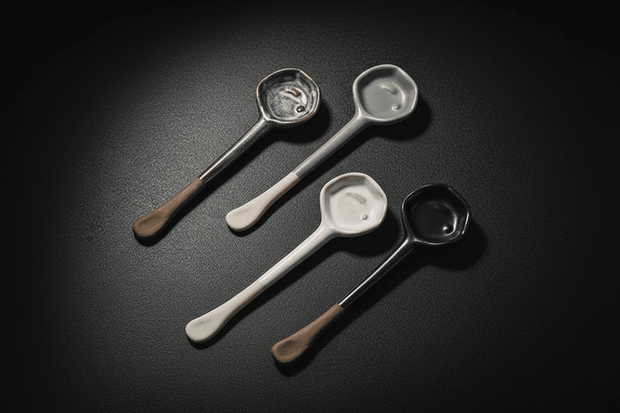
Browse Altar Supplies and Ritual Herbs after deciding what must be transferred. The Witch’s Ritual Spoon supports controlled dry handling, while the Amethyst Cluster Crystal Spoon is best treated as a delicate decorative transfer tool rather than a grinder or calibrated measure. Use Brass Charcoal Tongs for hot charcoal according to the product directions. None of these tools should move casually between food, skin, incense, oil, and hot-material use.
Frequently Asked Questions
Is a ritual spoon equal to a teaspoon?
Not unless it has been measured and verified. Decorative spoons vary widely.
Can one spoon be used for every herb?
Only with appropriate cleaning between materials and when all herbs belong to the same safe use category. Dedicated tools reduce mistakes.
Can crystal spoons hold hot resin?
Do not assume they can. Heat, glue, inclusions, and sudden temperature changes can damage assembled stone tools.
Can I pick up charcoal with ordinary tweezers?
Use purpose-built tongs that grip the disc securely and keep your hand away from heat.
Should ritual spoons be cleansed after every use?
They should be physically cleaned according to the material and residue. Symbolic cleansing depends on the practice and should not damage the tool.
Can a ritual spoon return to kitchen use?
Not after contact with nonfood herbs, incense, charcoal, dirt, ritual oil, pigment, or unknown material.
Small Tools Create Better Boundaries
A spoon, scoop, or pair of tongs improves ritual preparation when its function is narrow and documented. Separate food from nonfood use, keep hot charcoal tools purpose-built, prevent cross-contamination, record symbolic versus physical quantities, and store each tool clean, dry, and labeled.
Tools for this practice
Explore the products selected for this guide. Review each listing for what is included and how to use it.
Shop this guide · 1 item Collapse

Keep exploring the shop
You made it to the end of the guide. Keep exploring through related products, major departments, or the full catalog.
 RELATED TO THIS GUIDE
Ritual Supplies & Altar Tools
Shop this topic
RELATED TO THIS GUIDE
Ritual Supplies & Altar Tools
Shop this topic


Leave a comment