


Is This Tradition Really Ancient? How to Evaluate Historical Claims

Spiritual books, websites, products, and teachers often describe a ritual, symbol, deity practice, or tradition as ancient. Sometimes that description is well supported. Sometimes it compresses centuries of change into one dramatic word. In other cases, it is repeated because it sounds authoritative.
Historical accuracy does not require treating every modern tradition as fraudulent. A practice can be meaningful, ethically serious, and culturally important even when its current form is recent. The problem is not modernity. The problem is presenting invention, revival, reconstruction, or adaptation as an uninterrupted ancient survival without evidence.
“Ancient” can describe several different things
An ancient source
A surviving inscription, manuscript, archaeological object, hymn, law code, ritual text, or historical description may genuinely come from the ancient world. That establishes the age of the source—not necessarily the uninterrupted survival of the modern practice built from it.
A later copy of older material
Many ancient works survive only in manuscripts copied centuries after their original composition. Scholars compare copies, quotations, language, and historical context to estimate how the text developed.
A continuing tradition that changed over time
A religion can preserve substantial continuity while changing language, ritual details, theology, institutions, and social setting. Continuity does not mean perfect immobility.
A survival in folklore or household custom
A prayer, charm, seasonal custom, protective mark, or household practice may continue after its original meaning changes or is forgotten. Evidence of survival does not prove that every modern explanation of the custom is equally old.
A revival
A revival intentionally renews a religion or custom after disruption, decline, or disappearance. It may draw from surviving communities, historical records, archaeology, literature, and modern values. Revival is a legitimate category and should be named honestly.
A reconstruction
Reconstructionist practitioners attempt to build modern religious practice from historical and comparative evidence. Strong reconstruction distinguishes what is directly documented, what is inferred, and what has been adapted for present conditions. Read Syncretism vs. Eclecticism vs. Reconstructionism.
A modern synthesis
A contemporary system may combine historical material, folklore, ceremonial magic, psychology, personal revelation, and new ritual design. Calling it modern does not make it shallow. Calling it ancient when it is not prevents readers from understanding what they are actually practicing.
The object and its interpretation may have different dates
A historical symbol can appear on a newly designed pendant. An old plant can receive a recent correspondence. A statue can depict an ancient deity while using imagery created by a modern artist. A contemporary ritual can include a translated historical prayer inside a new structure.
Ask two separate questions:
- How old is the underlying object, name, text, or source?
- How old is this particular interpretation, design, or use?
This prevents a common error: treating a real historical connection as proof that every modern detail surrounding it is equally old.
Start with the earliest verifiable evidence
When someone says a practice is ancient, ask for the earliest source that clearly supports the specific claim. Useful evidence may include dated manuscripts, inscriptions, archaeological reports, period artwork, contemporary descriptions, legal records, liturgical texts, museum records, or reputable historical scholarship.
Do not confuse the age of a general idea with the age of a particular form. People have used circles, stars, knots, fire, water, plants, offerings, and divination for millennia. That does not prove that a specific diagram, scripted ritual, correspondence chart, or commercial design was used in the same way across ancient cultures.
Use Primary vs. Secondary Sources in Occult Study to separate original evidence from later interpretation.
Check the dates in the middle
An ancient reference and a modern practice do not automatically prove an unbroken chain between them. Look for evidence across the intervening centuries:
- Are there records of continued practice?
- Did the meaning of the symbol or ritual change?
- Was the material rediscovered through archaeology, translation, or publication?
- Did a modern author introduce the present form?
- Are there communities that document continuous transmission?
- Does the claim skip a long period without acknowledging the gap?
A gap does not make revival or reconstruction invalid. It changes the most accurate category.
Separate evidence from resemblance
Two symbols or rituals can look similar without one descending directly from the other. Simple geometric forms arise independently, and cultures also borrow through trade, migration, conquest, translation, and conversion. Resemblance is a reason to investigate, not proof of a direct lineage.
Claims such as “every culture had the same goddess,” “all horned figures are one deity,” or “this symbol appears everywhere and therefore has one universal meaning” flatten important differences.
Watch how sources are cited
Strong historical writing identifies authors, titles, dates, editions, translators, archives, museums, archaeological sites, source communities, or scholarly debates. Weak claims often cite only “ancient wisdom,” “oral tradition,” “secret teachings,” or another website repeating the same paragraph.
Oral tradition can carry genuine history, identity, and religious knowledge. It should not be dismissed merely because it is oral. A person invoking unnamed oral tradition to support a universal commercial claim, however, should explain their relationship to the community and the limits of what can be verified.
Use How to Evaluate an Occult Book to examine an author’s sources, editions, and credentials.
A six-step check for historical claims
- Look for a specific noun. “Ancient people believed” is weak. Which people, in what place, during what period?
- Look for a named source. Is the claim connected to a text, artifact, scholar, archive, or documented tradition?
- Check the date of the interpretation. A modern author may discuss an old source while adding a new system.
- Distinguish continuity from revival. A reconstruction is not automatically an unbroken survival.
- Compare independent sources. Ten shops repeating one supplier paragraph count as one claim, not ten confirmations.
- Allow an honest “unknown.” A gap in evidence is not permission to invent certainty.
Red flags in product pages, books, and social posts
- “Used for thousands of years” without a culture, period, or source
- “The original meaning” when several interpretations exist
- A historical-sounding name presented as evidence by itself
- A modern symbol placed beside an ancient deity without explanation
- A secret universal tradition that conveniently cannot be checked
- Disagreement treated as proof that outsiders cannot understand
- “Ancient” used to justify high prices, obedience, initiation, or immunity from questions
These signs do not prove that an object or practice is meaningless. They show that the historical claim should not be the reason you accept or buy it.
Later evidence is still evidence—of a later period
A symbol documented in an early-modern or nineteenth-century manuscript should not be relabeled as prehistoric or Viking-age. Correct dating does not make the symbol meaningless; it places it in the history that can actually be demonstrated.
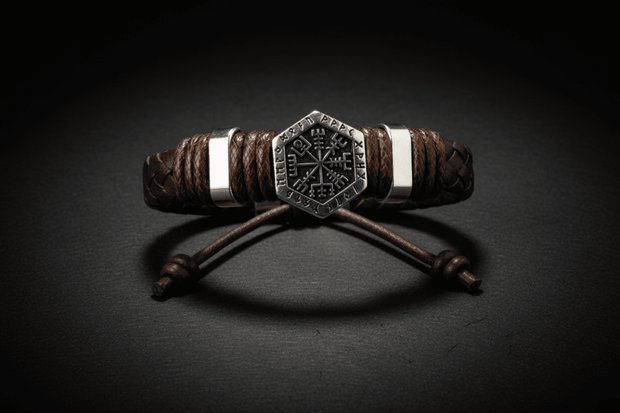
For a concrete example, read Vegvísir and the Helm of Awe, which distinguishes familiar Icelandic magical-stave designs from unsupported claims that every modern form is a surviving Viking-age emblem.
Absence of evidence requires careful language
Not finding evidence does not prove that something never happened. Perishable materials disappear, marginalized communities may leave few records, and institutions preserve elite voices more often than household practice. The responsible conclusion is proportionate: “No evidence has been identified,” “the claim remains uncertain,” or “the surviving record begins in a later period.”
Uncertainty should not be converted into certainty because a claim feels spiritually appropriate.
Modern does not mean fake
Tarot developed over time. Modern witchcraft movements reorganize older materials. Contemporary artists create powerful devotional images. Practitioners design meaningful rituals for circumstances their ancestors did not share.
A modern origin becomes a problem when it is hidden to manufacture authority. Accurate dating creates better questions: Who developed the interpretation? Which sources influenced it? How did communities change it? Why does it remain meaningful now?
Frequently asked questions
Does a modern origin make a practice fake?
No. Religions and rituals are continually created, adapted, revived, and reconstructed. Honest modern practice can be meaningful without pretending to be ancient.
Can a practice be ancient if the surviving manuscript is later?
Possibly. Scholars may date the underlying composition through language, quotations, references, and comparison among copies. State both the likely date of the work and the date of the surviving manuscript.
Are family stories enough to prove an ancient lineage?
Family memory is valuable evidence about the family, especially when supported by objects, records, and multiple witnesses. It rarely proves a universal or thousands-of-years-old religious lineage by itself.
Why do historical dates change?
New manuscripts, archaeological discoveries, improved dating, better translations, and revised scholarship can change conclusions. Updating a claim is a strength.
Accuracy gives modern practice a stronger foundation
A tradition does not need an invented age to deserve respect. Clear categories—ancient source, continuous tradition, folklore survival, revival, reconstruction, adaptation, or modern synthesis—allow practitioners to value what they have without erasing the people, documents, and historical changes that made it possible.
Continue the research
See which symbols on Lilith statues are ancient and which are modern and The History of Modern Satanism for applied examples. Browse Printed Works when a book is the appropriate next step—but ask whether the author shows how a claim is known, not merely whether it sounds old.
Examine historical claims in real products
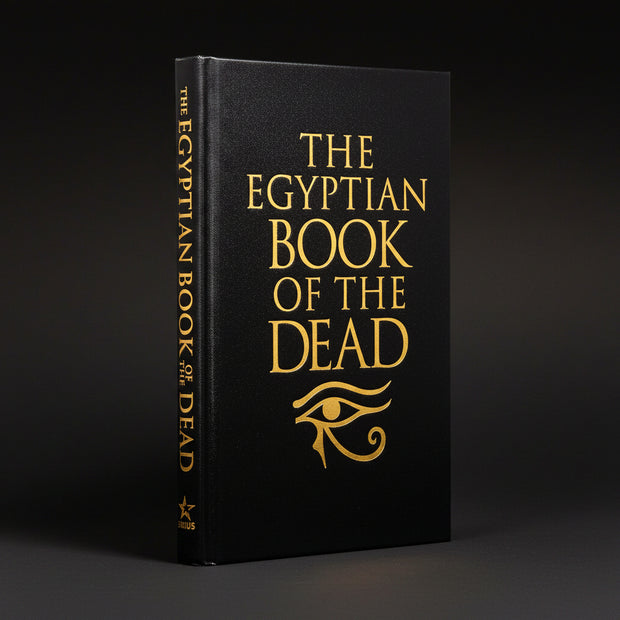
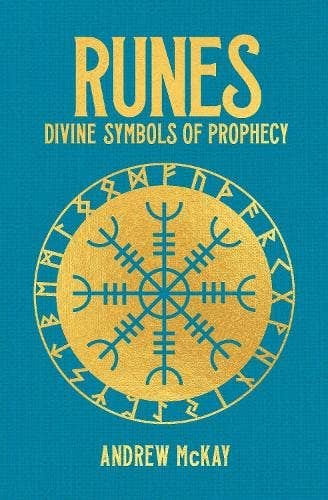
Compare how public editions and symbolic goods are described, including The Egyptian Book of the Dead, Runes: Arcturus Hidden Knowledge, and the historically later Vegvísir bracelet. Product language should identify inspiration and documented context rather than manufacture an ancient pedigree.
Tools for this practice
Explore the products selected for this guide. Review each listing for what is included and how to use it.
Shop this guide · 3 items Collapse


Keep exploring the shop
You made it to the end of the guide. Keep exploring through related products, major departments, or the full catalog.


Leave a comment