


Religious Experience vs. Historical Evidence: Keeping Both in Perspective

Religious life often includes experiences that feel immediate and deeply significant: a vivid dream, a powerful ritual, an apparent omen, a sense of presence, an answered prayer, an unexpected coincidence, or an impression received during meditation or divination.
Historical study asks a different kind of question. It examines documents, objects, dates, languages, institutions, and testimony to determine what can reasonably be said about the past. A personal experience and a historical argument can both matter, but they do not provide the same kind of evidence.
Keeping those categories distinct allows people to take spirituality seriously without turning every meaningful experience into proof that others must accept.
Personal meaning is not the same as public proof
If a ritual brings comfort, focus, courage, or a strong sense of connection, that effect is real as an experience. It does not automatically establish why the experience occurred, which spiritual being—if any—caused it, or whether a related historical story is literally accurate.
Likewise, a dream about a deity can become an important part of someone’s devotional life without proving that an ancient community worshiped that deity in the exact modern form revealed in the dream.
This distinction does not insult belief. It describes the limits of what one person’s internal experience can demonstrate to another person.
Traditions shape interpretation
People interpret unusual or powerful experiences through the concepts available to them. One person may describe a feeling as divine presence, another as ancestral connection, another as intuition, another as psychological symbolism, and another as coincidence.
Religious education, expectations, recent reading, grief, stress, sleep, community teaching, and cultural symbolism all influence the meaning assigned to an event. That does not prove the interpretation false. It means interpretation is part of the experience rather than a neutral layer added afterward.
Our guide to signs, synchronicities, and coincidence offers a practical method for considering several explanations before reaching a conclusion.
Separate observation from interpretation
A useful journal records what happened before deciding what it meant.
- Observation: “I dreamed of an owl three nights after beginning a devotional practice.”
- Interpretation: “The owl was a message from a deity.”
- Alternative explanations: “I recently read about owl symbolism, heard owls outside, or was thinking intensely about the practice.”
- Practical response: “I will record the dream, continue respectfully, and avoid making a major decision based on one event.”
Writing these layers separately does not remove mystery. It helps prevent the first interpretation from becoming unquestionable certainty.
Historical evidence answers historical questions
Questions such as “Was this deity worshiped in this city?” or “Did this ritual exist in the tenth century?” require historical evidence. Relevant sources may include inscriptions, manuscripts, archaeology, contemporary accounts, language, and later records evaluated in context.
A modern vision may inspire a new ritual, but it cannot by itself establish ancient precedent. A present-day spiritual practice should describe revelation as revelation and historical documentation as documentation.
See Primary vs. Secondary Sources in Occult Study and Is This Tradition Really Ancient? for methods of evaluating historical claims.
Experience can guide practice without controlling life
A personal experience may invite reflection, prayer, study, creativity, or a modest ritual response. It should not automatically override safety, consent, finances, medical care, legal obligations, or the rights of other people.
Before acting, consider:
- Is the interpretation the only possible explanation?
- Does the proposed action create harm, debt, isolation, or fear?
- Am I seeking repeated confirmation because uncertainty feels intolerable?
- Would I make the same decision without the spiritual interpretation?
- Can I wait, gather more information, and discuss it with a grounded person?
- Does the action respect the consent and privacy of everyone involved?
Divination, dreams, and perceived signs are better used for reflection than as unquestionable commands. Our grounded guide to psychic development emphasizes observation, bias awareness, and boundaries.
Devotion does not require constant proof
Some practitioners become trapped in a cycle of asking whether every animal, number, song, candle movement, or unexpected event confirms a divine relationship. That can turn devotion into surveillance and anxiety.
A stable devotional practice can rest on chosen values, regular prayer, offerings, study, service, or ritual rather than continuous supernatural reassurance. Read Devotional Practice vs. Deity Work for a fuller discussion of relationships, reciprocity, signs, and boundaries.
Shared testimony has value and limits
Communities preserve stories of visions, miracles, revelations, initiations, and divine encounters. Repeated testimony can reveal how a tradition understands religious life and which experiences it considers meaningful.
Testimony still needs interpretation. Similar stories may reflect shared spiritual realities, shared expectations, common ritual conditions, storytelling patterns, social reinforcement, or several factors at once. Historical researchers can document that people reported an experience even when they cannot determine its supernatural cause.
Not every intense experience is spiritually beneficial
Sleep deprivation, fasting, substances, grief, trauma, illness, prolonged isolation, and high-pressure group settings can intensify perception and emotion. Some traditions use altered states with careful preparation and community support; intensity alone does not prove truth or safety.
Pause and seek support when experiences become frightening, interfere with sleep or daily functioning, create pressure to harm yourself or someone else, demand reckless spending, or make you feel unable to question what is happening. A licensed health professional can help with distress without requiring you to abandon your spiritual identity. Immediate danger requires local emergency assistance.
How to speak about experience responsibly
- Use first-person language: “I experienced,” “I interpreted,” or “In my practice.”
- Distinguish belief from documented history.
- Avoid telling others that your experience proves their destiny, illness, curse, ancestry, or divine obligation.
- Do not claim community authority because of a private revelation.
- Allow people to interpret similar events differently.
- Revise your interpretation when new evidence appears.
A balanced practice of discernment
Discernment is not automatic disbelief. It is the habit of holding meaning and uncertainty together. A practitioner can say, “This experience matters to me,” while also saying, “I cannot prove exactly what caused it.”
Over time, look for patterns rather than isolated intensity. Does the interpretation support compassion, stability, responsibility, and honest study? Or does it produce escalating fear, superiority, dependence, or impulsive decisions? The practical effects do not prove the metaphysical explanation, but they help evaluate whether the interpretation is serving a healthy life.
Frequently asked questions
Does psychology explain away spiritual experience?
Not necessarily. Psychological processes are part of how humans perceive and interpret every experience, including religious ones. Identifying those processes does not settle every metaphysical question.
Can a dream be spiritually meaningful?
Yes. It can inspire reflection or devotion. Record it before building a large claim around it, and avoid treating one dream as an unquestionable command.
Can personal revelation add to a tradition?
Many religions allow some form of inspiration or revelation, but they differ in how it is tested and whether it creates authority. Describe personal revelation honestly rather than presenting it as established ancient teaching.
What if an experience matches a fact I did not know?
Document the details and verify the fact independently. Consider ordinary exposure, memory, coincidence, broad interpretation, and information learned indirectly before claiming proof of a supernatural source.
Must I choose between belief and skepticism?
No. You can practice with openness while remaining careful about certainty, causation, and claims made on behalf of others.
Two kinds of truth can be discussed without confusion
Religious experience concerns meaning, relationship, identity, and personal interpretation. Historical evidence concerns what can be publicly supported about the past. Neither needs to impersonate the other. Keeping them distinct protects spiritual freedom, improves historical accuracy, and leaves room for wonder without demanding certainty where certainty is unavailable.
Optional Tools for Reflection
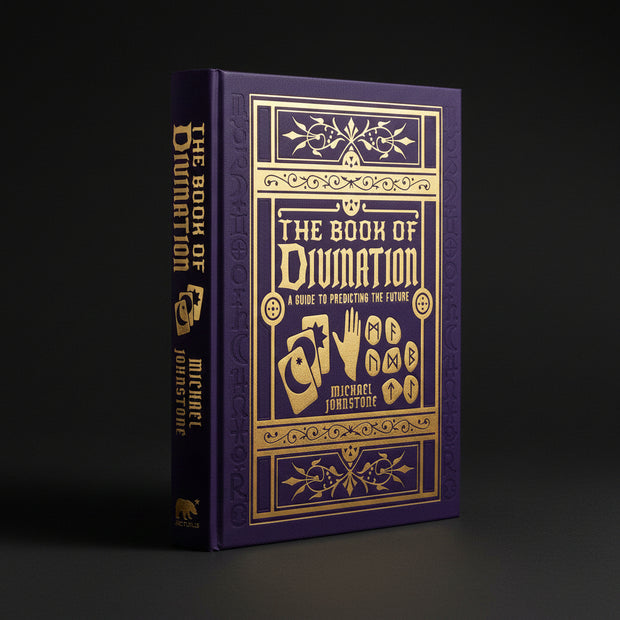
Readers who want a structured, non-diagnostic way to record symbols and questions can explore the Book of Divination or materials in the Divination Tools collection. These products can support journaling and study; they do not verify supernatural causation or replace mental-health care.
Tools for this practice
Explore the products selected for this guide. Review each listing for what is included and how to use it.
Shop this guide · 1 item Collapse

Keep exploring the shop
You made it to the end of the guide. Keep exploring through related products, major departments, or the full catalog.


Leave a comment