


Tarot Jumpers and Reversals: How to Decide What Counts in a Reading

A card flies from the deck while you shuffle. Three more slide onto the floor. Another lands sideways. One card appears upside down even though you thought the deck was upright. Which cards count?
Tarot has no universal governing rule for jumpers, dropped cards, reversals, or sideways cards. Readers develop methods based on tradition, deck handling, accessibility, and personal preference. The most reliable approach is not to interpret every accident after it happens. It is to decide your rules before the reading begins.
Define the Terms
- Jumper: a single card that clearly separates from the deck during an ordinary shuffle.
- Flier: a card propelled outward with noticeable force.
- Dropped card: a card lost because the deck slipped, the grip changed, or handling failed.
- Clump: several cards falling together.
- Reversal: a card deliberately or accidentally oriented upside down relative to the reader.
- Sideways card: a card landing approximately horizontal rather than upright or reversed.
These labels describe what happened physically. They do not prove why it happened or whether it carries spiritual significance.
Why Readers Use Different Rules
Some readers accept every clean jumper. Others place jumpers back into the deck and draw only from the planned spread. Some read reversals; others use upright cards with a full range of light, shadow, blocked, delayed, excessive, or internal meanings.
All of these systems can be coherent when used consistently. Problems begin when the rule changes whenever the reader wants another answer.
Start with Divination for Beginners if you are still choosing a basic tarot method.
Mechanical Causes Matter
Cards leave the deck for ordinary reasons:
- glossy new cardstock is slippery;
- old cards are warped or stuck together;
- the deck is too large for the reader’s hands;
- dry or humid air changes friction;
- sleeves, rings, nails, tremor, pain, weakness, or limited mobility affect grip;
- overhand, riffle, Hindu, and pile shuffles produce different accidents;
- the reader is rushing or emotionally activated;
- the table is uneven or crowded.
A physical cause does not make the reading meaningless. It means the event should not automatically be treated as supernatural evidence.
Write a Pre-Reading Protocol
A simple protocol prevents interpretation from shifting mid-reading.
| Event | Possible Rule |
|---|---|
| One clean jumper | Set it aside as context, then complete the planned spread |
| Two or three separate jumpers | Use only the first or return all and reshuffle |
| A clump falls | Treat it as a handling accident and return it |
| Cards fall face down | Return them without looking |
| Card lands sideways | Use the orientation closest to upright/reversed or redraw |
| Deck spills | Pause, reorganize, and restart the shuffle |
| Unexpected reversal | Follow the reversal rule chosen before the reading |
The exact rules matter less than clarity and repeatability.
When a Jumper Can Be Useful
A single card that separates cleanly can function as:
- the emotional atmosphere around the question;
- background information;
- a caution about how the question is framed;
- a theme to compare with the formal spread;
- a prompt for journaling after the reading.
Do not let a jumper replace the entire reading unless that is your stated method. If every card becomes an urgent interruption, the spread loses structure.
What to Do With a Clump
Several cards falling together usually provide more information than the reader can evaluate cleanly. The order may be accidental, some cards may have remained stuck, and the reader may feel pressured to invent a story for all of them.
A grounded rule is:
- do not inspect the faces;
- return the clump to the deck;
- square the cards;
- adjust the shuffle method;
- restart once;
- draw the planned spread.
If clumps continue, the deck may need cleaning, flattening, gentler handling, or a different shuffle.
Reversals Are a Method, Not an Obligation
Reversed cards can add nuance, but they are not required for serious reading.
Common reversal frameworks include:
- blocked or resisted energy;
- internal rather than external expression;
- delay or incomplete development;
- excess, distortion, or imbalance;
- release from the upright condition;
- the shadow or neglected aspect of the card.
Choose one framework and test it. Avoid assigning a new reversal meaning only because the upright interpretation feels inconvenient.
How to Introduce Reversals Deliberately
If you want reversals, create them intentionally rather than waiting for random disorder.
- Square the deck.
- Divide it into several packets.
- Rotate one packet 180 degrees.
- Recombine and shuffle normally.
- Record that reversals were enabled.
If you do not use reversals, orient the cards before each session and turn accidental reversals upright without interpreting them.
Sideways Cards
Sideways cards are difficult because tiny angle differences can change the decision. Possible systems include:
- read the card according to whichever end is closer to upright;
- treat sideways as transitional or uncertain;
- turn it upright and note the ambiguity;
- return it and draw again;
- ignore orientation entirely.
Write down the rule in advance. Do not rotate the card repeatedly while deciding which meaning feels better.
Ask Better Questions Before Blaming the Deck
Unclear questions create unclear readings. Before interpreting a jumper as a correction, review:
- Did the question ask one thing?
- Was a timeframe included?
- Was the subject within the reader’s consent and control?
- Did the spread match the question?
- Was the reader asking for certainty tarot cannot provide?
- Has the same question been repeated several times?
Use How to Ask Better Divination Questions before adding more cards.
Reading for Other People
Disclose your method before the shuffle.
A clear statement might be:
“I read one clean jumper as background context. I return clumps to the deck. I use reversals as blocked, internal, delayed, or excessive expressions depending on the card and position.”
The client can then understand why a card was included. Do not suddenly announce that a dropped card is an unavoidable prophecy.
Accessibility and Motor Differences
A person with arthritis, tremor, weakness, neuropathy, limited hand size, pain, or coordination differences may drop more cards. That does not make the reader less intuitive.
Adaptations include:
- shuffle smaller packets;
- use a table-based wash shuffle;
- use a card shuffler compatible with the deck;
- choose bridge-size or smaller cards;
- have the client cut rather than shuffle;
- spread cards face down and select from the table;
- use an assistant in an agreed group setting;
- treat drops as mechanical unless the prewritten rule says otherwise.
Accessibility should shape the method, not become a reason to assign spiritual meaning to involuntary movement.
Keep a Reading Record
For several weeks, record:
- deck and shuffle method;
- question and spread;
- jumper rule;
- number of jumpers or drops;
- reversal system;
- interpretation before knowing the outcome;
- later observations;
- changes in deck condition or handling.
This can reveal whether jumpers add useful context or simply increase noise. Review Ritual Recordkeeping for a broader documentation method.
Avoid the Urgent-Message Trap
Online tarot culture often labels every flier as a message that “refused to be ignored.” That framing can make ordinary accidents feel threatening.
Pause when you notice:
- repeating the same reading until the preferred card appears;
- treating every drop as a warning;
- adding cards until the answer becomes certain;
- asking the deck to confirm what another reading already said;
- feeling unable to make ordinary decisions without drawing;
- interpreting damaged cards or clumsy shuffling as punishment.
Put the deck away, return to observable information, and seek appropriate real-world support when the question concerns health, safety, law, money, or crisis.
Care for the Deck
Warped, sticky, dirty, or damaged cards produce more accidental separations. Keep the deck dry, supported, and free from wax, oil, smoke residue, and loose herbs. See How to Store and Care for Tarot and Oracle Decks.
Build a Consistent Reading Setup
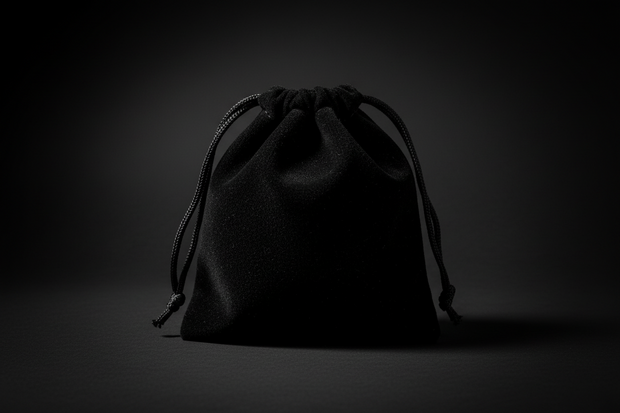
Browse the Tarot collection after deciding whether card size, finish, symbolism, and guidebook suit your hands and reading style. A Black Velvet Pouch can separate a compact deck inside larger storage, while Journals support a written jumper and reversal protocol. A pouch does not correct warped cards or protect a deck from crushing, so use rigid storage when needed.
Frequently Asked Questions
Does every card that falls out count?
No. Decide in advance whether a clean single jumper counts and whether clumps, face-down drops, or full spills are returned.
Are jumpers more important than drawn cards?
Not automatically. A jumper can provide context, but the planned spread should retain its structure.
Do I have to read reversals?
No. Upright-only reading can still address blocked, shadowed, delayed, or excessive expressions through position and context.
What if a card lands exactly sideways?
Use your prewritten rule: closest orientation, transitional meaning, upright interpretation, or redraw.
Should I restart after dropping the deck?
Usually yes. Re-square the deck, calm the handling, and restart once rather than interpreting an uncontrolled spill.
Can a jumper override the question?
It can suggest that the framing needs review, but it should not be used to abandon consent, evidence, or the stated scope of the reading.
Consistency Creates Meaning
Jumpers and reversals can enrich tarot when the rules are clear. Define the method before shuffling, account for mechanics and accessibility, keep a record, protect the deck, and resist turning every dropped card into an emergency.
Tools for this practice
Explore the products selected for this guide. Review each listing for what is included and how to use it.
Shop this guide · 1 item Collapse

Keep exploring the shop
You made it to the end of the guide. Keep exploring through related products, major departments, or the full catalog.


Leave a comment