


Can You Feel Crystal Energy? Sensation, Expectation, Symbolism, and a Grounded Test

Some people describe warmth, tingling, pressure, calm, heaviness, emotion, buzzing, or a sudden sense of attraction when holding a crystal. Others feel absolutely nothing. Both experiences are common, and neither one determines whether a person is spiritual, intuitive, blocked, gifted, skeptical, or “doing it wrong.”
The useful question is not only, “Did I feel something?” It is also, “What exactly did I feel, what conditions may have contributed to it, and what conclusion does the experience actually support?” A bodily sensation can be genuine without proving a single explanation for its cause.
Experience and Explanation Are Not the Same
Suppose you hold a stone and feel warmth in your palm. The warmth is a real experience. Several explanations may be possible:
- the stone is changing temperature against your skin;
- you are noticing pressure, texture, weight, or muscle tension;
- focused attention has made a subtle bodily sensation easier to detect;
- expectation or prior knowledge has shaped what you notice;
- the stone has a strong personal, aesthetic, cultural, or spiritual association;
- within your belief system, you interpret the sensation as energetic contact.
Those possibilities do not have to be treated as insults to one another. Spiritual interpretation and careful observation can coexist, provided the interpretation is not presented as medical proof or objective certainty.
What People Mean by “Crystal Energy”
The phrase is used for several different ideas:
- Bodily sensation: tingling, temperature, pulse, pressure, lightness, heaviness, or movement.
- Emotional response: calm, unease, affection, grief, confidence, fascination, or nostalgia.
- Attentional effect: feeling more focused because the object marks a ritual or reminds you of an intention.
- Symbolic correspondence: associating a stone with protection, love, prosperity, divination, or another traditional quality.
- Spiritual belief: understanding the mineral as carrying, directing, storing, or expressing subtle energy.
- Physical material property: referring to measurable features such as hardness, crystal structure, conductivity, fluorescence, or piezoelectric behavior.
These meanings should not be quietly substituted for one another. A mineral having measurable physical properties does not automatically prove every metaphysical claim made about it. Likewise, the absence of scientific confirmation for a spiritual explanation does not erase the personal meaning of a ritual experience.
Why Focused Attention Can Change What You Feel
Interoception is the perception of internal bodily signals. Attention, expectation, breathing, posture, context, and prior learning can influence which sensations reach awareness and how they are interpreted.
When someone sits quietly, closes their eyes, slows their breathing, and waits for a stone to “feel” a certain way, several things change at once. The person is more attentive to the hands and body, less distracted by the environment, and more likely to notice ordinary sensations that usually remain in the background.
Research on expectation and tactile perception shows that suggestion and attention can alter reports of bodily sensation. That does not mean the sensation is fake. It means perception is an active process rather than a neutral meter.
Expectation Is Not the Same as Fraud
People sometimes use the word placebo as though it means “imaginary” or “stupid.” That is inaccurate and unhelpful. Expectations, ritual context, conditioning, attention, and meaning can influence subjective experience. A person can sincerely feel a change even when the proposed mechanism is not supported.
A 2025 randomized study comparing rose quartz with a visually matched placebo found anxiety reductions among believers regardless of which object they received, while no specific advantage appeared for the crystal itself. The result does not show that participants lied. It shows why belief, context, and expectation must be separated from claims that a material has a specific therapeutic effect.
Crystals should never replace medical or mental-health care, and sellers should not promise that a stone treats disease, detoxifies the body, changes medication needs, or guarantees emotional healing.
A Grounded At-Home Comparison
This exercise cannot prove or disprove metaphysical energy, but it can help you examine your own experience more carefully.
What you need
- three similarly sized objects that can be held safely;
- at least one crystal and one non-crystal object;
- opaque cloth bags or identical containers;
- a helper who can randomize the objects;
- a notebook and timer.
Before beginning
Write down the sensations you will record: warmth, coolness, tingling, pressure, emotional change, mental images, attraction, discomfort, or no noticeable effect. Also record sleep, caffeine, stress, room temperature, and whether you already know which object is which.
Procedure
- Have the helper place and label the hidden objects in random order without telling you the identities.
- Hold each covered object for the same amount of time.
- Keep posture, hand, room, and breathing as consistent as practical.
- Record sensations before guessing the object.
- Repeat the comparison on several different days.
- Reveal the labels only after the session is complete.
How to interpret it
Look for consistency rather than one dramatic session. Did you identify one object above chance across repeated trials? Did the same object produce the same description? Did sensations change with stress, temperature, or knowledge of the stone?
Whatever happens, avoid turning a home exercise into a universal claim. It is a personal observation under informal conditions, not a clinical or laboratory study.
What If You Feel Nothing?
Feeling nothing is not evidence that you are spiritually blocked. You do not need to invent sensations to participate in crystal practice.
You can work with a stone through:
- historical or contemporary correspondence;
- color symbolism;
- geological appreciation and collecting;
- devotional placement;
- meditation or contemplative focus;
- use as a tactile reminder of a chosen action;
- altar design, grids, or display;
- simple enjoyment of the mineral’s beauty.
A crystal can be meaningful because of what it represents and how you use it, even when it never buzzes, pulses, or becomes warm in your hand.
What If the Sensation Is Very Strong?
Strong sensations should be observed without immediately calling them detoxification, activation, a curse, kundalini, psychic attack, or proof that a stone is dangerous.
- Set the stone down.
- Change posture and move your hands.
- Check temperature, circulation, breathing, anxiety, caffeine, medication effects, and how long you have been still.
- Ground and return attention to the room.
- Record what happened before reading more interpretations online.
- Repeat only when you feel calm and physically well.
Persistent pain, numbness, dizziness, breathing difficulty, severe anxiety, fainting, or other concerning symptoms belong with qualified medical care, not crystal troubleshooting.
Do Shape and Size Change the Experience?
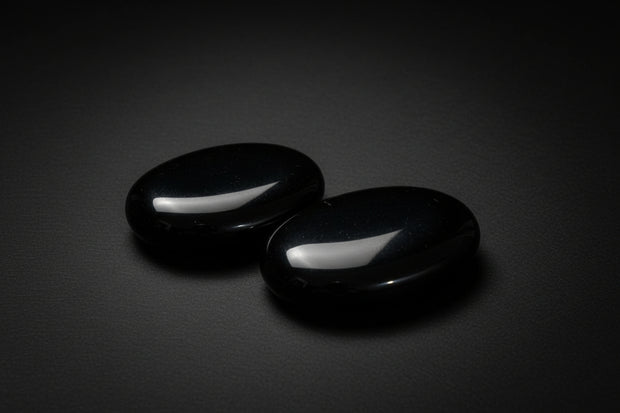
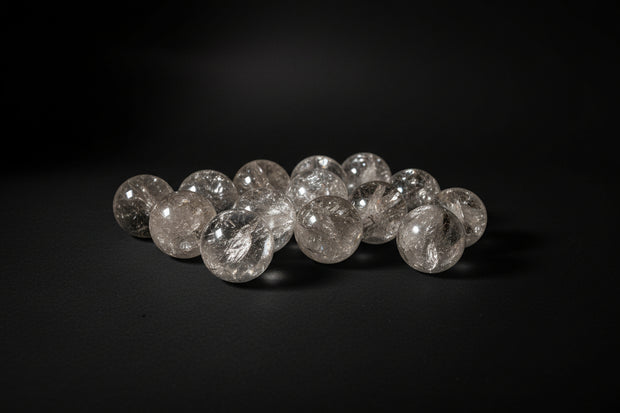
Shape and size can change how an object feels physically and symbolically. A sphere fills the hand differently from a point. A large specimen has more weight and visual presence than a small tumble. A polished surface feels different from a raw cluster. Points are often interpreted as directional, spheres as radiating evenly, towers as focusing upward, and palm stones as suited to holding or meditation.
Those traditional and practical distinctions can affect attention and ritual use. They should not be presented as measured proof that one shape emits a stronger invisible force.
Compare practical forms in Tumbled Stones, Palm Stones, Towers, and Natural Specimens, Crystal Spheres in Witchcraft, and How to Use Crystal Towers.
How to Evaluate Crystal Claims Online
Before repeating a claim, ask:
- Is the source describing tradition, personal experience, geology, or medical treatment?
- Does it distinguish symbolism from demonstrated physical effect?
- Is the claim specific enough to test?
- Are negative experiences automatically called “detox” or “purging”?
- Is the source selling an expensive solution to fear it created?
- Does it advise replacing professional care?
- Does every outcome count as proof, including no outcome?
A claim that cannot possibly be wrong cannot teach you much. Responsible metaphysical writing should state what is traditional, what is personal, what is physically known, and what remains unverified.
A Useful Way to Work With Crystals
- Choose the stone for a clear reason. Meaning, appearance, tradition, geology, or personal association are all legitimate reasons.
- Inspect and care for the material. Identify it when possible and follow safe handling guidance.
- Name one purpose. Avoid assigning ten unrelated jobs to the same object.
- Connect it to behavior. Let the stone remind you to breathe, journal, speak, save, practice, rest, or set a boundary.
- Record outcomes. Note changes without forcing a supernatural or skeptical conclusion in advance.
- Revise honestly. Keep the practice when it helps; change it when it does not.
For ritual maintenance, use How to Cleanse and Charge Crystals Safely. For wearable pieces, see How to Choose a Crystal Bracelet.
Frequently Asked Questions
Why does a crystal feel warm in my hand?
Heat transfer, circulation, grip, attention, expectation, and emotional response may all contribute. The warmth is an observation; its cause requires more evidence than the sensation alone.
Does tingling prove a crystal is working?
No. Tingling can accompany pressure, posture, circulation changes, focused attention, anxiety, or other ordinary factors. You may interpret it spiritually, but it is not proof of a medical or universal metaphysical effect.
Why do I feel one stone but not another?
Differences in weight, temperature, texture, shape, appearance, expectation, memory, and personal association can all influence the experience. Repeated blinded comparisons can help you explore consistency.
Are lab-grown crystals less energetic?
Traditions and practitioners disagree. Geologically, natural and laboratory-grown materials may share a crystal structure while differing in formation history, inclusions, treatment, rarity, and symbolism. Claims about subtle-energy superiority remain matters of belief rather than established measurement.
Can crystals heal anxiety or physical illness?
Crystals may support a calming ritual, personal meaning, or a reminder to use healthy coping skills, but they should not be sold or used as replacements for evidence-based medical or mental-health treatment.
Final Principle: Take the Experience Seriously Without Overclaiming It
You do not have to choose between mocking every spiritual experience and treating every sensation as proof. Describe what happened precisely. Consider multiple explanations. Test consistency when possible. Use crystals as symbols, ritual anchors, contemplative objects, or beautiful minerals without turning subjective experience into a medical promise.
Research notes: See studies on expectation and detection of bodily sensations, expectation and tactile perception, and the 2025 randomized study of healing crystals, belief, and anxiety outcomes.
Explore Crystals Without Overclaiming Them
Compare shapes, textures, natural specimens, and polished forms in our Crystals & Stones collection. Choose pieces for geology, symbolism, ritual focus, or personal beauty—not as replacements for medical or mental-health care.
Tools for this practice
Explore the products selected for this guide. Review each listing for what is included and how to use it.

Shop this guide · 4 items Collapse


Keep exploring the shop
You made it to the end of the guide. Keep exploring through related products, major departments, or the full catalog.
 RELATED TO THIS GUIDE
Crystals & Stones
Shop this topic
RELATED TO THIS GUIDE
Crystals & Stones
Shop this topic


Leave a comment