


How to Practice Witchcraft Alone: Building a Sustainable Solitary Practice

Practicing witchcraft alone does not mean practicing without structure, standards, or support. A solitary witch may study and perform rituals independently, develop a personal devotional or magical practice, and make decisions without belonging to a coven or formal group. That independence can be freeing, but it also places more responsibility on the practitioner to research carefully, recognize personal bias, maintain safety, and evaluate whether a practice is actually sustainable.
Solitary witchcraft is not one standardized tradition. Some solitary practitioners follow Wicca, folk magic, traditional witchcraft, Pagan devotional paths, green witchcraft, ceremonial systems, or an eclectic practice. Others use witchcraft as a secular symbolic practice. What makes the practice solitary is not a particular belief system—it is the fact that most study, ritual, and decision-making happen independently.
What Is Solitary Witchcraft?
Solitary witchcraft is an independent approach to magical, spiritual, or ritual practice. A solitary witch may work entirely alone, learn from books and classes, participate in online communities, attend public events, or occasionally practice with trusted people while remaining unaffiliated with a permanent group.
Being solitary does not require secrecy, social isolation, or rejection of teachers. It simply means that no coven, lodge, temple, or group leader governs the practitioner’s entire path.
Solitary witchcraft can include:
- Private spellwork, meditation, divination, prayer, or devotional ritual
- Independent study of folklore, religion, history, magic, and symbolism
- A personal altar, temporary ritual space, or entirely tool-free practice
- Seasonal, lunar, ancestral, deity-centered, nature-based, or secular observances
- Careful experimentation followed by written review
- Selective participation in classes, public rituals, shops, festivals, or online groups
Solitary witchcraft does not automatically mean:
- Inventing every practice without research
- Combining traditions without understanding their contexts
- Refusing all outside feedback
- Assuming intuition is always correct
- Practicing every day
- Buying a large collection of ritual tools
Benefits and Challenges of Practicing Alone
Independent practice allows flexibility. You can work according to your schedule, physical abilities, living situation, beliefs, and privacy needs. You can study slowly, revise your methods, and decline practices that do not fit your ethics.
The same freedom can create difficulties. Without a group schedule, it is easy to collect information without practicing, jump between unrelated systems, or abandon routines whenever motivation fades. Without trusted feedback, personal assumptions may go unchallenged. Solitary practice works best when freedom is paired with deliberate structure.
Common benefits
- Control over pace, schedule, and level of privacy
- Freedom to study before committing to a tradition
- Ability to adapt rituals for disability, housing restrictions, allergies, pets, children, or limited space
- No pressure to accept a group hierarchy or shared theology
- Room for honest experimentation and revision
Common challenges
- Difficulty choosing reliable sources
- Lack of accountability or consistent practice
- Confusion caused by conflicting traditions and correspondence lists
- Overreliance on divination or perceived signs
- Isolation, perfectionism, or fear of “doing it wrong”
- Buying tools as a substitute for developing skills
Choose a Working Framework
A sustainable practice needs a center. That center does not have to be permanent, but it should be clear enough to guide what you study and why you are practicing.
Begin by writing a temporary working statement. For example:
- “I am studying household protection and folk practices connected to my region.”
- “I am exploring Wiccan ritual structure before deciding whether the religion fits me.”
- “I use symbolic ritual, journaling, and divination as tools for reflection rather than supernatural certainty.”
- “My practice centers on seasonal observation, plants, and ecological responsibility.”
A working statement prevents every attractive idea from becoming an immediate obligation. It can be revised after several months of study.
Readers who are still surveying possible paths may begin with Paganism 101 or the guide to building a reliable witchcraft study library.
Build a Minimum Viable Practice
A minimum viable practice is the smallest routine you can maintain even during a busy or difficult month. It should be simple enough to repeat, meaningful enough to matter, and flexible enough to survive changes in energy or schedule.
A basic solitary practice might contain only four parts:
- Study: Read or review one focused subject each week.
- Observation: Notice a seasonal change, recurring dream, household pattern, emotional response, or ritual result.
- Practice: Perform one low-risk exercise such as meditation, prayer, cleansing, a written intention, or divination.
- Record: Write what you did, why you did it, and what happened afterward.
This structure is more useful than attempting a complicated daily routine that collapses after one week.
Create a Sustainable Rhythm
Solitary practice does not need to imitate a monastery, coven calendar, or social-media content schedule. Choose a rhythm that supports ordinary life rather than competing with it.
A daily practice
Daily practice can be as small as one minute of intentional attention. You might light an LED candle, take three measured breaths, greet a deity, write one line in a journal, observe the weather, or state the day’s priority. Daily work should not become a test of worthiness.
A weekly practice
Set aside one short session for study and one for practice. These can be combined. A useful weekly session may include:
- Ten minutes reviewing notes
- Fifteen minutes reading one source
- A simple ritual, meditation, or divination session
- Five minutes recording results and questions
A monthly practice
Use the beginning or end of each month—or a moon phase if that is relevant to your path—to review what you practiced. Ask what was useful, what felt performative, what raised safety concerns, and what deserves deeper research. The article on beginner full moon rituals offers one example of a structured monthly reflection.
A seasonal practice
Seasonal practice may follow local weather, agricultural changes, religious festivals, family traditions, or a formal calendar such as the Wheel of the Year. Do not force seasonal symbolism that does not match your climate. A meaningful seasonal observance can be as simple as changing altar decorations, cooking an appropriate meal, cleaning the home, reviewing goals, or spending time outdoors safely.
How to Plan a Solo Ritual
A ritual performed alone does not need to reproduce every role found in group ceremony. Remove anything that exists only because several participants are present. Keep the purpose clear and the sequence manageable.
A simple solo ritual structure
- Define the purpose: State one clear reason for the ritual.
- Prepare the space: Tidy the area and remove physical hazards.
- Open deliberately: Use a breath, spoken statement, bell, gesture, prayer, or circle according to your path.
- Perform the central act: Meditation, petition, offering, divination, spell, devotional act, or reflection.
- Take practical action: Connect the ritual to a realistic next step.
- Close: Thank any beings addressed, release the space, extinguish flame, and clean up.
- Record: Note what happened without exaggerating immediate meaning.
Wiccan practitioners may find the guide to casting and closing a circle useful. Other traditions may use a different method or no circle at all.
Tools are optional
A notebook, cup of water, ordinary bowl, safe light, and meaningful symbol can support many practices. Ritual tools can help focus attention, but they do not create skill automatically. Add tools when they have a defined function, not because a list says every witch must own them.
Keep physical safety separate from symbolism
Magical intention does not make flame, smoke, oils, herbs, sharp objects, food, or water physically safe. Use LED candles when open flame is unsuitable. Do not ingest, burn, smoke, bathe with, or apply a substance because it appears on a correspondence list. Keep ritual materials away from children and pets, and follow ordinary fire, food, allergy, medication, and household safety.
Use a Study–Practice–Review Cycle
Independent practitioners need a method for evaluating information. A useful cycle is:
- Study: Learn the method and identify its source or tradition.
- Plan: Decide what you will test and what safety limits apply.
- Practice: Perform the exercise without adding unnecessary variables.
- Record: Write down the date, conditions, method, feelings, and observable results.
- Review: Compare expectations with what actually occurred.
- Revise: Keep, change, or discard the practice based on evidence, ethics, and usefulness.
This cycle protects against endlessly collecting spells and treating every coincidence as confirmation.
Separate different kinds of claims
- Documented fact: A claim that can be checked through reliable historical, scientific, legal, or botanical sources.
- Traditional belief: A teaching belonging to a specific religious, magical, cultural, or folkloric framework.
- Modern correspondence: A symbolic association commonly used by contemporary practitioners.
- Personal experience: What you felt, dreamed, interpreted, or observed in your own practice.
All four can be meaningful, but they should not be treated as interchangeable.
Keep a Useful Magical Record
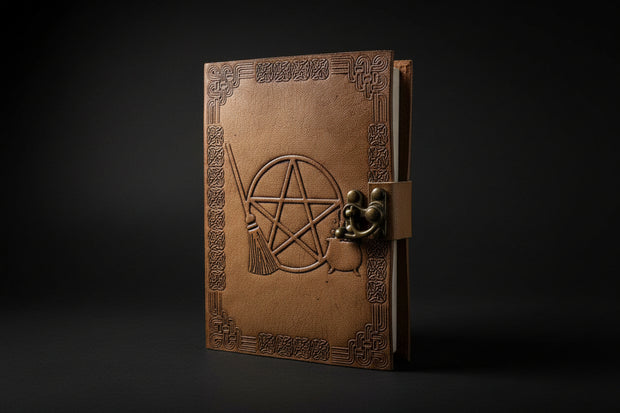
Your journal should help you remember and evaluate, not merely look mysterious. Record sources, methods, results, mistakes, questions, and revisions. The distinction between a personal Book of Shadows and a broader grimoire is explored in Book of Shadows vs. Grimoire.
A practical entry can include:
- Date, time, location, and relevant conditions
- Purpose of the working
- Source or tradition
- Materials and safety precautions
- Exact steps used
- Immediate impressions
- Observable follow-up over several days or weeks
- What you would change next time
Do not rewrite disappointing outcomes to make every ritual appear successful. Honest records are more valuable than impressive ones.
Use Divination Without Giving Away Your Judgment
Tarot, runes, pendulums, scrying, and other methods can support reflection, but repeated questioning can increase anxiety and produce contradictory answers. Set limits before beginning.
- Ask one clear question.
- Record the first reading before seeking clarification.
- Do not repeat the same question until receiving the preferred answer.
- Do not use divination as the sole basis for medical, legal, financial, safety, or relationship decisions.
- Pause when readings become compulsive or distressing.
The guide to pendulum use and avoiding bias explains one method for keeping divination grounded.
Deities, Spirits, Signs, and Personal Discernment
Some solitary witches work with deities, ancestors, land spirits, or other spiritual beings. Others do not. Begin from the theology and customs of the tradition you are studying rather than assuming every spiritual relationship follows the same rules.
A dream, animal sighting, repeated number, song, or coincidence does not automatically prove that a deity or spirit is sending a message. Record the experience, consider ordinary explanations, research the relevant tradition, and look for patterns over time. Respectful uncertainty is healthier than forcing certainty.
No spiritual claim should require you to harm yourself, endanger others, violate consent, abandon needed medical care, spend beyond your means, or obey a person who claims unquestionable authority.
Solitary Does Not Have to Mean Isolated
You can remain a solitary practitioner while learning from others. Libraries, museums, historical societies, botanical gardens, extension services, public classes, reputable shops, religious organizations, and moderated online communities can provide useful information.
Community should expand your understanding without taking control of your private judgment.
Warning signs in teachers or groups
- Pressure to cut off friends, family, therapists, doctors, or outside communities
- Claims that one leader is beyond question
- Sexual contact, nudity, substances, blood, pain, or secrecy presented as mandatory
- Threats of curses, spiritual punishment, or catastrophe for leaving
- Increasing fees combined with promises of exclusive power or rank
- Demands for private personal information, passwords, money, or compromising images
- Using “tradition” to dismiss consent, law, or physical safety
A trustworthy teacher can explain boundaries, admit uncertainty, identify sources, accept questions, and allow students to leave.
Avoid Burnout and Perfectionism
Practice naturally changes during illness, grief, work demands, caregiving, financial stress, relocation, and seasonal changes. Reducing your routine is not failure.
Signs that your practice may need adjustment include:
- Feeling obligated to perform rituals you no longer understand or value
- Fear that missing a day will cause punishment or disaster
- Spending money needed for essentials
- Constantly seeking signs or readings for reassurance
- Losing sleep to maintain ritual schedules
- Using witchcraft to avoid necessary conversations or practical action
Return to your minimum viable practice. Rest, review, and remove anything that exists only to satisfy an imagined standard.
Mental Health and Reality-Based Boundaries
Ritual, prayer, meditation, journaling, and community can be personally meaningful, but witchcraft is not a replacement for qualified medical or mental-health care. Seek appropriate support when distress, paranoia, hallucinations, mania, self-harm thoughts, severe anxiety, or impaired daily functioning appear or worsen.
Step back from divination, spirit communication, sleep deprivation, fasting, substances, and intense trance work if they increase fear or destabilization. A grounded practice should support your ability to function in ordinary life rather than make ordinary life impossible.
The guide to shadow work and healthy boundaries offers additional guidance for reflective practices.
A Twelve-Week Solitary Witchcraft Plan
This plan builds a practice gradually. It can be slowed down or adapted.
Weeks 1–2: Define the practice
- Write a temporary working statement.
- Choose one introductory source and one journal.
- List your physical, ethical, financial, privacy, and time boundaries.
Weeks 3–4: Build observation and recordkeeping
- Make three short journal entries each week.
- Observe local weather, seasonal change, dreams, mood, or household patterns.
- Practice describing experiences before interpreting them.
Weeks 5–6: Learn one foundational method
- Choose meditation, prayer, cleansing, protection, divination, or ritual structure.
- Study one method from at least two credible sources.
- Perform it safely and record the results.
Weeks 7–8: Create a repeatable ritual
- Define a single purpose.
- Write a short opening, central act, practical follow-through, and closing.
- Perform the same ritual twice rather than creating a new one each time.
Weeks 9–10: Add context
- Research the history, folklore, religion, or modern movement connected to your method.
- Separate documented information from correspondence and personal interpretation.
- Remove claims or steps you cannot support or explain.
Weeks 11–12: Review and revise
- Read your journal from the beginning.
- Identify what you maintained without strain.
- Choose one practice to continue, one to revise, and one to stop.
- Write the next three-month study question.
Frequently Asked Questions
Can you become a witch without joining a coven?
Yes. Many people study and practice independently. Some traditions require initiation for specific titles, degrees, or lineage claims, but witchcraft as a broad field is not limited to coven members.
Do solitary witches need an altar?
No. An altar can provide focus and organization, but a temporary surface, journal, outdoor observation, or tool-free meditation can serve the same practical purpose.
How often should a solitary witch practice?
Practice as often as you can sustain safely and meaningfully. Consistent weekly practice may be more useful than an ambitious daily schedule that creates guilt or exhaustion.
How do I know whether a spell worked?
Define the desired outcome before the working, take appropriate practical action, record observable changes, and review after a reasonable period. Emotional intensity or coincidence alone does not prove causation.
Can a solitary witch learn from a teacher?
Yes. Independent practice can include classes, mentorship, books, workshops, and public rituals. Maintain consent, financial limits, source awareness, and the freedom to question or leave.
What should a beginner study first?
Begin with basic terminology, source evaluation, safety, recordkeeping, one ritual structure, and one low-risk practice. Add specialized subjects only after you can explain their context and purpose.
Build a Practice You Can Actually Live With
A strong solitary practice is not measured by the number of tools owned, rituals performed, or labels collected. It is measured by clarity, consistency, ethical judgment, honest recordkeeping, and the ability to revise when new information appears.
Start small. Choose a working framework. Study one subject deeply enough to explain it. Perform a simple practice, record what happened, and review it without forcing certainty. Over time, those repeated acts create something more valuable than an impressive collection: a practice that belongs to you because you understand how and why it works within your life.
Tools for this practice
Explore the products selected for this guide. Review each listing for what is included and how to use it.


Shop this guide · 3 items Collapse


Keep exploring the shop
You made it to the end of the guide. Keep exploring through related products, major departments, or the full catalog.


Leave a comment