


Fire Safety for Candles, Incense, Charcoal, and Ritual Burning

Fire can be symbolically important without being treated casually. Candles, incense, charcoal discs, loose herbs, resins, oils, petitions, and cauldrons can ignite nearby material, overheat vessels, produce embers, or create smoke that affects people and animals.
No ritual requires continuing an unsafe burn. If the setup becomes unstable, the correct action is to stop, extinguish it, and revise the method.
Choose Your Ritual-Safety Path
- Remove flame and smoke: Read Smoke-Free and Flame-Free Witchcraft.
- Protect animals and sensitive households: Use Incense Smoke and Pets.
- Use ritual oils more safely: Read How to Use Ritual Oils in Witchcraft.
- Handle an interruption: Follow What to Do When a Ritual Is Interrupted.
- Dispose of remnants: Use Proper Disposal of Ritual Remnants.
- Recognize fear-driven protection work: Read When Protection Becomes Fear.
- Recognize spiritual fraud: Continue with Fake Psychics and Spiritual Scams.
- Adapt for fatigue, illness, or disability: Use Low-Energy Witchcraft.
- Keep reflective work within healthy limits: Read Shadow Work Is Not Therapy.
Prepare the Room Before Lighting Anything
- Use working smoke alarms on every level of the home and near sleeping areas.
- Know two ways out when possible.
- Keep a suitable extinguisher accessible and know how to use it.
- Remove paper, cloth, dried plants, curtains, hair, cords, packaging, alcohol, aerosols, and oils from the burn area.
- Keep children and pets away.
- Do not burn when impaired, extremely tired, or unable to supervise continuously.
- Check building, rental, event, and local fire rules.
Plan the physical setup before adding symbolic objects.
Maintain Clear Space
Keep candles and open flame at least 12 inches, or about 30 centimeters, from anything that can burn. More distance may be needed for tall flames, hanging cloth, shelves, dried herbs, or unstable air movement.
Do not place flame beneath a cabinet, shelf, tapestry, wreath, dried botanical bundle, paper petition, or altar-cloth edge. Heat rises even when the flame appears small.
Use a Stable, Noncombustible Surface
A safe holder should be:
- designed for the heat source;
- large enough to catch wax, ash, and embers;
- stable and difficult to tip;
- placed on a level, noncombustible surface;
- away from the edge of furniture;
- free from cracks, unknown coatings, and loose parts.
Decorative bowls, shells, ceramic dishes, glass jars, and metal vessels are not automatically flame-safe or thermal-shock resistant.
Candle Safety
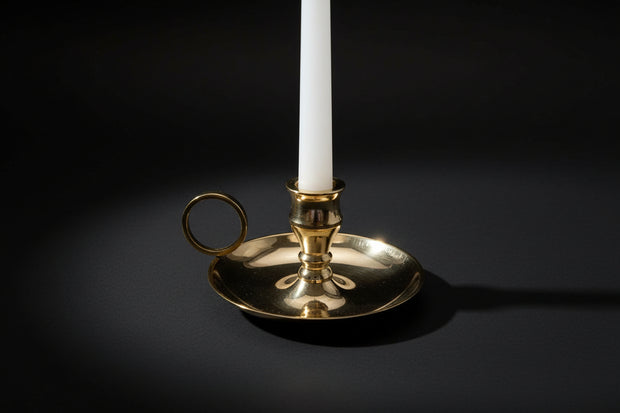
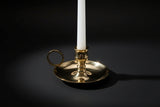
- Use the correct holder for the candle’s size and shape.
- Trim the wick according to the manufacturer’s guidance.
- Keep wax free of herbs, paper, matches, and other debris.
- Do not overload a candle with oil, glitter, crystals, powders, or dried plants.
- Keep multiple candles far enough apart that they do not heat one another.
- Extinguish candles before leaving the room or going to sleep.
- Stop using a container candle when the manufacturer’s minimum wax depth is reached.
Dressed candles can produce sudden flare-ups when loose herbs or excess oil reach the flame. Apply only materials intended for candle use and keep combustible decorations away from the wick.
Glass Container Candles
Glass can crack or shatter from impact, defects, uneven heat, a flame burning too close to the side, or thermal shock.
- Do not use chipped, cracked, or heavily sooted glass.
- Do not move hot glass onto a cold or wet surface.
- Do not add water to hot wax.
- Do not burn a candle inside another tight container that traps heat.
- Stop if the flame shifts close to the glass wall.
Incense Sticks and Cones
Incense may smolder rather than produce an open flame, but the ember remains hot enough to ignite material.
- Use a holder that securely supports the full stick or cone.
- Place it on a heat-resistant surface.
- Ensure the ash catcher is long and wide enough.
- Keep it away from drafts, windows, fans, paper, cloth, and dried plants.
- Never leave it unattended.
- Confirm the ember is completely out before disposal.
Browse Incense Burners by the incense format they are designed to hold. A decorative burner that looks appropriate may not safely support every stick, cone, resin, or charcoal disc.
Charcoal Discs and Resin Incense
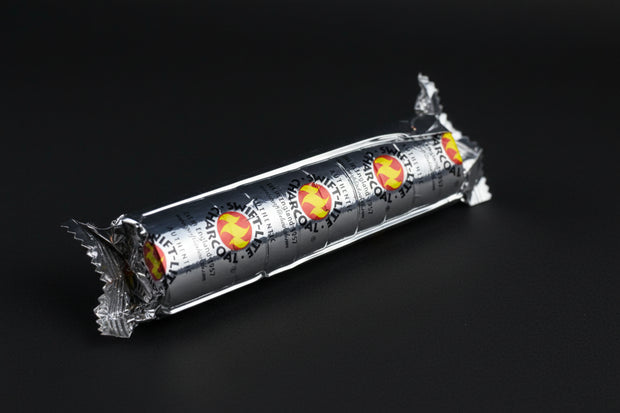
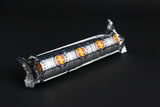
Charcoal can reach very high temperatures and remain hot long after visible smoke stops. Use only a burner specifically designed for charcoal and place a heat-resistant barrier beneath it.
- Use tongs to handle the disc.
- Light it in a ventilated area away from combustible material.
- Do not hold it while ignition sparks travel across the surface.
- Add small amounts of resin or herb at a time.
- Do not use a closed container that can build heat or pressure.
- Do not place the burner directly on wood, fabric, plastic, or glass furniture.
- Allow the charcoal and ash to cool completely before disposal.
Never assume ash is cold because it looks gray.
Ventilation and Smoke Exposure
Smoke and fragrance can affect people with asthma, migraine, respiratory illness, sensory sensitivity, pregnancy-related sensitivity, and other conditions. Birds and some other animals can be especially vulnerable to airborne contaminants.
Ventilation does not make unlimited smoke safe. Use less material, shorten the burn, move to a suitable outdoor setting when lawful and safe, or choose a smoke-free method. Read Smoke-Free and Flame-Free Witchcraft.
Burning Herbs, Petitions, and Other Materials
Do not burn unknown or treated materials. Avoid:
- glossy paper and thermal receipts;
- plastic, synthetic ribbon, glitter, resin charms, and laminated paper;
- painted, pressure-treated, or chemically finished wood;
- fabric of unknown fiber;
- large bundles of dried herbs indoors;
- powders that can become airborne or flash;
- oils or alcohol near flame;
- minerals that may fracture, release contaminants, or retain dangerous heat.
Cutting a petition into smaller pieces does not make an unsafe material safe to burn. Shredding, archiving, or secure disposal can provide closure without flame.
Cauldrons and Ritual Bowls
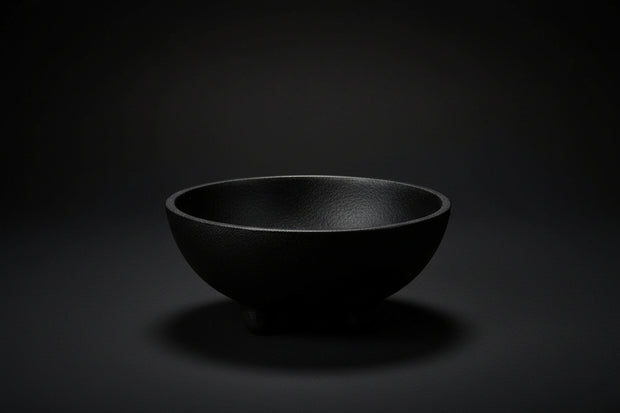
A cauldron may be decorative, resin, thin metal, cast iron, ceramic, or another material. Confirm its intended use before adding flame or charcoal.
- Inspect for cracks, unstable legs, coatings, and loose handles.
- Use a heatproof mat beneath the vessel.
- Do not fill a hot vessel with cold water.
- Do not carry a hot cauldron through the room.
- Keep handles turned away from edges and walkways.
- Never assume a vessel used for burning remains food-safe.
Clothing, Hair, and Accessibility
Secure long hair, sleeves, shawls, cords, veils, and jewelry before leaning over flame. Arrange the altar so the practitioner does not need to reach across a candle.
A person with tremor, weakness, limited vision, cognitive fatigue, pain, or mobility limitations may benefit from electric candles, pre-positioned tools, a seated setup, an assistant, or eliminating flame entirely. Accessibility is part of fire safety.
Extinguishing
Use the method appropriate to the fuel and holder. A candle snuffer can reduce blown wax, but it does not replace checking that the wick is fully out. Do not use water on burning wax, oil, electrical equipment, or hot glass.
If clothing catches fire: stop, drop, and roll. If a fire grows beyond immediate control, leave, close doors behind you when possible, call emergency services, and do not re-enter.
After the Ritual
- Confirm every flame and ember is extinguished.
- Leave hot vessels in place until cool.
- Check nearby cloth, paper, shelves, and surfaces for heat or embers.
- Dispose of cold ash and charcoal in a noncombustible container before household disposal.
- Clean wax and oil residue before the next use.
- Record any flare-up, cracked vessel, unstable holder, or smoke problem and change the setup.
Flameless Alternatives
| Traditional Element | Alternative |
|---|---|
| Candle | Electric candle, lamp, reflective object, written flame symbol |
| Incense | Sound, ordinary cleaning, fresh air, unscented gesture |
| Burned petition | Shred, archive, dissolve only when material-safe, or mark complete |
| Charcoal offering | Unburned resin in a sealed display dish |
| Flame transformation | Tear, fold, erase, cover, bury only when environmentally safe, or recycle |
A symbol can remain meaningful after the hazardous mechanism is removed.
Choose Equipment by Function
Browse Candle Accessories, Incense Burners, Candles, and Incense according to the holder, fuel, room, and supervision available. Do not purchase a burner for charcoal merely because it can hold a cone, or use a decorative vessel because it resembles a cauldron.
Frequently Asked Questions
Can I leave a seven-day candle burning while I sleep?
No. Extinguish candles before leaving the room or going to sleep, even when the ritual traditionally spans several days.
Is a metal bowl safe for charcoal?
Not automatically. Thin metal can transfer dangerous heat, coatings can fail, and the bowl may tip. Use equipment designed for charcoal with a heatproof barrier.
Can I add herbs directly to candle wax?
Loose herbs near the wick can ignite and produce flare-ups. Keep combustible dressing away from the flame and follow candle-specific guidance.
Is incense safe if it has no visible flame?
The ember is still hot enough to ignite nearby material. Supervise it continuously.
Can I pour water on a ritual fire?
Not on wax, oil, electrical equipment, or hot glass. Use an extinguishing method suited to the fuel and call emergency services when the fire is not immediately controlled.
Does opening a window make heavy smoke safe?
No. Ventilation may reduce accumulation but does not eliminate respiratory exposure or fire risk.
Safety Is Part of the Ritual
Clear the area, use purpose-built holders, maintain distance, supervise every flame and ember, protect people and animals from smoke, extinguish completely, and choose flameless alternatives whenever the physical setup cannot be made safe.
Tools for this practice
Explore the products selected for this guide. Review each listing for what is included and how to use it.
Shop this guide · 4 items Collapse


Keep exploring the shop
You made it to the end of the guide. Keep exploring through related products, major departments, or the full catalog.
 RELATED TO THIS GUIDE
Candles & Incense
Shop this topic
RELATED TO THIS GUIDE
Candles & Incense
Shop this topic


Leave a comment