


Is Enochian Magic Safe for Beginners? A Source-First Study Path

Enochian magic is not automatically dangerous, and it is not automatically safe merely because it is described as angelic. The realistic risks are the same ones that surround many intense occult practices: misinformation, anxiety, compulsive interpretation, sleep disruption, fire and smoke, poor boundaries, and making important decisions from unverifiable experiences.
A source-first beginner path reduces those risks. It also prevents the most common technical mistake—combining Dee, the Golden Dawn, Crowley, LaVey, and a modern author into a ritual none of those systems actually teaches.
What “safe” should mean here
| Area | Reasonable precaution |
|---|---|
| Historical accuracy | Name the source and distinguish original records from later adaptations |
| Psychological wellbeing | Stop if practice increases paranoia, compulsion, insomnia, dissociation, or fear |
| Physical environment | Use stable tools; supervise flame and incense; ventilate appropriately |
| Decision-making | Do not treat a vision or divination result as medical, legal, financial, or safety authority |
| Religious consent | Understand the Christian, angelic, Hermetic, Thelemic, or Satanic theology being invoked |
| Study limits | Reading a text does not obligate you to pronounce or perform it |
Stage 1: Learn the timeline
Begin with John Dee, Edward Kelley, and the recorded angelic conversations of the 1580s. Learn that Dee usually called the language Angelical or Adamical and that “Enochian” became the common later term. Identify Liber Loagaeth, the Calls, the Great Table, the thirty Aethyrs, and the ritual apparatus without trying to master every diagram.
Our introduction, What Is Enochian Magic?, provides that map and identifies the later Golden Dawn, Crowleyan, and Satanic layers.
Stage 2: Choose one branch to study
“Enochian practice” is not one standardized curriculum. Choose a documented branch:
- Dee–Kelley source study emphasizes diaries, apparatus, Angelical material, and historical context.
- Golden Dawn Enochian uses elemental tablets within that order’s Hermetic temple system.
- Crowleyan or Thelemic work centers later publications and the Aethyrs as interpreted through Thelema.
- LaVeyan Satanic use employs adapted Keys for ritual drama and Satanic symbolism.
- Modern reconstructions offer authored methods that may claim to complete, simplify, or correct earlier systems.
Study other branches comparatively, but do not silently assemble one procedure from incompatible pieces.
Stage 3: Build a vocabulary notebook
Record each term, source, date, and lineage. Separate Call from translation, Great Table from Holy Table, shew-stone from Sigillum Dei Aemeth, and Aethyr from elemental tablet. Note when two authors use the same number differently.
A plain ritual journal or dedicated notebook is more useful at this stage than elaborate altar equipment. Write citations beside claims so a dramatic sentence can be traced back to a manuscript, later order, or named modern author.
Stage 4: Study pronunciation without invoking
Compare manuscript-oriented, Golden Dawn, Crowleyan, and LaVeyan conventions. Read our Enochian alphabet and pronunciation FAQ before trusting an online translator. You can learn the differences silently; pronunciation study does not require reciting a full Call.
Stage 5: Practice observation before spirit claims
If scrying interests you, begin with short, recorded observation sessions. A Black Obsidian Scrying Mirror is historically relevant because an obsidian mirror is associated with Dee, but it does not verify an angelic message or make a session Enochian by itself.
Use the grounded procedure in How to Use a Scrying Mirror: describe before interpreting, consider visual adaptation and expectation, set a stopping time, and do not make high-stakes decisions from perceived imagery.
Stage 6: Decide whether ritual practice fits
Before performing a Call, answer these questions:
- Which exact edition and lineage am I following?
- What does this Call address within that system?
- What theology does the translation assume?
- Which pronunciation convention am I using, and why?
- How will I begin, stop, and record the session?
- What ordinary explanation will I consider for unusual impressions?
- Am I rested, sober, calm, and able to stop?
If you cannot answer, remain in the study stage. Waiting is a valid practice decision.
Warning signs to pause
- You feel commanded to harm yourself or someone else.
- You lose sleep to repeat sessions or decode ordinary coincidences.
- You become certain that strangers, devices, or unrelated events contain private messages for you.
- You spend beyond your means because a perceived being demanded tools.
- You stop medication or professional care based on ritual information.
- You feel unable to close a session or return to everyday responsibilities.
Stop the practice, return to ordinary routines, and seek qualified support when needed. In an immediate crisis, use local emergency resources. Spiritual framing does not make a health or safety emergency less real.
Frequently asked questions
Can beginners read Enochian books safely?
Yes. Reading history, comparing sources, and studying diagrams are not the same as performing invocations.
Do I need the full Holy Table?
No. Historical study requires no ritual furniture. Practical schools differ, and a partial decorative setup should not be presented as a complete reconstruction.
Are Enochian angels more dangerous than other spirits?
There is no objective scale by which that claim can be measured. Reports of intensity belong to practitioner traditions. Evaluate observable effects on wellbeing and behavior.
Should I start with the first Aethyr?
No universal beginner sequence exists. Later Aethyr practitioners generally begin with the thirtieth, not the first, but a newcomer can study the structure without attempting either.
Can I mix Enochian with Wicca or Satanism?
You can create an eclectic practice, but label the sources and understand their conflicting theology. Our articles on Watchtowers versus Wiccan quarters and Satanic Enochian explain the major differences.
Choosing a first book
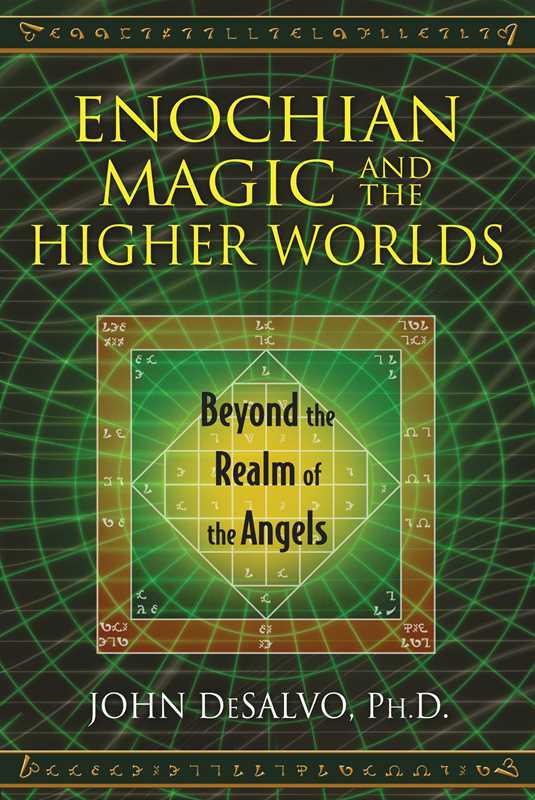
Enochian Magic and the Higher Worlds by John DeSalvo is an Enochian-specific practical book available from our store. It presents the author’s Power Magic reconstruction and the claim that Dee and Kelley’s system remained incomplete. Read those as DeSalvo’s teachings, compare them with source-based scholarship, and do not mistake one modern method for universal consensus.
The safest beginner is not the person with the most elaborate protections. It is the person who knows which source they are reading, can tolerate uncertainty, keeps ordinary evidence in view, and stops when the practice stops being healthy.
Tools for this practice
Explore the products selected for this guide. Review each listing for what is included and how to use it.

Shop this guide · 2 items Collapse

Keep exploring the shop
You made it to the end of the guide. Keep exploring through related products, major departments, or the full catalog.
 RELATED TO THIS GUIDE
Divination Tools
Shop this topic
RELATED TO THIS GUIDE
Divination Tools
Shop this topic


Leave a comment