


What Questions Should You Ask During a Tarot or Palm Reading?

A strong question does not force a reader to predict every detail of the future. It gives the session a clear subject, identifies what you can influence, and leaves room for information you may not have considered.
This guide focuses specifically on questions used during a live tarot or palm reading. For the deeper principles behind question design, begin with How to Ask Better Divination Questions.
Start With One Opening Question
Choose one question broad enough to create a useful conversation but narrow enough to fit the appointment.
- What should I understand about the decision I am facing?
- What pattern is most important in this relationship?
- What strengths and obstacles are affecting this project?
- What can I influence during this transition?
- What should I pay attention to over the next three months?
Tell the reader the practical timeframe and the choices already available. A question about a deadline next week should not be handled as though it concerns the next ten years.
Questions for a Tarot Reading
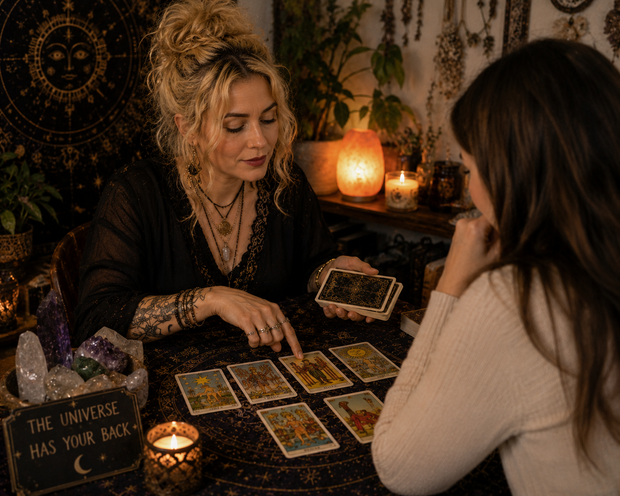
Tarot is especially suited to comparing conditions, perspectives, and possible paths.
Decision questions
- What are the likely strengths and difficulties of each option?
- What information am I missing?
- What consequence may be easy to overlook?
- What would help me make this decision more responsibly?
Relationship questions
- What is the current pattern between us?
- What boundary or conversation requires attention?
- How am I contributing to this dynamic?
- What would a healthier response look like?
Work and project questions
- Where is the project losing momentum?
- Which resource or skill should I strengthen?
- What risk should I prepare for?
- What is the most useful next step?
Questions about relationships should focus on your choices and the observable dynamic rather than claiming unrestricted access to another person’s private mind. Read The Ethics of Divining About Other People.
Questions for a Palm Reading
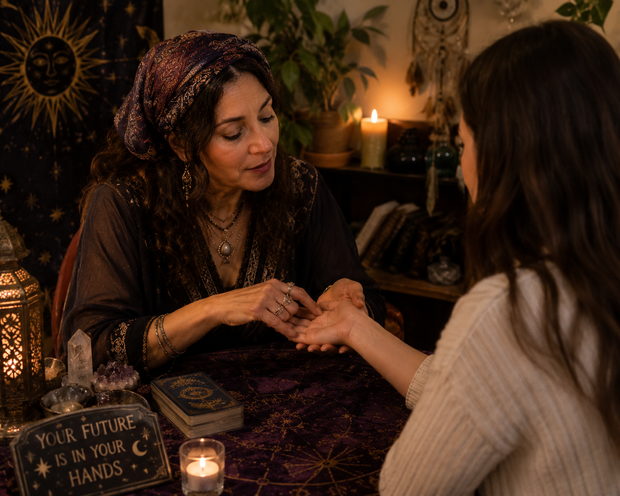
Palmistry questions work best when they connect interpretation to a visible feature of the hands.
- Which hand features are most important in your system?
- How do you interpret the differences between my hands?
- Which markings do you associate with communication or decision-making?
- Is this feature read as a tendency, a current pattern, or a fixed event?
- How do hand shape, fingers, mounts, and lines work together?
- Which parts of this interpretation are widely shared and which are specific to your tradition?
Ask the reader to point out the feature being discussed. This makes the reading easier to follow and gives you something concrete to record.
Useful Clarifying Questions During the Session
A clarifier should deepen a point, not restart the entire reading.
- What led you to that interpretation?
- How does this connect to the previous card or hand feature?
- What part of this is within my control?
- What would indicate that the situation is changing?
- Can you explain that without predictive language?
- What is one practical action I can take?
- What uncertainty remains?
You may also say, “That does not fit my experience. Is there another way to read it?” A reading is not improved by pretending every statement is accurate.
Questions That Often Waste Limited Time
- Tell me everything about my future.
- What exact date will this happen?
- What is every person around me secretly thinking?
- Can you guarantee that I will get what I want?
- How will I die?
- Which medical condition do I have?
- Should I ignore my lawyer, doctor, accountant, or therapist?
A reader may redirect questions that seek certainty, invade another person’s privacy, or require qualified professional advice. That is a healthy boundary, not a failure of the method.
Ask About the Reader’s Method
Before treating an interpretation as universal, ask:
- Do you read predictively, reflectively, spiritually, or through a combination?
- Do you use reversals, clarifying cards, or fixed spreads?
- Which palmistry tradition or system informs your reading?
- How do you handle timing?
- What subjects do you decline to read?
- May I take notes or record the session?
Understanding the method helps you evaluate what the reading is actually claiming.
Protect Your Privacy
You may decline to provide names, photographs, medical details, account information, or identifying information about other people. Give only the context required for the question. Review Privacy and Confidentiality in Spiritual Practice.
Ask before recording. Do not secretly record the reader, and do not assume the reader may retain photographs of your hands or personal notes without permission.
Use the Final Minutes Well
Near the end of the session, ask questions that turn interpretation into a usable record:
- What are the two or three main themes?
- What action is most important?
- What should I observe before booking another reading?
- What timeframe did this reading actually address?
- What question remains unanswered?
Do not spend the final minutes introducing a completely new life crisis unless you are prepared to book a separate session.
Prepare Before You Arrive
Use How to Prepare for Your First Tarot Reading or How to Prepare for Your First Palm Reading. Bring your opening question, one backup question, and a notebook.
Explore In-Store Readings
View current information through our Tarot Readings, Palm Readings, and complete In-Store Services pages. Readers developing their own tarot practice can study imagery through decks such as the Occult Tarot Deck or Runic Tarot Cards.
Frequently Asked Questions
How many questions should I bring?
One main question and one backup question are usually enough for a focused session. The available time determines how deeply each can be explored.
Are yes-or-no questions allowed?
They can be used, but questions about conditions, choices, and consequences usually produce more useful detail.
Can I ask whether someone is cheating?
A responsible reading should not be treated as proof. Focus on the relationship pattern, observable concerns, boundaries, and direct communication.
Can I ask health questions?
You may reflect on coping, support, or decision-making, but divination cannot diagnose illness or replace medical care.
What if I do not understand the answer?
Ask which card, line, or feature supports it and request a plain-language explanation.
Should I ask the same question again at the end?
Usually no. Summarize what remains uncertain rather than restarting the reading in search of a different answer.
Good Questions Create Useful Limits
A reading becomes more valuable when the question defines the subject, timeframe, ethical boundaries, and practical purpose. Ask for perspective rather than certainty, clarify the method, and leave with a small number of actions you can actually use.
Tools for this practice
Explore the products selected for this guide. Review each listing for what is included and how to use it.

Shop this guide · 4 items Collapse




Keep exploring the shop
You made it to the end of the guide. Keep exploring through related products, major departments, or the full catalog.


Leave a comment