


Can a Spell Backfire? Unintended Consequences, Coincidence, and Safer Planning

“A spell backfired” can describe several very different situations: nothing happened, an unrelated problem occurred afterward, the goal was vague, the practical actions created consequences, the materials were unsafe, or fear changed how ordinary events were interpreted. Backfire is not one clear diagnosis, so the most useful response is to identify what actually happened before deciding what it means.
Quick answer: define the outcome before blaming the spell
Start with observable facts:
- What was the exact goal?
- What materials and actions were used?
- What happened, in what order, and over what timeframe?
- What ordinary causes could explain the result?
- Did the working create a practical, interpersonal, or safety consequence?
- What evidence connects the outcome to the ritual rather than timing alone?
A difficult event occurring after a spell does not automatically mean the spell caused it. Sequence is not proof of cause.
Different experiences commonly called “backfire”
| What happened | What may be going on | Useful response |
|---|---|---|
| No observable result | The goal was unrealistic, the timeframe was unclear, practical action was missing, or the outcome cannot be measured | Review the working rather than calling it backfire |
| An unrelated bad event occurred | Coincidence, ordinary risk, or selective attention | Compare the actual timeline and baseline probability |
| The goal arrived in an unwanted form | Vague wording, limited planning, changed circumstances, or an overly broad interpretation | Define acceptable and unacceptable outcomes more clearly |
| A relationship became tense | Changed behavior, secrecy, pressure, manipulation, or ordinary conflict | Address communication and boundaries directly |
| A candle, jar, or ingredient caused damage | Fire, breakage, mold, toxicity, pests, or unsafe storage | Stop the hazard and use material-based safety guidance |
| Fear increased after the ritual | Anxiety, repeated checking, ominous interpretation, or reassurance-seeking | Pause divination and protection escalation |
| A seller says disaster is coming | Fear-based manipulation or an upsell | Do not pay for emergency curse removal based on pressure |
No result is not the same as backfire
A working that produces no clear outcome may be disappointing, but it did not necessarily reverse or cause harm. The goal may have been too broad, the timeframe may not have ended, the result may not be measurable, or the ritual may have had no effect.
Use Ritual Failure: How to Review a Working Without Superstition to separate method, timing, practical action, evidence, and expectation.
Coincidence can feel causal
People naturally look for connections between emotionally important events. After a protection spell, a broken object may feel like proof of an attack. After a money spell, an unexpected bill may feel like punishment. Yet broken objects and bills also occur without ritual work.
Compare the event with ordinary frequency and prior conditions. Was the object already damaged? Was the expense already developing? Did the conflict begin before the ritual? A journal written before the outcome is more reliable than memory reconstructed afterward.
Vague goals create flexible stories
“Bring me money,” “remove negativity,” or “make them come back” leaves important questions unanswered. How much money? Through which acceptable sources? What does negativity mean? What boundaries apply? What happens if the relationship is unsafe or unwanted?
A clearer goal defines:
- The desired condition
- The timeframe
- Actions you are willing to take
- Outcomes you do not accept
- People and property that should not be harmed
- How success, partial success, and failure will be recognized
- When the working will be reviewed or closed
Clear wording does not control every event. It does make the intention easier to evaluate and reduces the temptation to reinterpret any outcome as success or backfire.
Practical actions can create real consequences
Sometimes the ritual itself is not the main cause; behavior surrounding it is. A person may spend money they cannot afford, confront someone based on divination, neglect medical care, ignore a deadline, make accusations, or repeatedly contact an unwilling person. Those choices can produce consequences regardless of spiritual belief.
Do not use spellwork to replace legal, medical, financial, safety, or relationship decisions that require appropriate evidence and professional advice.
Coercive goals create ethical and interpersonal risks
Work intended to control another person’s affection, communication, sexuality, employment, choices, or consent can encourage fixation and boundary violations. Even without assuming supernatural causation, the practitioner may begin monitoring the person, interpreting every interaction as a sign, or acting as though consent no longer matters.
A safer approach focuses on your own clarity, confidence, opportunities, protection, grief, or ability to accept an answer. Ethical limits reduce practical harm even when traditions disagree about magical rules.
Unsafe materials are not spiritual consequences
A cracked candle jar, moldy spell bottle, skin reaction, poisoned pet, smoke-filled room, or damaged surface is a material safety problem. Do not continue a hazardous setup because stopping might “interrupt” the spell.
- Extinguish uncontrolled flames.
- Stop using damaged glass.
- Keep unknown powders, oils, herbs, and minerals away from food and drinking water.
- Do not burn synthetic materials or heavily dressed candles.
- Keep small objects and toxic plants away from children and animals.
- Dispose of moldy, leaking, pressurized, or contaminated jars responsibly.
Read Fire Safety for Candles, Incense, Charcoal, and Ritual Burning and Proper Disposal of Ritual Remnants.
Fear can make every later event look connected
After someone warns that a spell may backfire, ordinary delays, arguments, dreams, headaches, misplaced objects, and appliance problems can become evidence of danger. Repeated tarot readings, cleansing, protection work, and online reassurance may then intensify the fear.
Pause the interpretation loop. Write down only the observable facts, attend to sleep and health, check the environment, and speak with a trusted person. Review When Protection Becomes Fear and Intrusive Thoughts Are Not Spells.
Beware of emergency curse-removal sales
A common manipulation pattern begins with a frightening claim: the spell backfired, a curse attached itself, a spirit is angry, or disaster will occur unless an expensive service is purchased immediately. Warning signs include:
- Guaranteed catastrophe
- Pressure to pay immediately
- Increasing fees after each “discovery”
- Claims that only the seller can solve the problem
- Instructions to keep the situation secret
- Threats that stopping payment will worsen the danger
- Requests for unusual payment methods or large transfers
Do not send more money because a reader or practitioner created fear. Save communications, contact the payment provider when appropriate, and seek practical support.
A safer spell-planning checklist
- Define the goal: Write one specific outcome or area of work.
- Identify practical actions: List what you will do outside the ritual.
- Set boundaries: State what you will not do and which outcomes are unacceptable.
- Review materials: Check fire, ingestion, allergy, pet, child, environmental, and storage safety.
- Choose a timeframe: Decide when the work will be evaluated.
- Define evidence: Write what counts as success, partial success, failure, or unresolved.
- Create a stop condition: Identify when fear, expense, injury, conflict, or obsession means the work must end.
- Plan closure: Decide how tools, offerings, petitions, jars, and remnants will be handled afterward.
Read What Happens After You Cast a Spell? for a post-ritual review framework.
What to do when you think a spell backfired
- Stop any unsafe physical activity.
- Record the event without interpretation.
- Check medical, electrical, mechanical, environmental, financial, and interpersonal causes as relevant.
- Compare the result with the original written goal and timeframe.
- Repair practical harm: apologize, clean, replace, report, seek care, or secure the area.
- Stop repeated divination and reassurance-seeking.
- Decide whether to close, revise, or leave the working alone.
- Document the lesson before beginning anything new.
If the working needs to end, use How to End or Dismantle a Long-Term Spell or Altar Working.
Can doubt make a spell backfire?
Doubt may change focus, confidence, and behavior, but it does not prove that the ritual reversed itself or caused punishment. Fear of imperfect concentration can become more disruptive than ordinary uncertainty. Read Can Doubt Ruin a Spell?.
Frequently asked questions
How do I know whether a spell backfired?
There is no single test. Define the exact unwanted outcome, compare the timeline, check ordinary causes, and examine whether the ritual or related behavior created a direct consequence.
Does an unexpected bill mean a money spell backfired?
Not by itself. Bills and expenses occur independently of ritual work. Check whether the expense was already developing and whether the working changed any practical financial behavior.
Can protection magic attract danger?
Performing protection work does not establish that later problems were attracted by it. Excessive focus on threats can, however, increase vigilance, fear, and interpretation of ordinary events as attacks.
Should I reverse the spell immediately?
Not automatically. First stop hazards, identify what happened, and review the original goal. An unnecessary reversal can prolong anxiety and add more uncontrolled steps.
Can a love spell backfire and make someone hate me?
Relationship outcomes have many causes. Coercive focus can also lead to pressure, monitoring, or boundary violations that damage the relationship. Focus on consent, communication, and your own choices.
Do I need a cleansing after a failed spell?
No universal cleansing is required. Clean the physical workspace, dispose of materials safely, record the outcome, and use a simple closing act if it fits your practice.
What if I cannot stop worrying about consequences?
Pause ritual and divination work, return to present facts, and seek support from a trusted person or qualified mental-health professional if fear is persistent or interferes with daily life.
Plan the work without turning uncertainty into fear
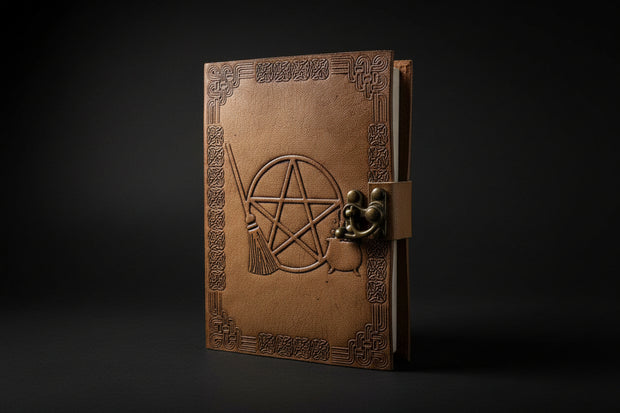
Use a journal to record goals, boundaries, materials, outcomes, and closure dates. Browse ritual supplies with attention to actual material safety rather than dramatic claims about guaranteed results.
Tools for this practice
Explore the products selected for this guide. Review each listing for what is included and how to use it.

Shop this guide · 2 items Collapse


Keep exploring the shop
You made it to the end of the guide. Keep exploring through related products, major departments, or the full catalog.


Leave a comment