


Ritual Failure: How to Review a Working Without Superstition

A ritual does not produce the hoped-for result. The candle burned strangely, the petition was completed, weeks passed, and nothing obvious changed. It is tempting to conclude that the spell was blocked, a deity refused, an enemy interfered, or the practitioner lacked enough belief.
Those explanations may fit a person’s theology, but they should not become automatic answers. A useful review begins with the goal, the method, the evidence, and the real-world conditions surrounding the working.
Define What “Failed” Means
A ritual can be called a failure for several different reasons:
- The stated outcome did not occur.
- The outcome occurred outside the chosen timeframe.
- The result was partial or different from what was requested.
- The ritual could not be completed safely.
- The method created distress, obsession, debt, conflict, or physical risk.
- The goal was vague enough that no result could be evaluated.
- The ritual succeeded symbolically but did not change the external situation.
These are not the same problem. Write down which one actually occurred.
Return to the Original Goal
Review the wording used before the ritual. Was the goal specific, observable, ethical, and possible?
| Weak Goal | More Reviewable Goal |
|---|---|
| Bring me abundance | Support my thirty-day effort to secure two new wholesale accounts |
| Make them love me | Help me communicate clearly and recognize whether mutual interest exists |
| Protect me from everything | Support the safety plan I have created for this particular risk |
| Give me a sign | Help me identify information relevant to this decision by Friday |
A goal that depends entirely on controlling another person, reversing a medical condition, guaranteeing money, or eliminating all risk may be impossible or unethical regardless of ritual technique.
Check the Timeframe
Was a timeframe established before the work began? If not, the ritual can remain permanently “pending,” and every later coincidence can be recruited as evidence.
Use Ritual Timing Without Astrology to distinguish symbolic timing from the practical time a result would reasonably require.
Separate the Ritual From the Action Plan
List what was done ritually and what was done materially.
Ritual actions may include:
- prayer, petition, candle, offering, oil, sigil, or divination;
- chosen timing;
- repetition or devotional commitment;
- closure and disposal.
Practical actions may include:
- applications, conversations, medical appointments, budgeting, study, documentation, repair, or legal advice;
- changing unsafe conditions;
- asking qualified people for help;
- following through after an opportunity appears.
A working aimed at employment cannot substitute for applications. Protection work cannot replace locks, alarms, boundaries, professional guidance, or emergency planning.
Review the Record
Use the notes made before, during, and after the ritual. Review Ritual Recordkeeping if the original record is incomplete.
Look for:
- the exact goal and timeframe;
- ingredients and substitutions;
- safety problems or interruptions;
- changes made during the ritual;
- what was interpreted before the outcome was known;
- real-world actions taken;
- observable results;
- ordinary external conditions.
Do not rewrite the original intention after seeing the result.
Do Not Treat Every Candle Detail as a Verdict
Flame height, soot, wax, smoke, popping, tunneling, and extinguishing can have physical causes: wick length, drafts, vessel shape, fragrance load, oil, herbs, moisture, fuel quality, and airflow.
A ritual interpretation may be meaningful within a tradition, but check mechanical causes first. Never repeat an unsafe burn merely to obtain a cleaner sign.
Consider Method Fit
The ritual may have been poorly matched to the goal. A long devotional commitment may not suit a short administrative problem. A destructive reversal may be unnecessary when a boundary conversation is required. A complex ingredient list may introduce confusion without adding function.
Use How to Choose Ingredients for a Spell or Ritual and Spell Substitutions to review function rather than simply adding more materials.
Common Reasons a Working Is Hard to Evaluate
- The goal was never written down.
- No timeframe was established.
- The desired result depended on another person’s consent.
- Several rituals targeted the same issue at once.
- The same divination question was repeated until reassurance appeared.
- Every event was interpreted as a sign.
- The result required practical action that was never taken.
- The goal changed after the ritual.
- The ritual was copied without understanding its structure.
- Fear of failure prevented the working from being formally closed.
When to Repeat
Repeat only when:
- the first working had a defined, correctable interruption;
- the tradition calls for a fixed number of repetitions;
- the timeframe has ended;
- the goal remains ethical and realistic;
- the revised method addresses a specific weakness;
- repetition will not create physical, emotional, or financial harm.
Do not repeat immediately because anxiety demands certainty. Read Why Repetition Matters in Ritual.
When to Revise
Revise when the goal is too broad, the ingredients do not serve the function, the timeframe is unrealistic, the method conflicts with physical limitations, or practical information changes. Write a new version rather than pretending the original never happened.
When to Stop
Stop when the working:
- requires unsafe fire, smoke, ingestion, skin exposure, or hazardous materials;
- encourages stalking, coercion, retaliation, or violation of consent;
- replaces medical, legal, financial, or crisis support;
- creates compulsive checking or repeated reassurance divination;
- requires money or labor you cannot sustain;
- depends on promises you no longer consent to;
- keeps you attached to a harmful situation.
Stopping is not proof that an enemy won. It may be the most accurate outcome of the review.
A Seven-Question Review
- What exactly did I ask to happen?
- What would have counted as success?
- What timeframe did I establish?
- What practical actions did I take?
- What physical or social conditions affected the result?
- What evidence supports my interpretation?
- Should I repeat, revise, close, or stop?
Tools for Better Review
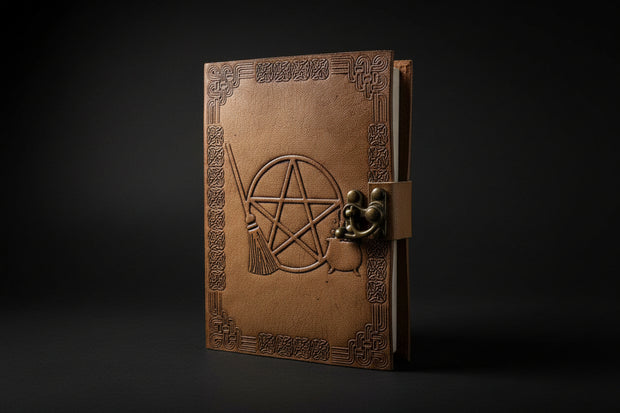
A journal can hold the original wording, material list, timing, and outcome review. The Deckle-Edge Book of Shadows Journal offers space for a stable record, while Spell Kits can be evaluated by whether their stated ingredients and instructions match the working’s actual function.
Frequently Asked Questions
Does a failed spell mean I lack power?
No conclusion about personal worth or ability follows automatically from one outcome.
Should I perform divination immediately?
Usually pause first. Repeated readings can turn uncertainty into a reassurance cycle.
Can doubt cause failure?
Doubt can affect attention and follow-through, but an unwanted thought does not automatically cancel a deliberate ritual. See Can Doubt Ruin a Spell?.
What if the result was partial?
Record which part occurred, which did not, and whether the partial result was useful, harmful, or unrelated.
How long should I wait?
Use the timeframe chosen before the ritual and the ordinary time the outcome would require.
Is stopping disrespectful?
Not inherently. Close promises appropriately, dispose of materials safely, and end obligations clearly.
Review Produces Better Practice
A ritual review should reduce confusion, not create a new superstition for every detail. Return to the original goal, compare ritual and practical action, use records, investigate physical causes, and make a clear decision to repeat, revise, close, or stop.
Tools for this practice
Explore the products selected for this guide. Review each listing for what is included and how to use it.

Shop this guide · 2 items Collapse


Keep exploring the shop
You made it to the end of the guide. Keep exploring through related products, major departments, or the full catalog.
 RELATED TO THIS GUIDE
Ritual Supplies & Altar Tools
Shop this topic
RELATED TO THIS GUIDE
Ritual Supplies & Altar Tools
Shop this topic


Leave a comment