


Which Incense Burner Do You Need? Sticks, Cones, Backflow, Resin & Charcoal

The best incense burner is determined by the incense format, heat source, and cleaning needs—not by decoration alone. A narrow hole can support a bamboo-core stick but cannot safely hold charcoal. A backflow burner needs a hollow cone aligned over a smoke channel. A resin burner must tolerate concentrated heat and contain melted aromatic material.
Choose the incense first, then match the burner to it.
Browse the Incense Burners & Holders collection to compare burners by the incense format and heat source you actually use.
Incense burner compatibility at a glance
| Incense format | Correct burner feature | Main concern |
|---|---|---|
| Stick | Correctly sized support and a long ash-catching tray | The stick must stand securely and ash must remain inside the holder |
| Standard cone | Flat heat-safe dish or vented cone burner | Hot ash, airflow, and clearance |
| Backflow cone | Smoke channel aligned with the cone’s hollow base | Correct alignment and residue along the channel |
| Resin on charcoal | Heat-rated bowl, censer, cauldron, or charcoal screen | Extreme heat, sparks, melted resin, and ventilation |
| Indirectly heated resin | Purpose-built electric or tea-light resin warmer | Temperature control and hot surfaces |
| Botanical bundle | Large heat-safe catch bowl designed for embers | Falling embers and incomplete extinguishing |
Burners for incense sticks
A stick holder needs a hole or support that grips the base without splitting it. The tray should be long and wide enough to catch ash as the stick burns down. Do not force a thick stick into a small hole or balance it against the edge of a dish.
A bowl-style holder may use clean sand to support one or more sticks, but each stick must remain upright and separated from nearby objects. The Tree of Life Ceramic Incense Holder provides a dedicated resting point for a simple single-stick setup.
Burners for standard incense cones
A standard cone sits upright on a noncombustible surface and releases smoke upward. It does not need a waterfall channel. Choose a ceramic or metal dish with enough open space for airflow and ash. Decorative lids must be vented and approved for use while the cone is burning.
Backflow incense burners
A backflow cone has a hollow channel through its base. When aligned with the opening in a backflow burner, cooled smoke moves downward through the sculpture. A standard cone may burn on the platform, but it will not create the intended waterfall.
To compare backflow-specific shapes, see backflow incense burners and check the smoke channel and cone opening against the cone's specifications.
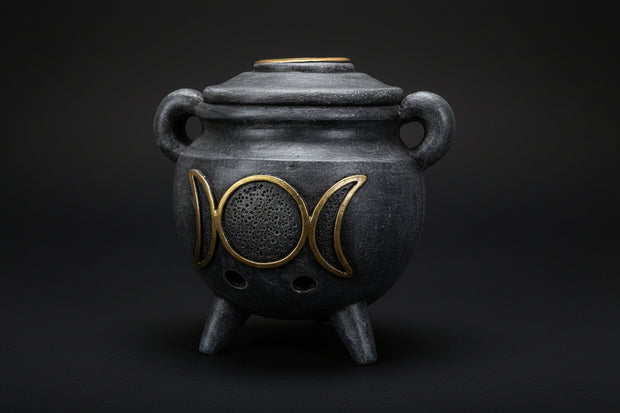
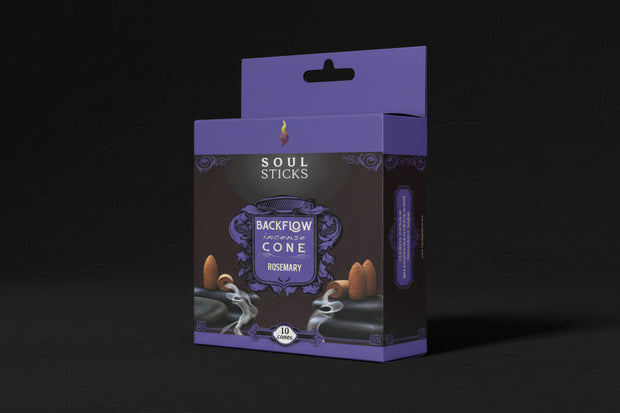
The Triple Moon Cauldron Backflow Incense Burner should be paired with cones made specifically for backflow use, such as Rosemary Backflow Cones.
Burners for resin and loose incense on charcoal
Charcoal produces far more concentrated heat than a stick or cone. Use a burner specifically labeled for charcoal, resin, or high-heat incense. Suitable designs may include a metal screen, vented brass censer, or substantial heat-rated bowl with the manufacturer-approved base material.
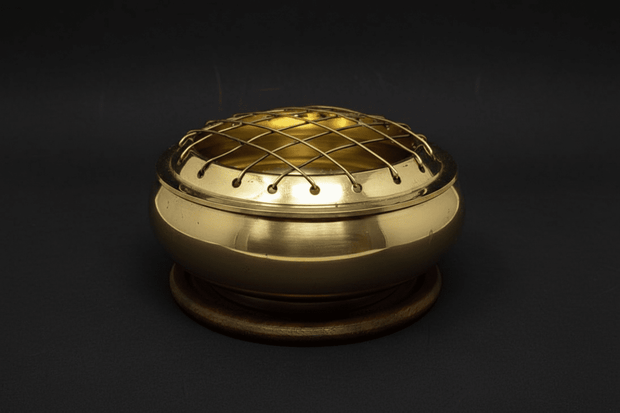
A stick holder, thin offering plate, ordinary drinking glass, shell, wooden tray, or decorative ceramic dish should not be assumed to tolerate charcoal. The Brass Screen Charcoal Burner is designed to support a disc with airflow beneath it.
Read How to Use Charcoal Discs for Resin Incense before the first session.
Burners for resin without charcoal
Electric resin warmers and adjustable tea-light resin burners release aroma through indirect heat. They are different from ordinary oil warmers, wax melters, and decorative candle holders. Use only a device whose maker specifically lists resin or loose incense as an approved material.
Compare the options in Can You Burn Resin Incense Without Charcoal?.
Can one burner handle everything?
Some multipurpose burners accept several formats, but no decorative vessel should be treated as universal without instructions. A bowl with sand may hold sticks and standard cones yet still be too thin for charcoal. A backflow sculpture may have a separate stick hole but not be suitable for resin. Check each function independently.
Incense burner materials
Ceramic
Ceramic contains ash well and supports many designs, but thermal shock, glaze damage, or hidden cracks can cause failure. Do not move a hot ceramic burner onto a cold or wet surface. Retire a burner with structural cracks rather than repairing a heat-bearing area with ordinary glue.
Brass and other metals
Metal burners conduct heat beyond the center and can remain hot after the incense appears finished. Use a stable noncombustible barrier or trivet, avoid touching the burner during use, and allow ample cooling time.
Stone
Not every stone tolerates direct heat. Decorative stone dishes can crack, discolor, or transfer heat unless they are specifically approved for the intended incense format.
Wood
Wooden stick holders are common, but ash must land inside the tray and the ember must remain well above the surface. Wood is not appropriate for charcoal or direct-burning resin.
Six things to check before buying
- Compatibility: Does the maker name the exact incense format you use?
- Material: Is the burning surface heat-rated for that format?
- Stability: Does the base sit flat and resist tipping?
- Clearance: Is there enough space above, around, and beneath the burner?
- Ash and residue control: Will ash, embers, and melted resin remain contained?
- Cleaning access: Can cooled residue be removed without damaging narrow channels, glaze, or finish?
Charcoal and resin precautions
Charcoal becomes extremely hot and remains hot after visible smoke decreases. Use only an approved burner on a fireproof surface and handle the disc with appropriate tongs. Never hold lit charcoal, place it directly on furniture, or discard it before it is completely cold.
Add only a small amount of resin at a time. Excess resin produces heavy smoke, can smother airflow, and may overflow the vessel. Keep additional resin, packaging, alcohol, oils, and other flammable materials away from the burner.
Smoke, fire, and household safety
- Never leave sticks, cones, charcoal, resin, or botanical bundles unattended.
- Keep the burner away from curtains, paper, books, plants, shelves, hair, and sleeves.
- Place it on a stable heat-resistant barrier.
- Ventilate the room without exposing the ember to a strong draft.
- Avoid smoke around respiratory illness, scent sensitivity, children, birds, and other vulnerable animals.
- Follow leases, dormitory rules, hotel policies, smoke alarms, and local fire restrictions.
- Do not burn unknown powders, oils, treated wood, plastic, or decorative material.
- Use a smoke-free ritual cue when combustion is unsuitable.
For household-specific concerns, read Incense Smoke and Pets.
Cleaning and maintenance
- Wait until the burner, ash, screen, and charcoal are completely cold.
- Remove dry ash with a dedicated brush, spoon, or disposable paper.
- Clean backflow channels regularly because condensed smoke leaves oily residue.
- Use only cleaning methods safe for the burner’s material and finish.
- Inspect ceramic for cracks and metal screens for warping, corrosion, or unstable supports.
- Do not immerse hot ceramic or metal in water.
- Replace damaged heat-bearing burners rather than relying on ordinary adhesive.
Frequently asked questions
Can I use a backflow burner for regular cones?
Only if the manufacturer allows it. A regular cone may burn, but it will not create the downward smoke effect because it lacks the hollow channel.
Can a stick holder burn resin?
Not unless it has a separate component explicitly designed for resin and its heat source. A stick hole and ash tray alone are not suitable for charcoal.
Can I use an offering bowl as an incense burner?
Only when the maker identifies it as heat-safe for that incense format. Spiritual symbolism and food-safe glazing do not prove resistance to thermal shock.
Can I burn resin without charcoal?
Yes, but only with a purpose-built electric warmer, adjustable tea-light resin burner, or another method approved for resin. An ordinary oil warmer should not be assumed compatible.
Why does a backflow burner leave residue?
Backflow smoke contains condensed aromatic material that settles along the channel and nearby surfaces. Let the burner cool and clean it according to the maker’s instructions.
Does a metal burner need a trivet?
Yes. Metal conducts heat to the altar or furniture beneath it. Use a stable noncombustible barrier.
What is the safest incense alternative?
When smoke is unsuitable, use an unlit aromatic material for symbolic presence, a visual focus, music, sound, prayer, or another non-combustion ritual cue.
Related reading
Tools for this practice
Explore the products selected for this guide. Review each listing for what is included and how to use it.
Shop this guide · 3 items Collapse


Keep exploring the shop
You made it to the end of the guide. Keep exploring through related products, major departments, or the full catalog.
 RELATED TO THIS GUIDE
Candles & Incense
Shop this topic
RELATED TO THIS GUIDE
Candles & Incense
Shop this topic


Leave a comment