


How to Make an Altar Safer for Pets and Children

An altar can be spiritually meaningful and still contain ordinary household hazards. Candles burn. Incense produces smoke and hot ash. Bowls spill. Oils leak. Stones become choking hazards. Statues tip. Cords entangle. Herbs and offerings may be unsafe for an animal or child to touch or swallow.
Making an altar safer does not require hiding your practice or removing every object. It requires designing the space around the actual behavior of the people and animals who live there—not around the assumption that they will simply leave it alone.
Begin With a Household Risk Assessment
Observe the space from the height and movement pattern of the child or animal.
- Can a cat jump onto it from nearby furniture?
- Can a dog pull a cloth or cord?
- Can a toddler climb the shelving?
- Can a bird reach smoke, wax, metal, or plants?
- Can an aquarium or reptile enclosure be exposed to fragrance or ash?
- Can anyone knock the altar while using a doorway, chair, mobility aid, or light switch?
- Can a visitor mistake ritual herbs or oil for food or medicine?
A high shelf is not automatically safe. Cats jump, children climb, objects fall, and smoke travels.
Choose the Location for Safety First
A safer altar location is:
- away from curtains, bedding, paper, and hanging fabric;
- away from exits and narrow walkways;
- not directly over a bed, crib, cage, aquarium, food bowl, or seating area;
- outside kitchens and medication-storage areas;
- away from unstable furniture and climbable shelves;
- protected from direct sun and heating vents;
- visible to the responsible adult during active flame use;
- easy to clean when something spills.
Do not place an altar where supervision requires leaving a child or animal unattended elsewhere.
Anchor Furniture and Heavy Objects
Tall cabinets, bookcases, narrow altar tables, and stacked crates can tip. Secure furniture according to the manufacturer and wall type. Do not rely on the weight of books or statues to stabilize a top-heavy setup.
- Use a wide stable base.
- Keep heavy objects low.
- Avoid overhanging shelves.
- Use museum putty or another suitable restraint only when compatible with the object and surface.
- Keep breakable statues away from edges.
- Do not stack storage boxes into an unstable tower.
- Check anchors after furniture is moved.
A devotional statue is still a falling object when placed on an unsecured shelf.
Create Three Access Zones
Organize the practice by who may reach it.
- Open zone: safe, durable objects that may remain visible.
- Supervised zone: objects used only while a responsible adult is present.
- Secured zone: flame, incense, charcoal, oils, herbs, blades, pins, matches, batteries, small stones, private papers, and breakable tools.
Secure storage means more than pushing an item to the back of a shelf. Use an appropriate latch, lock, closed cabinet, or inaccessible container based on the household.
Flame Should Never Be a Permanent Altar Feature
A lit candle is an active fire, not background decoration.
- Never leave it unattended, even briefly.
- Keep children and animals out of the burn zone.
- Use a fitted stable holder on a heat-resistant surface.
- Keep wax, wick debris, herbs, oils, and decorations controlled.
- Do not burn candles beneath shelves.
- Keep matches and lighters locked separately.
- Extinguish before moving the holder.
- Allow everything to cool before storage.
Use How to Store Ritual Candles for prepared and partially burned candles.
Smoke and Fragrance Travel Beyond the Altar
Incense, charcoal, smoke-cleansing bundles, essential oils, fragrance oils, candles, and sprays affect the entire airspace. Closing a door does not guarantee that smoke or scent stays inside.
Pets have different respiratory and metabolic sensitivities, and children may have asthma, allergies, migraine, or sensory needs. Birds are especially sensitive to airborne contaminants.
- Do not burn smoke products near cages, aquariums, bedding, feeding areas, or ventilation intakes.
- Do not place diffusers where they can spill or concentrate fragrance.
- Disclose fragrance to household members.
- Use ventilation appropriate to the product and space.
- Choose smoke-free and fragrance-free methods when anyone is affected.
Read Incense Smoke and Pets and Smoke-Free and Flame-Free Witchcraft.
Secure Oils, Herbs, Resins, and Powders
Natural does not mean harmless. A material may irritate skin, harm an animal, trigger an allergy, create a choking hazard, or be unsafe to ingest or burn.
- Keep original labels and botanical names.
- Use child-resistant or locked storage where appropriate.
- Do not leave open bowls of herbs or salt.
- Keep ritual supplies separate from tea, spices, food, medicine, and pet products.
- Store oils upright inside secondary containment.
- Clean spills promptly.
- Do not allow pets to walk through powders and groom them off.
- Remove moldy or unidentified material.
Use How to Store Ritual Herbs and How to Label and Store Ritual Oils.
Small Stones, Charms, and Jewelry
Tumbled stones, crystal chips, beads, charms, coins, bells, pendulums, bones, shells, and miniatures can be swallowed or carried away.
- Keep small objects inside a closed container.
- Do not scatter crystal chips across cloth.
- Inspect stretchy bracelets and beaded strands for failure.
- Keep pendulum chains and cords secured.
- Do not leave mineral specimens where licking, chewing, or breakage is possible.
- Wash hands after handling unknown or treated minerals.
A stone’s metaphysical association does not establish biological safety.
Sharp and Pointed Tools
Athames, knives, scissors, pins, nails, needles, antlers, crystal points, railroad spikes, and broken shells require secured storage.
- Use sheaths and rigid containers.
- Lock blades away.
- Do not display points at eye level.
- Remove loose pins from candles before storage.
- Inspect crystal tips for chips.
- Never leave sharp tools hidden under an altar cloth.
A symbolic paper image, wand, finger gesture, or ordinary key can replace a blade in many household practices.
Cords, Chains, Cloths, and Hanging Decorations
Altar cloths, tassels, necklaces, pendulum chains, lights, and electrical cords create pulling and entanglement hazards.
- Keep cloth edges from hanging over the table.
- Secure electrical cords to prevent pulling.
- Avoid loops accessible to children or animals.
- Do not drape fabric near flame or hot incense.
- Store pendulums individually.
- Check battery compartments and dispose of batteries properly.
- Do not allow string lights to become climbing or chewing targets.
A fitted mat or tray may be safer than a long hanging cloth.
Bowls, Water, Salt, and Offerings
Open bowls spill and attract attention.
- Use heavy, stable vessels away from edges.
- Do not leave standing water where it can be drunk, spilled, or contaminated.
- Remove perishable offerings promptly.
- Avoid foods toxic to household animals.
- Do not leave coins, stones, or beads in reach.
- Keep salt contained because it can harm pets, plants, metal, and surfaces.
- Use a tray beneath liquids.
Choose the vessel by its function with How to Choose and Use a Ritual Bowl.
Statues and Breakable Objects
Place statues on a broad stable surface with enough clearance around them. Heavy statues can injure even when they do not break.
- Keep the heaviest figures on lower shelves.
- Do not place breakables over sleeping or sitting areas.
- Separate objects so one impact does not create a chain reaction.
- Use restraints compatible with the finish.
- Inspect repaired statues before display.
- Avoid glass shelves unless rated and properly supported.
A printed image or framed card can replace a fragile figure during an active child or pet stage.
Food Offerings and Wildlife
Food attracts pets, insects, and rodents. Chocolate, grapes, raisins, onions, alcohol, caffeine, xylitol, and other ordinary foods can be dangerous to animals.
- Use sealed or supervised offerings.
- Remove food after the defined ritual period.
- Do not allow a child or animal to eat from ritual-only vessels.
- Label alcoholic or infused liquids.
- Do not place offerings outdoors where wildlife may be harmed.
- Clean residue promptly.
A written, pictured, or symbolic offering can replace exposed food.
Batteries, Electric Lights, and Devices
Flame-free does not mean risk-free.
- Secure button batteries and battery compartments.
- Keep cords away from chewing and pulling.
- Do not overload outlets.
- Use products according to their instructions.
- Inspect for heat, damaged insulation, leaking batteries, and flickering connections.
- Turn devices off when the altar is unattended if the product requires it.
Button batteries are especially dangerous when swallowed and must be kept secured.
Teach Boundaries Without Creating Fear
For children old enough to understand, explain the altar in plain language:
- which objects may be touched;
- which require an adult;
- why flame, smoke, oil, and sharp tools are restricted;
- how to ask questions respectfully;
- that accidental contact is a safety issue, not supernatural punishment.
Do not tell a child that touching an object will curse them, anger a deity, or cause spiritual harm. Use ordinary household boundaries.
Respect the Animal Rather Than Assigning Consent
A cat lying near an altar or a dog approaching during ritual does not prove the animal is a familiar, guardian, participant, or willing recipient of smoke, oil, sound, clothing, or crystals.
Protect the animal’s ability to leave. Do not place ritual products on fur, collars, paws, food, water, cages, or bedding without qualified safety guidance.
Create a Daily Reset Routine
- Extinguish and cool all flame and charcoal.
- Seal oils, herbs, resin, and powders.
- Remove food and liquid offerings.
- Count small objects.
- store blades, pins, chains, and cords.
- Check the floor for wax, glass, herbs, and stones.
- Close and latch storage.
- Confirm furniture remains stable.
- Ventilate if smoke or fragrance was used.
- Return the altar to the household’s safe unattended state.
Emergency Information
Keep product labels and ingredient information so you can identify an exposure. Know how to reach local emergency services, poison resources, and the household veterinarian. Do not induce vomiting or improvise treatment after an ingestion; provide the exact product information to a qualified professional.
Secure Storage for Household Practice
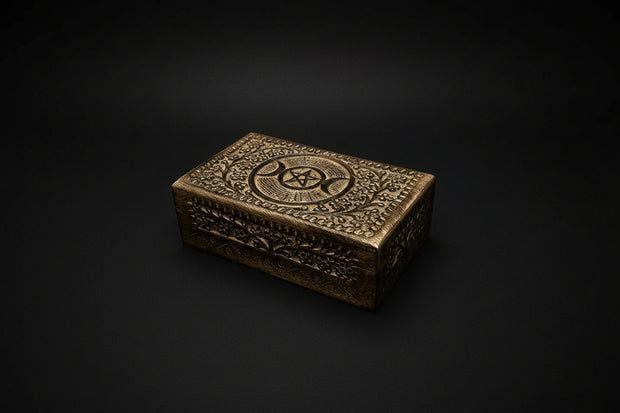
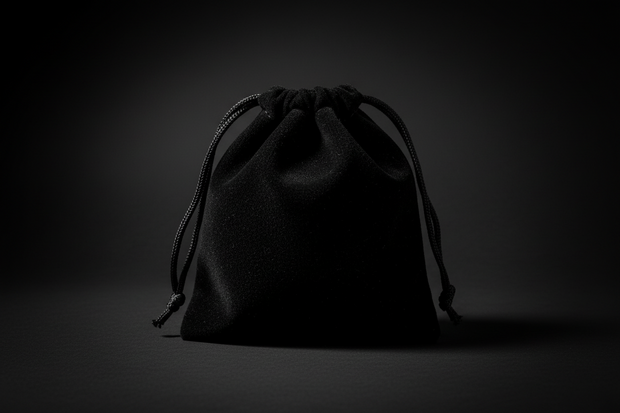
Browse Storage & Chests after identifying what requires a latch, rigid protection, or privacy. The Triple Moon Pentacle Box can organize clean, dry tools where the box itself is placed securely, while the Black Velvet Pouch separates small durable objects inside a larger secured container. A pouch alone does not prevent access, crushing, choking, or ingestion.
Use Altar Supplies by function, not as a requirement to keep every tool permanently displayed.
Frequently Asked Questions
Is a high shelf enough to keep an altar safe?
Not always. Cats jump, children climb, and objects fall. Use secured storage and anchored furniture.
Can I burn incense in another room from my pet?
Smoke and fragrance travel through ventilation and open spaces. Review the species, product, room, and qualified safety guidance; smoke-free practice may be necessary.
Are electric candles completely safe?
No. Batteries, cords, heat, small parts, and damaged devices still require supervision and secure storage.
Can children participate in altar care?
Yes, with age-appropriate tasks, supervision, consent, and clear restrictions. Safe participation might include placing a paper image, choosing a cloth, or helping with a written gratitude practice.
Should pets be allowed on the altar?
No access should be assumed safe. Prevent contact with flame, smoke, oils, plants, food, cords, sharp objects, and breakables.
Do I need to dismantle the altar completely?
Not necessarily. Keep a simple open display and move hazardous or fragile components into secured storage between uses.
A Safer Altar Can Still Be Complete
Design the altar around real movement, curiosity, jumping, climbing, chewing, pulling, and spilling. Anchor the furniture, separate access zones, secure hazardous supplies, replace smoke and flame when needed, remove offerings promptly, and return the space to a safe unattended state after every practice.
Tools for this practice
Explore the products selected for this guide. Review each listing for what is included and how to use it.
Shop this guide · 2 items Collapse


Keep exploring the shop
You made it to the end of the guide. Keep exploring through related products, major departments, or the full catalog.


Leave a comment