


How to Store Pendulums and Dowsing Tools: Chains, Stones, Rods, and Calibration Records

Pendulums and dowsing rods are movement-based tools. Their usefulness depends partly on freely moving chains, balanced points, straight rods, smooth handles, and a repeatable way to record questions and responses. Poor storage can create mechanical changes that later get mistaken for energetic messages.
A kinked chain, bent rod, sticky handle, loose jump ring, or chipped weight can alter motion. Storage should protect the tool’s physical condition and preserve the records needed to evaluate how it is being used.
Identify the Tool and Its Materials
Before choosing storage, record:
- tool type;
- manufacturer or maker;
- pendulum weight material;
- chain, cord, clasp, and metal type;
- dowsing rod material;
- handle material and construction;
- repairs or replaceable parts;
- date acquired;
- storage and cleaning restrictions.
A “crystal pendulum” may combine stone, plated metal, adhesive, wire, and a charm. The safest care method must account for every component, not only the stone.
Store Pendulums Without Chain Tension
Pendulum chains tangle when several tools are dropped into one pouch or wrapped tightly around the weight.
Better methods include:
- one pendulum per small pouch;
- a divided box with the chain laid loosely beside the weight;
- a stand that supports the chain without pulling on a weak connection;
- a labeled card around which only the loose chain—not the stone—is gently arranged;
- a rigid travel case for fragile or pointed pendulums.
Do not hang a heavy pendulum from a delicate clasp for long periods unless the holder supports that design. Inspect the jump ring and chain before every use.
Protect the Point and Weight
Faceted and pointed pendulums can chip when they strike other stones, metal tools, or hard drawer surfaces. Soft, cleavable, porous, coated, dyed, or assembled stones may require additional care.
- Wrap fragile weights individually.
- Keep quartz and metal away from softer polished stones.
- Do not allow pointed pendulums to swing against a wall while displayed.
- Use a rigid container for travel.
- Do not assume hardness means resistance to impact.
- Inspect drilled holes, caps, glue joints, and wire before use.
Read Crystal Hardness vs. Toughness vs. Cleavage when the pendulum contains a mineral weight.
Keep Dowsing Rods Straight and Free-Moving
L-rods should be stored where the rods cannot be bent, stepped on, compressed under books, or forced against the inside of a short drawer.
Use:
- a long rigid case;
- a wall rack that supports the handles rather than bending the rods;
- a divided drawer with enough length;
- protective sleeves that do not grip the metal tightly;
- a labeled case keeping each pair together.
For rods with free-spinning handles, confirm that dust, oil, corrosion, and debris have not increased friction. Do not lubricate them with an unknown product; follow the maker’s care directions.
Metal and Moisture
Copper, brass, steel, plated alloys, chain, and wire can tarnish or corrode. Skin oils, salt, ritual oils, humidity, and smoke residue can accelerate changes.
- Wipe tools after handling with a dry material appropriate to the finish.
- Do not store damp rods or pendulums.
- Keep them away from loose salt and leaking oil.
- Avoid bathrooms, basements, and humid windowsills.
- Do not polish plated or antiqued metal aggressively.
- Record natural patina separately from active corrosion or flaking.
Metal discoloration is not evidence that a tool absorbed spiritual harm.
Pouches, Boxes, and Display Stands
Pouches
A pouch reduces scratching and supports travel, but soft fabric does not protect against crushing. Use one pendulum per pouch and keep the chain from knotting.
Boxes
A divided rigid box protects several tools. Label each compartment and use padding that does not shed fibers or trap moisture.
Stands
A stand makes a frequently used pendulum visible and keeps the chain extended. Place it where the pendulum cannot strike a wall, shelf, candle, or passing person. Keep the stand stable and out of reach of children and pets.
Wall storage
Wall displays need secure anchors and enough clearance. Do not hang sharp, heavy, or sentimental tools over beds, seating, or fragile objects.
Store Calibration Records With the Method
Calibration language is a practice convention, not a universal property inside the pendulum. Record exactly how you defined movement.
A useful card includes:
- date;
- tool ID;
- hand used;
- grip length;
- starting position;
- defined yes, no, uncertain, and stop movements;
- test questions;
- environmental factors;
- observed bias or expectation;
- when the setup should be reviewed.
Keep the record in the box or a linked notebook. Do not engrave a temporary convention onto the tool as if it can never change.
Review How to Use a Pendulum for Beginners for calibration and bias control.
Question and Session Records
Store private reading notes separately from the physical tool. A pendulum pouch should not become an unsecured archive of names, health concerns, relationship details, or client questions.
Record:
- the exact question;
- consent and scope;
- response options;
- observable result;
- your interpretation;
- confidence and alternative explanations;
- later outcome when relevant.
Do not use divination storage as proof that a tool gives infallible answers. Read How to Ask Better Divination Questions.
Cleaning Without Damaging Components
Use the least invasive method compatible with every material.
- Start with a dry soft cloth.
- Use a soft brush around chain links and settings.
- Avoid soaking assembled pendulums.
- Keep water away from soft, soluble, porous, dyed, glued, or unidentified stones.
- Do not use salt as a universal cleaner.
- Avoid smoke when people, animals, alarms, or materials make it unsuitable.
- Do not use metal polish on stone, plating, glue, or protective coatings.
Physical cleaning and symbolic cleansing are separate actions. Neither needs to be repeated compulsively after every ordinary question.
Travel and Event Use
For travel:
- choose one durable tool;
- use a rigid case or individual pouch inside a rigid bag;
- carry an inventory card;
- keep rods from bending;
- avoid loose chains in zippers;
- leave rare, fragile, or irreplaceable tools at home;
- protect client records separately;
- check venue and transportation rules for long metal rods or pointed objects.
A compact setup is described in How to Build a Portable Travel Altar.
Children and Pets
Pendulum chains, cords, small stones, charms, rods, and pointed weights can create choking, entanglement, puncture, and breakage hazards. Secure them in a closed cabinet or latched box. A high open shelf is not sufficient when a cat can jump or a child can climb.
When to Repair or Retire a Tool
Pause use when:
- the chain or cord is frayed;
- a jump ring is opening;
- the weight is cracked or loose;
- a rod is bent;
- a handle no longer spins freely;
- metal is flaking or actively corroding;
- the material cannot be identified;
- the tool has become part of compulsive checking.
Repair changes should be documented because weight, chain length, and balance may alter movement. See How to Retire, Reuse, or Dispose of Ritual Tools Responsibly.
Storage Options for Active Tools
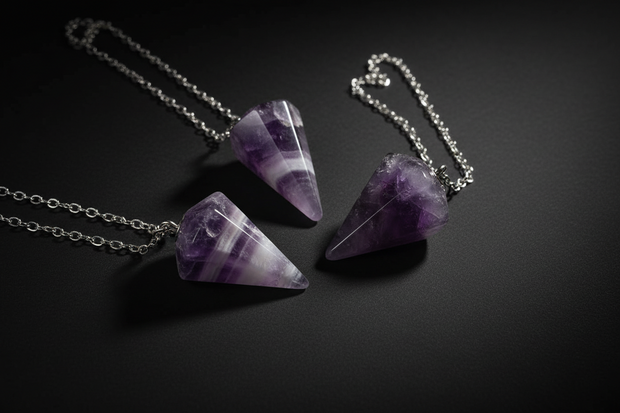
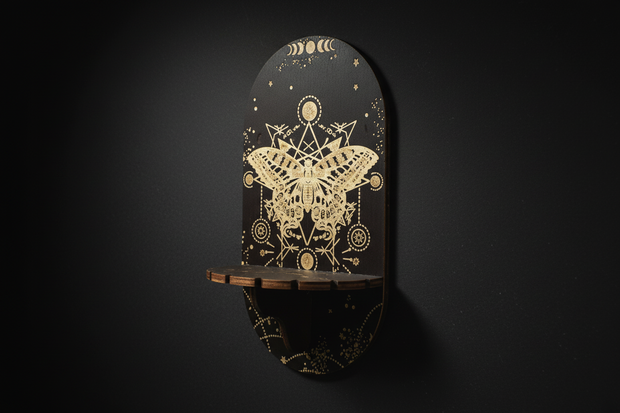
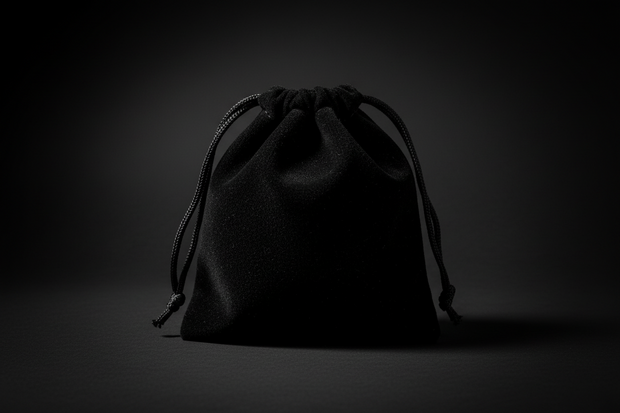
Browse Divination Tools and Storage & Chests after deciding whether the tool needs display, soft separation, or rigid protection. The Gemstone Pendulums collection product should be stored individually, while the Moon Phase Pendulum Holder and Moth Pendulum Holder support visible display where they are stable and inaccessible to pets or children. A Black Velvet Pouch prevents rubbing but does not replace rigid protection for a fragile point.
For rods, read How to Use Dowsing Rods Responsibly.
Frequently Asked Questions
Should a pendulum hang on a stand all the time?
It can when the stand is stable, the connection supports the weight, and the pendulum cannot strike anything. Fragile or sentimental pieces may be safer in a padded box.
Can multiple pendulums share one pouch?
They can, but chains tangle and stones strike one another. Individual separation is safer.
Does tarnish mean a tool needs spiritual cleansing?
No. Tarnish is a material reaction. Identify the metal and clean it appropriately.
Should calibration notes be kept with the pendulum?
Yes, either as a card in the case or a clearly linked record. This improves consistency and makes changes visible.
Can a bent dowsing rod still be used?
Bending changes balance and movement. Repair or replace it, then repeat practice tests rather than treating the change as a message.
Do I need to cleanse a pendulum after every use?
No universal rule requires that. Follow your tradition without allowing cleaning routines to become fear-based or damaging.
Protect the Mechanics and the Record
Store each pendulum so its chain and weight remain intact, keep rods straight and freely moving, control moisture, label repairs, secure private notes, and separate physical condition from spiritual interpretation. A well-kept tool makes bias and mechanical problems easier to recognize.
Tools for this practice
Explore the products selected for this guide. Review each listing for what is included and how to use it.
Shop this guide · 3 items Collapse


Keep exploring the shop
You made it to the end of the guide. Keep exploring through related products, major departments, or the full catalog.
 RELATED TO THIS GUIDE
Divination Tools
Shop this topic
RELATED TO THIS GUIDE
Divination Tools
Shop this topic


Leave a comment